Learning the Grammar of Making: Notes from the Workshop

Bay San • May 7, 2026

The scent of milled cedar hangs heavy in the cold morning air. A single stream of light cuts through the high window, illuminating a slow dance of sawdust drifting toward the floor of the workshop I have visited as you can see in this article here. I drag the heavy plane across the raw edge of the timber. A thin, translucent ribbon of wood curls upward and falls gently to the bench. The blade clicks back into its resting block. Time slows to the exact rhythm of my breathing.

Defining the Grammar of Making

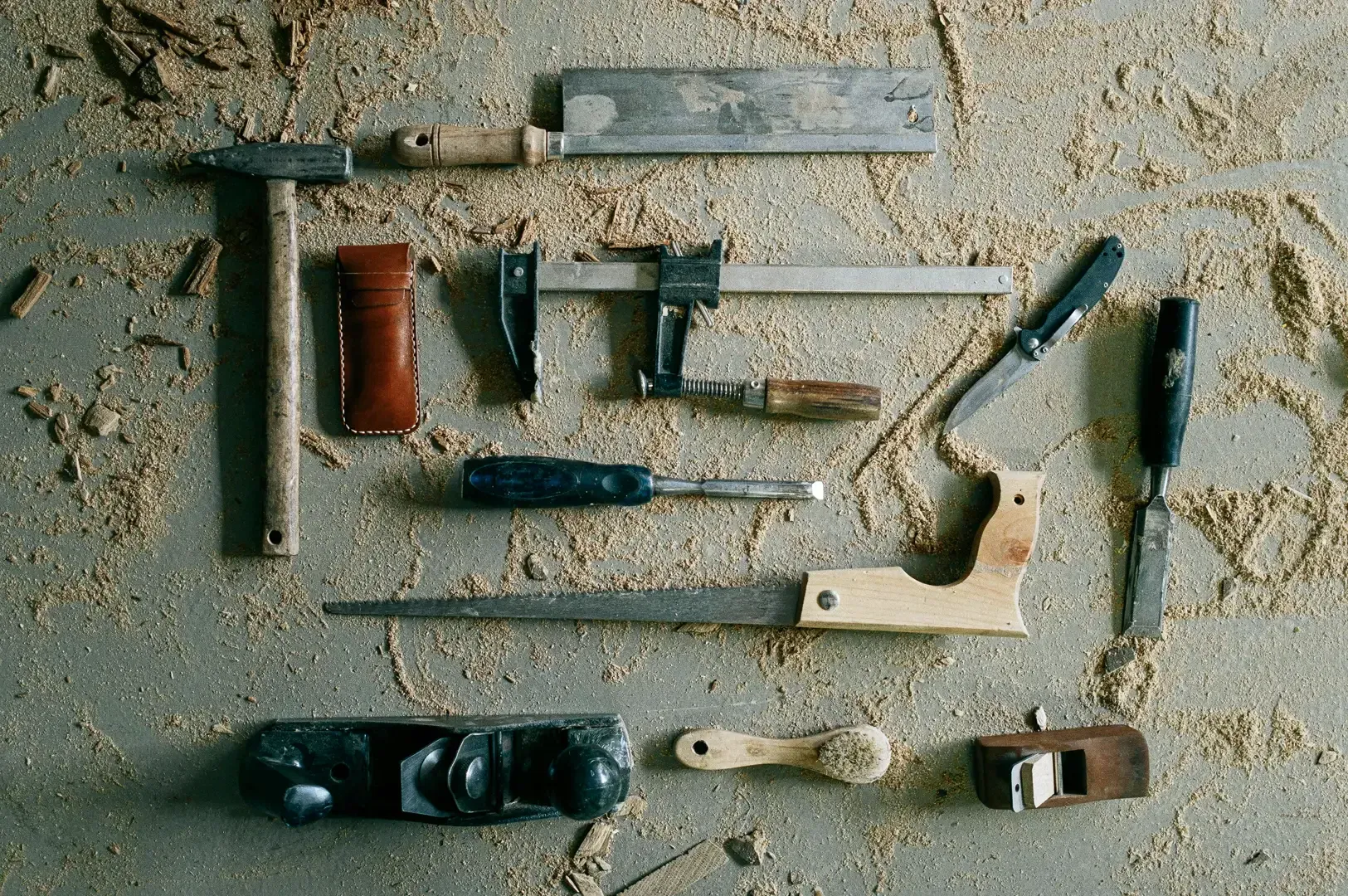
Top-down flat lay of essential woodworking hand tools on a sawdust-covered surface, including clamps, saws, chisels, and planer, captured in an overhead shot.

Every craft possesses its own hidden grammar. It is not a vocabulary of grand ideas or sweeping visions. It is a set of small, unyielding rules. It is the sequence of preparation, the posture you hold at the bench, and the quiet discipline of cleaning tools before you leave the room. It is the willingness to do the boring parts beautifully. When you learn a new language, you drill the syntax over and over until you stop translating in your head. Craft works exactly the same way. The rules shape the object, but eventually, they reshape the maker.


Through years of sitting quietly as a student of various disciplines, I have learned a few of these structural rules. They rarely arrive as sudden epiphanies. They arrive as quiet corrections, learned the hard way.

Rule 1: Preparation is the Work

Preparation is not a prelude, it is the work. In my early days at the workbench, I viewed preparation as a frustrating obstacle. I wanted to see the final shape immediately. I would rush through measuring and marking, eager to make the first cut. The result was always compromised. The joint would not sit flush. The lines would drift. Over time, I learned that setting up the workspace is the actual beginning of the craft. Laying out the tools, sweeping the floor, and checking the angles are not distractions from the work. They are the work. The moment I stopped rushing the setup, a profound clarity replaced my impatience.


Rule 2: Tools and Attention

Tools teach you how to hold your attention. There is a specific feeling when a blade meets a sharpening stone. You must hold the steel at a very precise angle, using water to carry away the grit. When I first tried to sharpen my own chisels, I pressed down entirely too hard. I wanted to force a sharp edge into existence through sheer effort. The steel bit into the stone unevenly. A master craftsman gently tapped my shoulder, motioning for me to loosen my grip, you can read more on my encounter with him in this article. He showed me that the stone does the work. You simply guide the tool. True attention is not tense. It is relaxed, observant, and responsive to the material in your hands.


Rule 3: Consistency as Respect

Consistency is a kind of respect. The final stages of sanding require a monotonous, repetitive motion. It is easy to let your mind wander and allow your pressure to become uneven. Early on, I would sand vigorously where the wood was visible and lazily where it would be hidden. I learned quickly that the wood remembers your lack of care. The finish applies differently. The stain pools in the neglected areas. Applying the exact same pressure to the unseen corners of a project is a fundamental form of respect. It proves your commitment to the standard, even when nobody is watching.


Through years of sitting quietly as a student of various disciplines, I have learned a few of these structural rules. They rarely arrive as sudden epiphanies. They arrive as quiet corrections, learned the hard way.
Applying Craft Grammar to Business

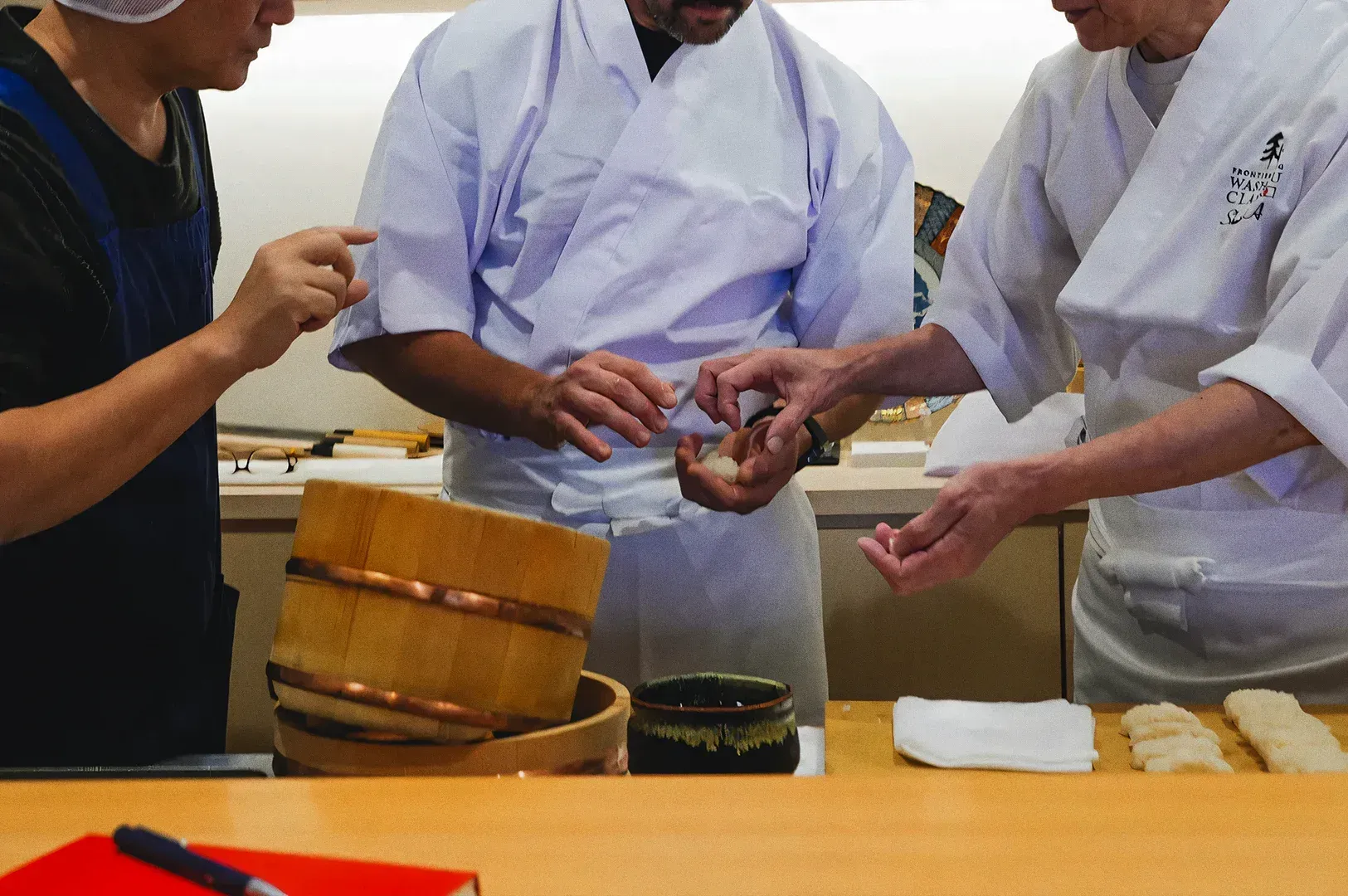
Close-up of sushi chefs shaping rice by hand at a traditional Japanese restaurant counter with wooden bucket and utensils, captured in a medium close-up shot at counter level.

This grammar extends far beyond the physical workshop. It is the exact same syntax required to build an enduring organization.

In the early days of opening the omakase counter, I watched our head chef train his apprentices. The transmission of quality did not happen through lectures in a boardroom. It happened through tiny, relentless corrections. He corrected how a warm towel was folded. He corrected the exact posture they held while wiping down the cypress counter. He was teaching them the grammar of hospitality.

Running businesses across education and property demands a clear understanding of this principle. You must know exactly what can change and what must remain absolute. The seasonal menu, the booking software, and the marketing strategies are fluid. They must adapt to the market. But the standards of training, the daily rituals of service, and the profound respect for ingredients must be fiercely protected. They are the fixed rules of the language. If you compromise the grammar, the entire culture falls apart.

Contrasting Environments, Unified Attention

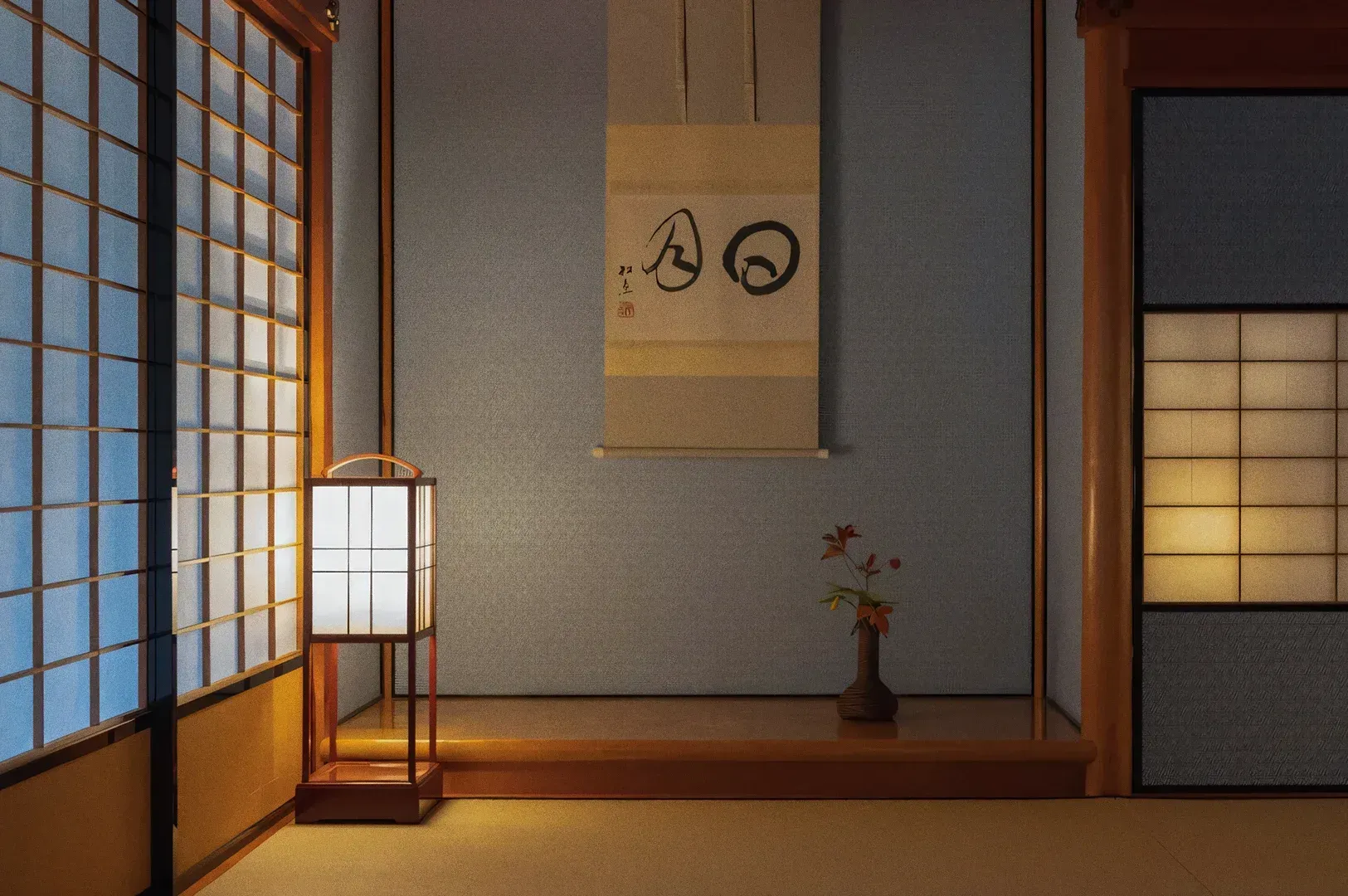
Minimalist Japanese tatami room with shoji screens, paper lantern, wall scroll art, and ikebana flower arrangement, captured in a straight-on interior shot.

Different environments demand different cadences of attention, yet the underlying grammar remains exactly the same. Consider the deep hush of the tea room before the first guest arrives. The preparation requires a soft, horizontal focus. You notice the exact angle of a ceramic bowl, the shifting afternoon light, and the low hum of the iron kettle.

Contrast that silence with a winter walkthrough of our alpine property in Japan during its renovation. The site was chaotic, freezing, and loud. Yet the master carpenter operated with the exact same measured attention as the tea master. He inspected a timber joint with quiet, absolute focus. He completely ignored the noise around him, running his bare hand over the grain to check for imperfections. They were two completely different workshops, but they demanded one identical standard of presence.


Conclusion: Mastery as Fluency

I brush the remaining cedar shavings from the bench. I return the hand plane to its heavy leather case, wiping the steel blade with a single drop of camellia oil. The workshop settles back into total silence.

We often mistake mastery for dominance over a material. We think it means bending the world to our will with force and volume. But spending enough time at the bench teaches you something entirely different. Mastery is simply fluency. It is knowing the quiet grammar of the work so deeply that your hands know exactly what to do when the light begins to fade.

Recent Posts

Low-angle motion shot of a street cleaner sweeping a wet brick sidewalk with a broom, capturing quie
By Bay San May 26, 2026
Explore the moral texture of travel. Discover how to practice attention without entitlement and master the quiet discipline of being a respectful guest.
Flat lay overhead shot of “A Life Less Throwaway” by Tara Button on a white wooden surface, minimali
By Bay San May 22, 2026
Meta Description: Tara Button argues for repair over replace. A reflection on durability as discipline, and what it means to build a life that lasts.
Tight close-up side-angle of chef slicing raw fish with precision knife skills on wooden board highl
By Bay San May 21, 2026
Discover the true economics of craft. Quality is not a luxury signal, but the visible edge of invisible inputs, time, and uncompromising standards.
Wide-angle perspective shot of a modern glass corridor with strong leading lines representing struct
By Bay San May 19, 2026
Explore the quiet paradox of entrepreneurship. Discover why the most effective leadership often requires knowing exactly when to step back and follow.
Top-down flat lay shot of
By Bay San May 15, 2026
Discover how James Kerr's Legacy reveals the uncompromising principles behind enduring culture, proving that standards and humility always outlast hype.
Close-up eye-level shot of a steaming coffee cup on a wooden windowsill overlooking a soft-focus cit
By Bay San May 14, 2026
Travel finds meaning not in doing more, but in choosing well. Discover how building a personal travel philosophy shapes a life of quiet intention.
Close-up high-angle shot of a professional writing in a journal beside a coffee cup, illustrating fi
By Bay San May 12, 2026
Financial discipline is not deprivation. Discover how quiet financial structures protect attention and create the conditions for lasting creative freedom.
Wall‑mounted copy of “The Great Good Place” by Ray Oldenburg displayed against a minimalist white wa
By Bay San May 8, 2026
Culture is engineered, not declared. Discover how Ray Oldenburg’s exploration of third places shapes our understanding of community, belonging, and business.
Macro low-angle shot of a luxury fountain pen with a gold nib resting on handwritten paper, highligh
By Bay San May 5, 2026
Explore how ordinary heirlooms become quiet vessels of inheritance. Discover how taste, discipline, and attention to detail pass across generations.
Straight-on eye-level shot of the book cover “Deep Work” by Cal Newport, showing minimalist typograp
By Bay San May 1, 2026
Focus is not a productivity hack; it is a structural advantage. Discover how Cal Newport’s rules for deep work shape business, craft, and quiet mastery.
Show More