

Material Conversations: Learning from Master Craftsmen

Bay San • February 24, 2026

In our information-rich world, we are conditioned to believe that knowledge is something that can be downloaded. We read books, watch tutorials, and consume articles, assuming that if we gather enough data, we will achieve understanding. But some of the most profound knowledge is not transmitted through words at all. It is passed through presence, observation, and the quiet, tactile conversation between a maker and their materials.


This is the central lesson I have learned from spending time with master craftsmen. Whether in the kitchen of a seasoned chef, the workshop of a carpenter, or the studio of a ceramicist, the deepest learning happens in silence. It is a form of mentorship that transcends instruction and enters the realm of communion. It is about learning to listen not with your ears, but with your hands and your eyes.

The Lesson of the Unspoken Word

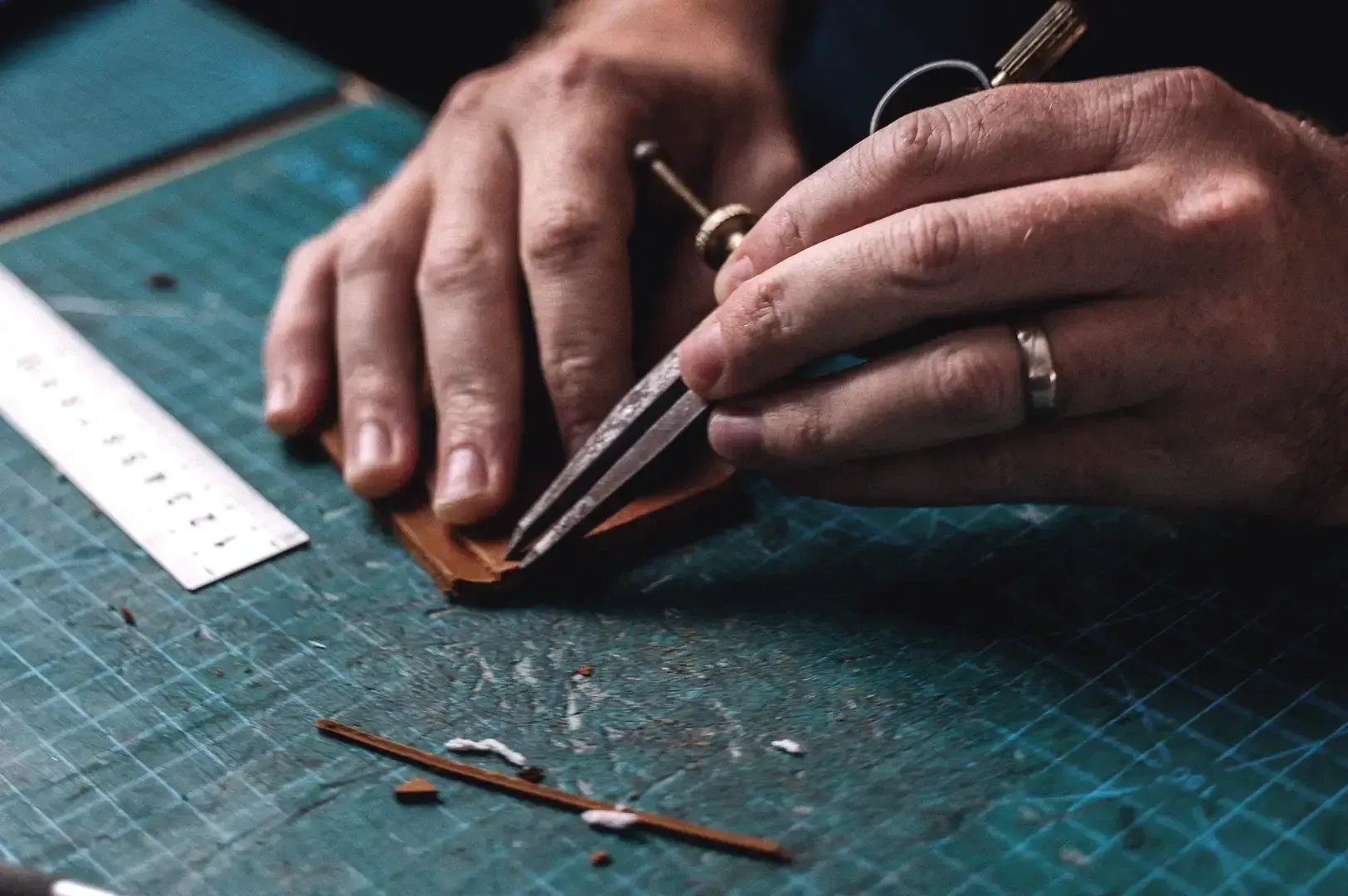
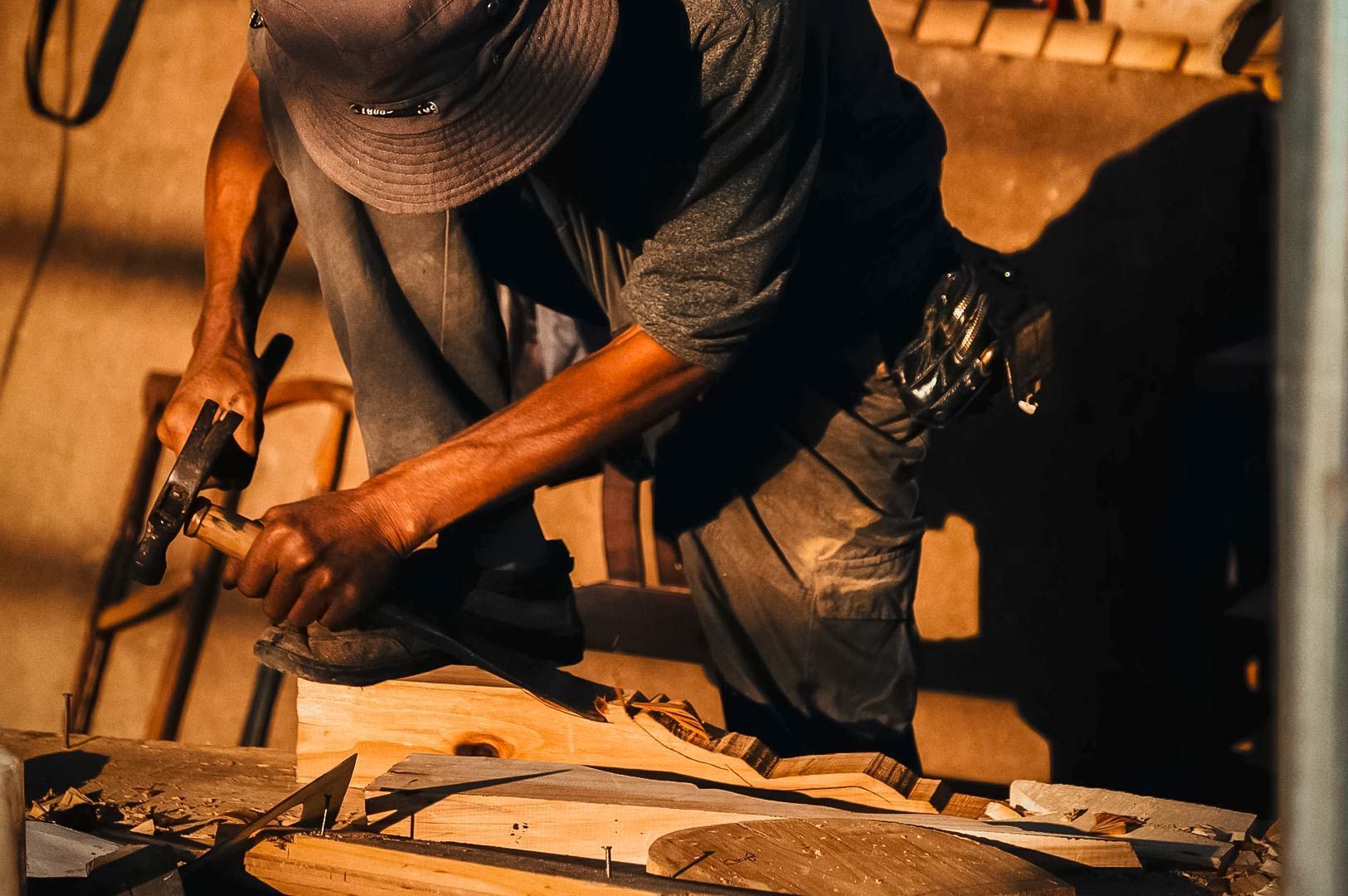
Woodworker carving a wooden piece by hand in a warm, sunlit workshop.

I once spent an afternoon with a master carpenter who was known for his intricate joinery. He was building a cabinet from a single, beautiful plank of walnut. I was there to learn, and I came armed with questions about angles, measurements, and techniques. He greeted me warmly but spoke very little. Instead, he gestured for me to watch.


He was preparing to make a cut. He did not grab a tape measure. Instead, he picked up the piece of wood, held it in his hands, and closed his eyes for a moment. He ran his thumb along the grain, feeling its texture and direction. He turned it over, observing how the light caught its surface. He was not just looking at the wood; he was communicating with it. After a few minutes of this silent dialogue, he placed the wood on his workbench, took a deep breath, and made a single, perfect cut with a handsaw.


He then handed me a similar piece of wood and the saw. I, eager to prove myself, immediately measured the wood and marked my line with a pencil. As I started to cut, the saw snagged, and the wood began to splinter. The carpenter put a gentle hand on my arm to stop me. He did not say, "You are doing it wrong." He simply took the wood from me, turned it over, and pointed to the direction of the grain. His gesture said everything: You are fighting the material. Listen to it. Work with it, not against it. In that silent, simple correction, I learned more than any book on woodworking could ever teach me. The lesson was not about technique; it was about respect for the material itself.

Material Understanding Over Technical Skill

This is the essence of true mastery. While technique is important, it is merely the grammar of a craft. Mastery is the ability to use that grammar to have a fluid, intuitive conversation with your materials.

  • A skilled chef knows the recipe. A master chef knows how the humidity in the air will affect the dough and adjusts accordingly.
  • A skilled painter knows how to mix colors. A master painter understands how a particular pigment will absorb or reflect light and uses it to evoke emotion.
  • A skilled programmer knows the code. A master programmer understands the underlying logic of the system and writes code that is not just functional, but elegant and efficient.

True mastery is demonstrated not in the flawless execution of a known process, but in the ability to respond to the unique and often unpredictable nature of the material at hand. This understanding cannot be memorized from a manual. It can only be developed through thousands of hours of hands-on practice, through trial and error, and through a deep, almost empathetic connection to the substance you are shaping.

The Limits of Learning from Books

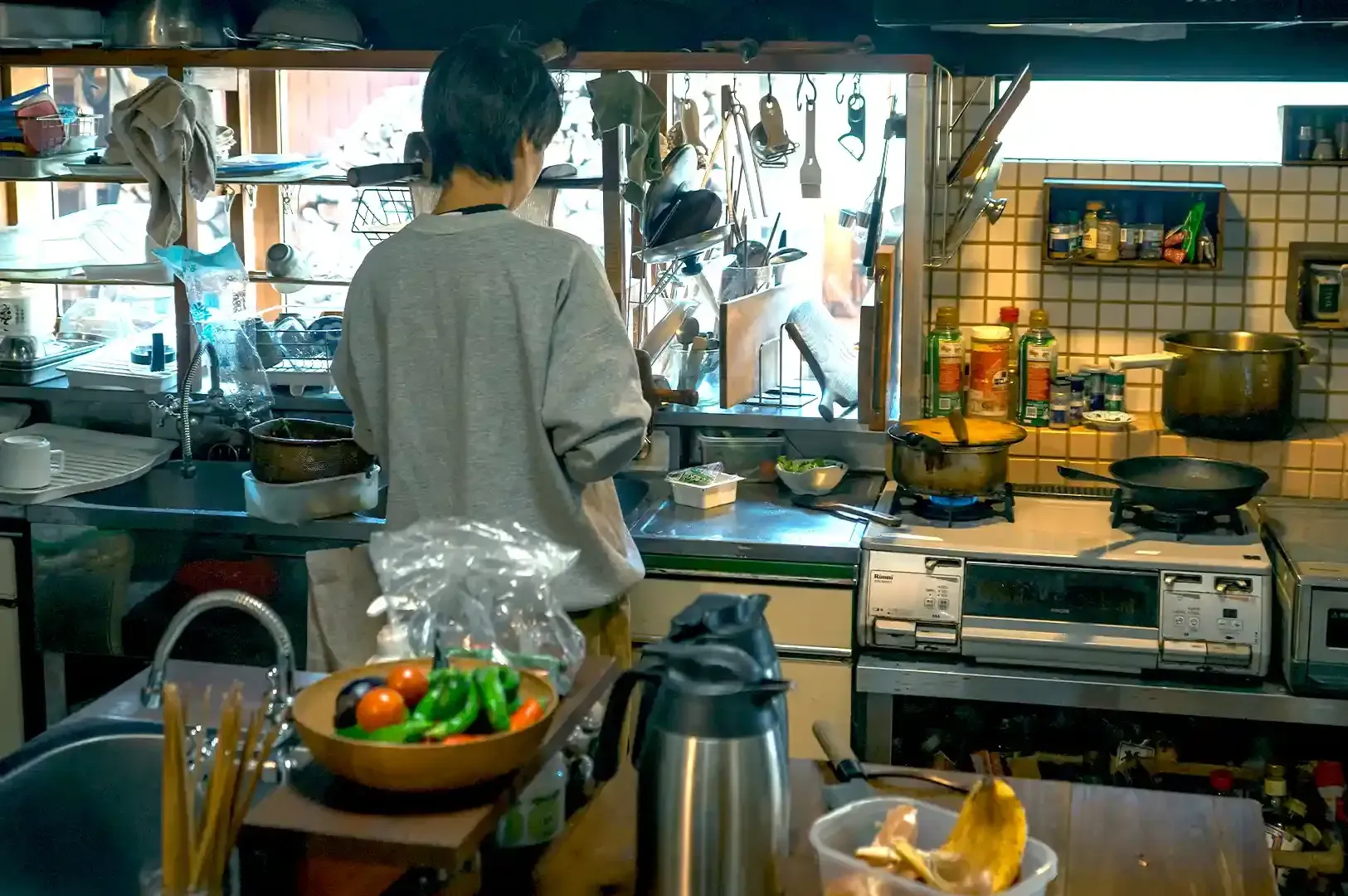
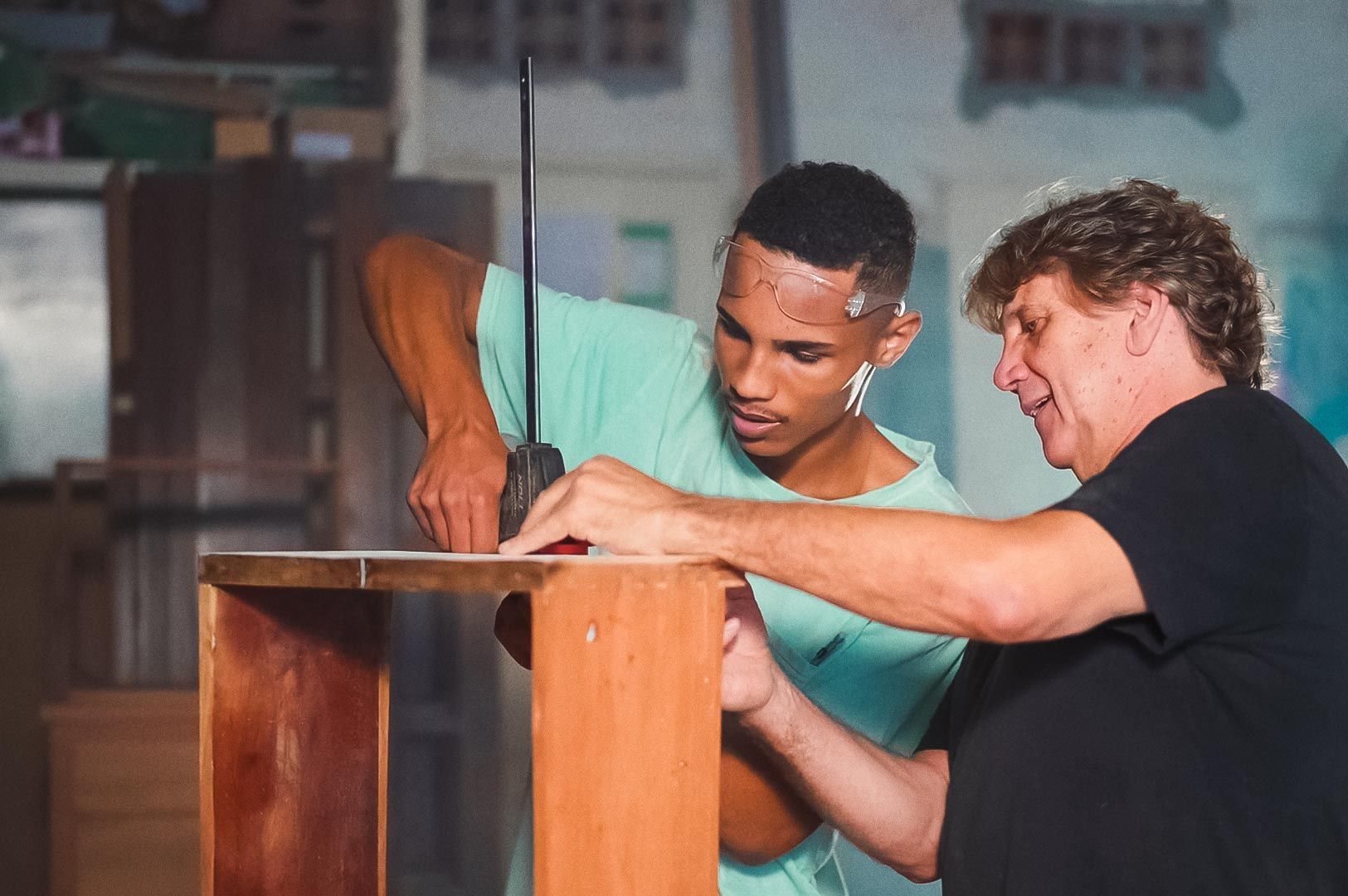
Apprentice learning woodworking techniques from a mentor while assembling a wooden cabinet in a carpentry workshop.

Books and online courses are valuable resources. They can provide a solid foundation of technical knowledge and give us the vocabulary to understand a craft. But they can also create a dangerous illusion of competence. Learning from a book is a one-way transmission of information. It is a monologue.


True apprenticeship is a dialogue. It is about being in the physical presence of a master. It is about observing the subtle, non-verbal cues that can never be captured in a video. It is about watching how they hold their body, how they breathe as they work, and how they recover from a mistake. You learn by absorbing the rhythm of their practice.


This form of learning requires humility and patience. You cannot fast-forward an apprenticeship. You must be willing to do the repetitive, unglamorous work. You sweep the floor, you sharpen the tools, you prepare the materials. These are not chores; they are the first lessons in the material conversation. By engaging with the craft at its most fundamental level, you begin to build the sensory library of knowledge that is the foundation of mastery.

Applying Material Conversations to Modern Work

Team collaborating around a table covered with charts and laptops during a creative planning meeting.

This philosophy of mentorship is not limited to traditional crafts. Its principles are deeply relevant to any creative or entrepreneurial endeavor. In business, as in craft, we are constantly working with materials. Our materials may not be wood or clay, but they are just as real: a team of people, a body of data, a client relationship, a brand’s reputation.


To lead a team effectively, you must learn to have a material conversation with your organization. This means listening beyond the words spoken in a meeting. It means observing the body language, the energy in the room, and the unspoken dynamics between people. It is about understanding the "grain" of your company culture and working with it, not against it.


To develop a new product, you must have a material conversation with the market. This goes beyond surveys and focus groups. It is about developing a deep, intuitive understanding of your customer’s needs and desires. It is about observing their behavior and listening for the problems they cannot articulate.


This approach to work requires us to slow down. It asks us to step away from our spreadsheets and our dashboards and engage with the messy, human reality of our work. It requires us to trust our intuition as much as our data. It is a call to become apprentices again, to approach our work with the quiet humility of a student in a master’s workshop.


The most valuable knowledge is rarely loud. It is quiet, nuanced, and embedded in the very fabric of the work itself. By learning to be present, to observe with our full attention, and to listen with our hands, we can begin to have our own material conversations. It is a slower path to understanding, but it is one that leads to a depth of mastery that no instruction manual can ever provide.

Recent Posts

The book ‘The Art of Stillness’ by Pico Iyer placed beside a laptop in a calm, minimalist workspace.
By Bay San February 27, 2026
On the discipline of withdrawal: Iyer reveals that stillness is not escape but focus; choosing where attention goes. A reflection on strategic quiet.
Group of friends having a deep conversation around a table in a cozy, dimly lit cabin.
By Bay San February 26, 2026
A reflection on pivotal conversations that shifted worldviews and influenced life decisions through the power of genuine listening and dialogue.
Hardcover book titled The Craftsman by Richard Sennett, shown standing upright with a black cover fe
By Bay San February 20, 2026
On mastery through practice: Sennett reveals that craft is not nostalgia but discipline; doing something well, for its own sake. A reflection on patient excellence.
Authority figure in suit guiding workplace discussion, clipboard in hand, colleagues engaged around
By Bay San February 19, 2026
Delegation isn't about offloading work. It's a strategic act of trust that shapes organizational culture and defines leadership legacy.
Busy night market with lit stalls selling clothes, striped tarpaulin covers, large umbrella, and neo
By Bay San February 17, 2026
What endures from travel beyond photographs? A reflection on markets, objects, and the stories we choose to carry home with us.
Minimalist book cover of The Laws of Simplicity by John Maeda displayed on a bright yellow backgroun
By Bay San February 13, 2026
On the power of restraint: Maeda's ten laws reveal that simplicity is not subtraction but strategic clarity. A reflection on doing less, better.
Image of a lone figure sitting in a slim vertical alley, leaning back with legs crossed, centered in
By Bay San February 12, 2026
On cultivating intentional solitude as a counterbalance to constant connectivity. A reflection on chosen withdrawal as essential practice for clarity and creation.
Bright, airy modern living room with curved light armchairs, dark round coffee table, teardrop wall
By Bay San February 10, 2026
How intentional curation becomes a personal language. On the difference between accumulation and meaningful collecting as self-expression.
By Robert Macfarlane February 9, 2026
On thinking with your feet: Macfarlane's walking journeys reveal that clarity comes through movement, not stillness. A reflection on embodied wisdom.
The image features the modern, curved architecture of Istanbul Medipol University's Kavacık South Ca
By Bay San February 5, 2026
Practical wisdom on creating organizations designed to thrive beyond you. On systems, succession, and the architecture of institutional longevity.
Show More