
Legacy by James Kerr | My Quiet Empire Book Review

Bay San

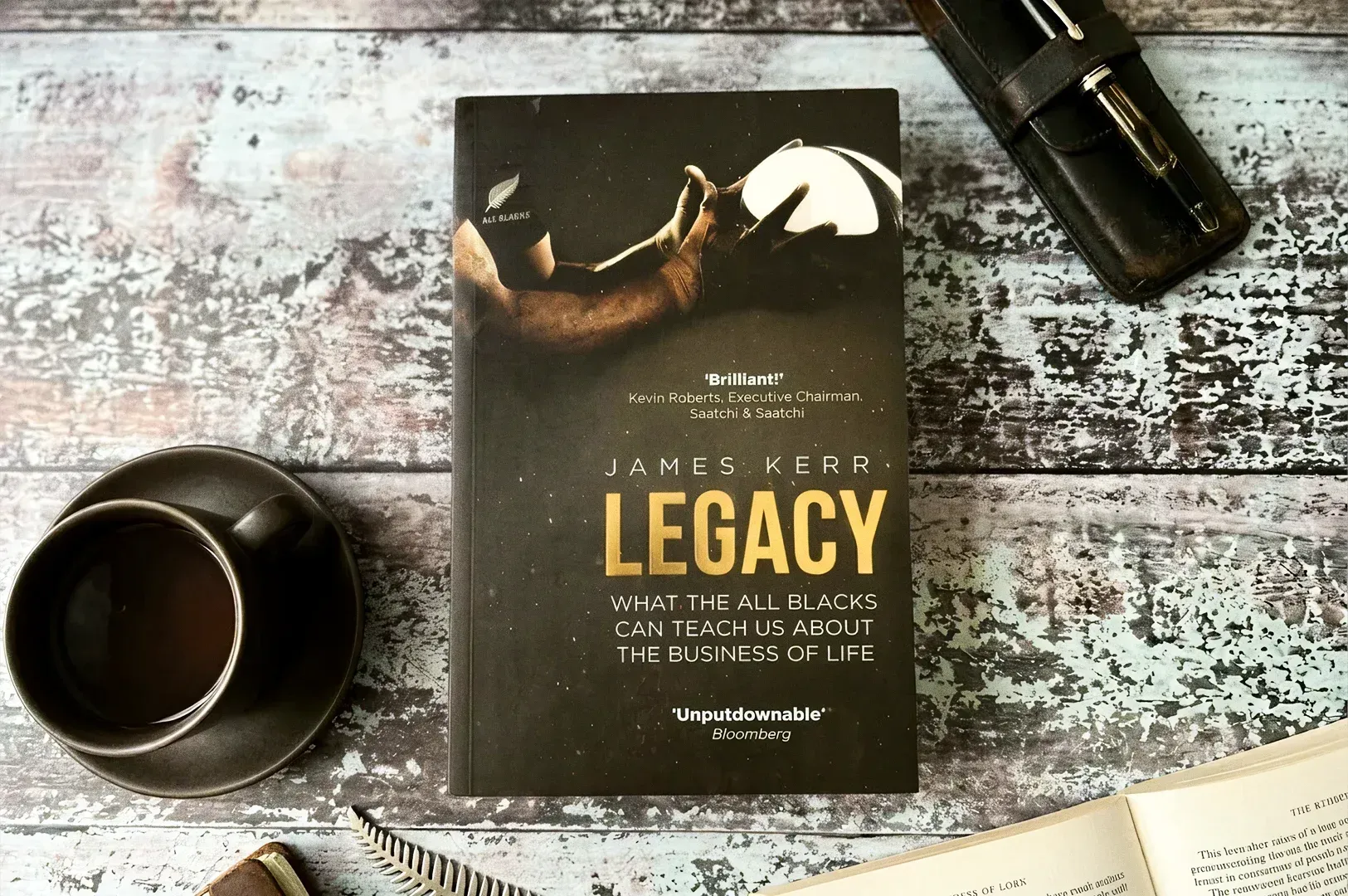
I have spent years building teams and shaping physical environments. If there is one absolute truth I have learned, it is that culture is never established through a charismatic speech. It is built through quiet, relentless, daily standards. This is the exact premise at the heart of James Kerr's Legacy. The book is a deep dive into the culture of the New Zealand All Blacks, exploring how this legendary rugby team turns ordinary talent into sustained, generational excellence. Kerr reveals that their dominance is not born from physical superiority, but from an uncompromising psychological architecture.

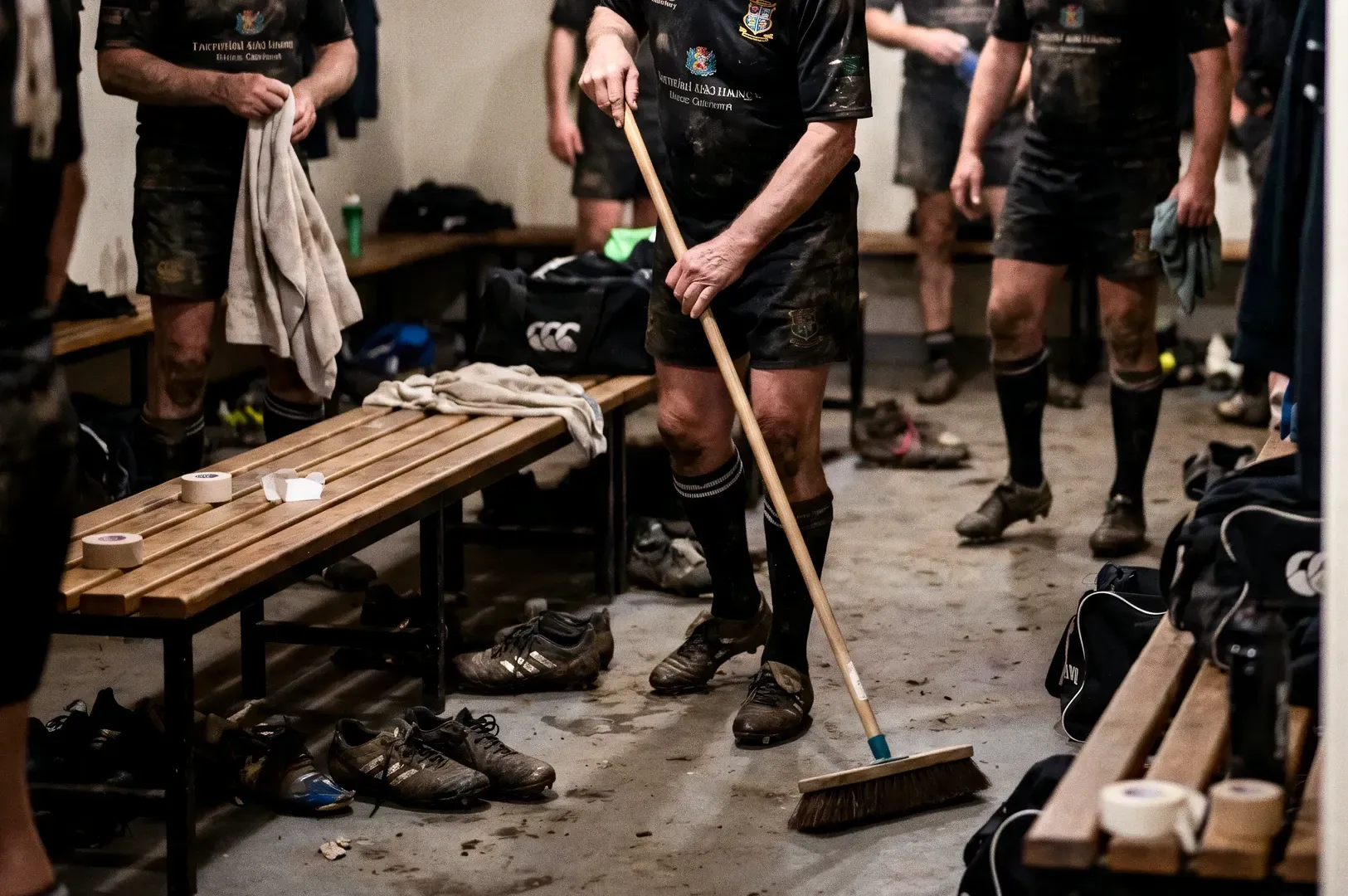
Eye-level candid shot of rugby players cleaning locker room with broom after match, illustrating

The most profound concept in the book is perhaps its simplest principle. Kerr highlights the team's commitment to "Sweep the sheds." He details how, after a grueling, triumphant match, the most senior and celebrated players on the team quietly pick up brooms and clean the locker room before they leave. As a practical philosophy of leadership, this is incredibly effective. It completely strips away entitlement. In my own experience running businesses, I have found that true durability and trust are forged in these exact micro-disciplines. When leaders willingly perform the lowest-status tasks, it establishes an environment where humility and ownership matter far more than corporate hype.


Kerr also captures the delicate tension between individual brilliance and collective identity. A great culture must somehow absorb massive egos without crushing personal ambition. The All Blacks do not reject exceptional talent or demand uniformity. Instead, they demand that the individual talent serves the broader legacy of the jersey. When you build an institution, you are constantly managing the friction between high performers who want to shine and the collective mission that requires sacrifice. Kerr shows that when the team identity is strong enough, it becomes an honor to sublimate personal glory for the group. He distills this with a perfect, memorable line: "Better people make better All Blacks." It is a reminder that you cannot separate the character of the professional from the output of the work.

However, there is an honest limitation in reading a book of this nature. At times, the fifteen core lessons risk feeling slightly slogan-like. It is incredibly easy to read the bold, punchy headings and mistakenly believe you can simply graft these concepts onto a struggling organization tomorrow.


But engaging deeply with the text reveals a more vital truth about business and craft. Principles always outlast tactics. You can easily copy a competitor's marketing strategy, their operational format, or their pricing model. What you cannot copy are their internal standards. You cannot forge the invisible bonds of trust that hold a team together under immense pressure. The true magic of the All Blacks is never their specific playbook. It is their total, unyielding devotion to their shared identity.


Legacy is not meant for the manager looking for a quick operational fix. It is definitely not for someone seeking a simple list of team-building exercises. It is written for the founder, the coach, and the builder who understands that creating a true high-performance institution requires a terrifying level of personal accountability. The book strips away the glamour of leadership and leaves us with a lingering, necessary question.


When the applause finally fades and the doors close, are the leaders in your organization actually willing to pick up the broom?

More Book Reviews

Flat lay overhead shot of “A Life Less Throwaway” by Tara Button on a white wooden surface, minimali
By Bay San May 22, 2026
Meta Description: Tara Button argues for repair over replace. A reflection on durability as discipline, and what it means to build a life that lasts.
Wall‑mounted copy of “The Great Good Place” by Ray Oldenburg displayed against a minimalist white wa
By Bay San May 8, 2026
Culture is engineered, not declared. Discover how Ray Oldenburg’s exploration of third places shapes our understanding of community, belonging, and business.
Straight-on eye-level shot of the book cover “Deep Work” by Cal Newport, showing minimalist typograp
By Bay San May 1, 2026
Focus is not a productivity hack; it is a structural advantage. Discover how Cal Newport’s rules for deep work shape business, craft, and quiet mastery.
Front-facing, eye-level shot of the book cover “The Power of Character in Leadership” by Dr. Myles M
By Bay San April 24, 2026
Character is built through daily choices, not corporate slogans. Discover how Myles Munroe' exploration of moral life shapes enduring business culture.
Overhead top‑down shot of the book Shop Class as Soulcraft: An Inquiry into the Value of Work by Mat
By Bay San April 17, 2026
Manual competence offers a profound form of freedom. Discover how Crawford’s meditation on skilled work shapes our approach to business, craft, and character.
Straight-on product shot of the book cover “Zen and the Art of Motorcycle Maintenance” by Robert M.
By Bay San April 10, 2026
Quality is not an accident; it is a discipline. Discover how Pirsig's meditation on maintenance shapes our approach to business, craft, and quiet mastery.
Three-quarter angle product shot of The Book of Joy by the Dalai Lama and Desmond Tutu, showing mult
By Bay San April 8, 2026
Joy is not a fleeting emotion but a disciplined practice. Discover how two spiritual leaders offer a framework for resilience in business and life.
Book titled ‘Wabi-Sabi for Artists, Designers, Poets & Philosophers’ on a blue background, featuring
By Bay San March 27, 2026
On embracing imperfection: Leonard Koren's meditation on wabi-sabi offers a framework for creation that honors transience over permanence. A reflection on building with constraint.
Vintage copy of ‘The Gastronomical Me’ by M.F.K. Fisher standing upright on a wooden surface with a
By Bay San March 20, 2026
On appetite as philosophy: Fisher's memoir reveals that how we eat reflects how we live. A meditation on attention, pleasure, and intentional living.
Book cover of ‘Originals: How Non‑Conformists Move the World’ by Adam Grant displayed in front of as
By Bay San March 13, 2026
Can originality be systematized? Adam Grant's research offers tools for fostering innovation, but the most transformative work may resist frameworks entirely.
Show More