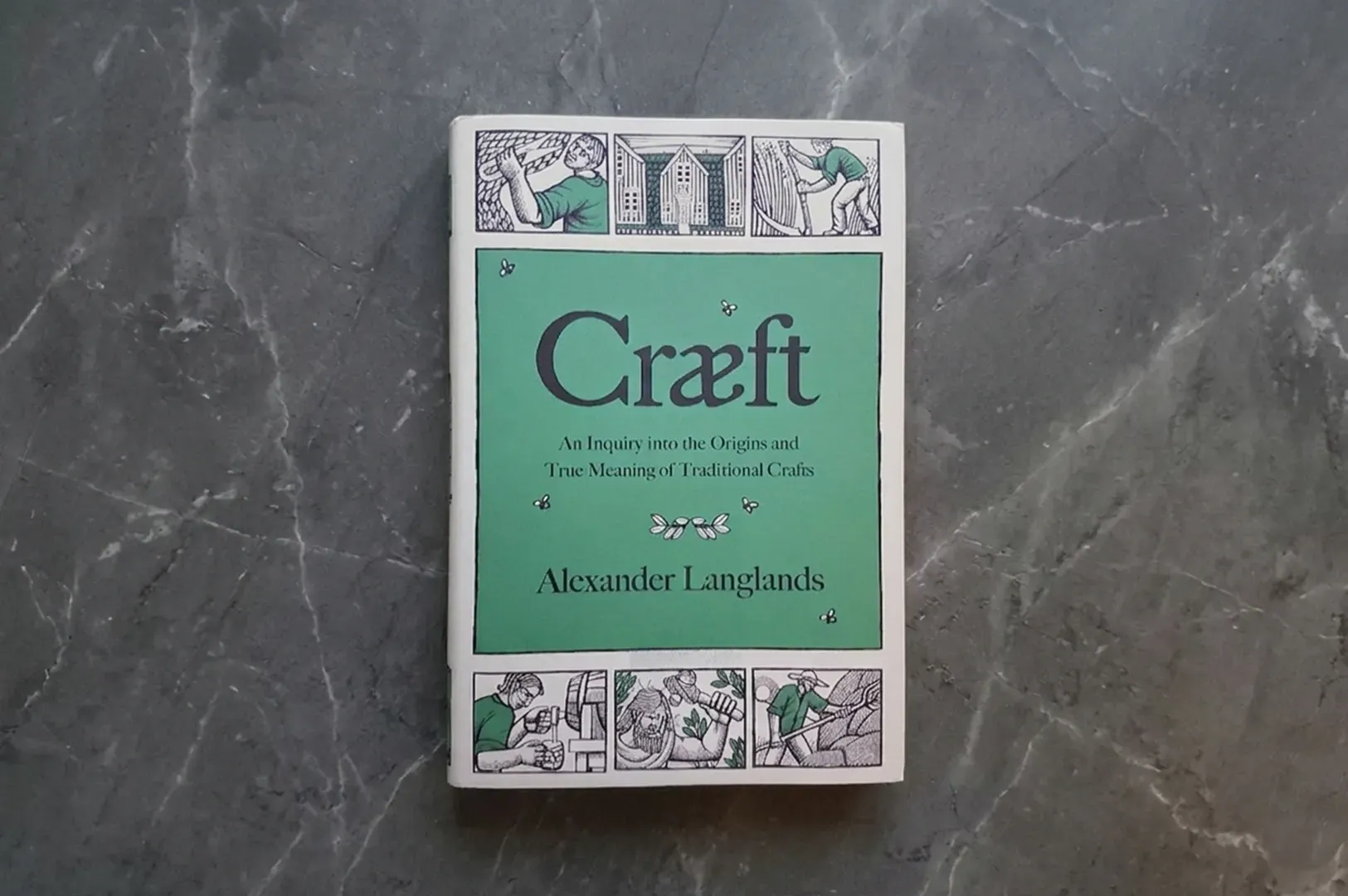

Craeft by Alexander Langlands | My Quiet Empire Book Review
Bay San
I picked up Craeft by Alexander Langlands expecting a nostalgic meditation on thatching, dry-stone walls, and the disappearing romance of rural work. What I found instead was a quiet argument about knowledge, and a mirror held up to the way most of us now build, manage, and measure value. Langlands, an archaeologist, returns to the Old English word cræft, which meant something far richer than our modern idea of “craft.” It suggested power, skill, resourcefulness, and a form of intelligence held not only in the mind, but in the body. His line that stayed with me was simple and clarifying: “Craft, then, was a form of knowledge as much as it was a means of making.”
That distinction is the heart of the book. Langlands is not merely defending handmade things. He is defending embodied intelligence: the kind of knowing that lives in hands, habits, repetition, and attention. We often imagine knowledge as something abstract, something that can be written down, uploaded, taught in a manual, or transferred through instruction. But some forms of skill resist that kind of flattening. They are learned slowly, through contact with material, correction over time, and the body’s quiet ability to notice what the mind has not yet named.

I recognize this from years of building. The best people I have worked with could not always explain everything they knew. A chef senses the rice before tasting it. An operator feels a process drifting before the numbers confirm it. A craftsman knows when something is slightly wrong before anyone else can see the flaw. This kind of knowledge cannot be downloaded. It is grown through doing, and once it is grown, it becomes part of the person.
This is where Craeft becomes more than a book about traditional practices. It becomes a study of attention. Langlands gives dignity to the unglamorous work that sustains value: the wall that must be repaired, the tool that must be sharpened, the standard quietly upheld. Modern systems are often designed around speed, convenience, and scale. Craft is designed around quality, fit, durability, and pride. These are not the same ambitions, and pretending they are has cost us more than we admit.
Most things worth having degrade without attention. A room loses its atmosphere. A kitchen loses its discipline. A team loses its rhythm. A brand loses its standards. The decline rarely happens all at once. It begins with small permissions: a corner cut, a tool neglected, a detail dismissed because no one will notice. Over time, what was once alive becomes merely functional.

I have watched managers announce that the team is "empowered now," then act surprised when standards slip. That is not intent-based leadership. That is abdication wearing a friendlier name. Marquet's submarine worked because the clarity and the technical mastery were already high, or were being deliberately built. Without shared principles underneath, "I intend to" is just a faster way to make a poor decision.
What sets the book apart is its craft. Marquet writes like a practitioner, not an ideologue. Each idea arrives attached to a specific scene aboard the ship, a real decision with real consequences, so the principles feel tested rather than theorized. That structure makes it read like a field manual. You finish a chapter and you can act on it Monday morning. There is no fog of inspiration here, only clear mechanisms you can install.
This book is for founders and managers who have quietly become the ceiling of their own organizations, and who suspect the fix is structural rather than personal. The lingering idea, for me, is that real authority is something you distribute, not hoard. A leader's job is not to have the answers. It is to build a place where the answers can come from anyone, and still meet the standard.