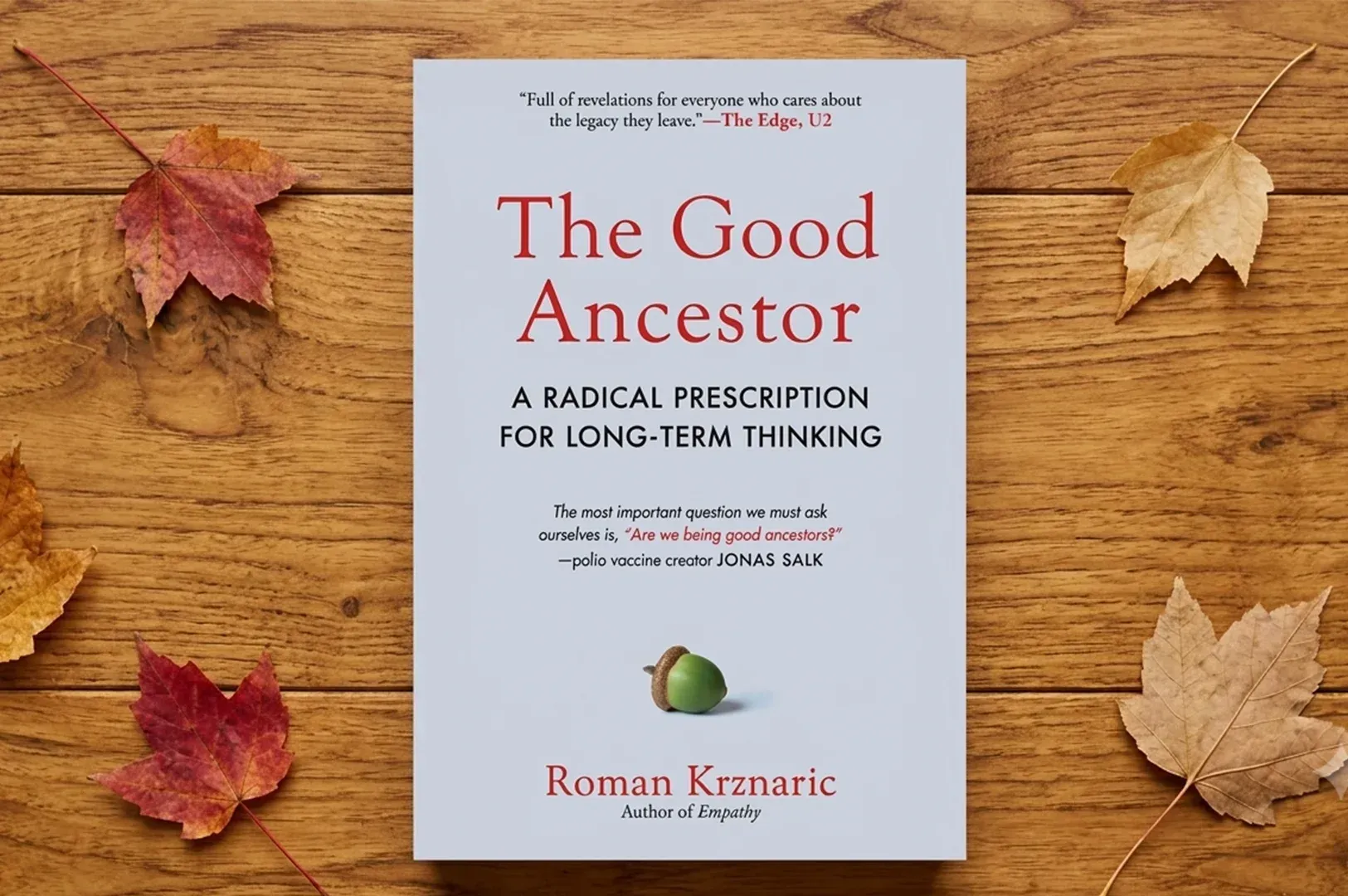

The Good Ancestor by Roman Krznaric | My Quiet Empire Book Review
Bay San
I picked up The Good Ancestor during a stretch when I was thinking about succession, though I would not have called it that yet. I was standing in one of my older properties, a building I had spent years restoring, and it struck me that I would not be around to see most of what it would become. Someone I will never meet will run their hand along a banister I chose. That thought stayed with me. Krznaric put words to it a few weeks later.
Early in the book, Krznaric asks a question that lodged itself in me and would not leave. He writes about the cathedral builders who laid foundations for structures they knew they would not live to see finished. Then he asks, in so many words, whether we are being good ancestors or bad ones to the generations that follow us.
It is not a comfortable question for anyone who builds.

Most of what we make in business is designed for the quarter, the year, the exit. We measure in returns we can collect ourselves. Krznaric calls this the tyranny of the now, and he is right that it runs deep, not because we are greedy, but because our systems reward the short view and punish patience.
I have felt this pull in every venture. The temptation to grow the academy faster than we could train people properly. The pressure to turn a table one more time. The offer on a building that made sense on paper and would have gutted what made the place worth keeping. What the book did for me was less inspiration than clarity. It named a habit I had been practicing without a word for it.
Years ago, when I set up the governance for the academy, I wrote a single clause into how decisions were made. Any change to the core training had to be justified not by this year's intake, but by the students who would arrive a decade after we were gone. It slowed us down. It cost us a season of growth once, and a partnership.

I did not know I was practicing intergenerational thinking. I thought I was just being stubborn about standards. Krznaric would say those are closer to the same thing than I realized. Here is my honest hesitation. The book is stronger on the case for long-term thinking than on the mechanics of it inside real institutions, where next month's payroll is not optional. Cathedral time is a beautiful idea. But cathedrals were funded by systems most of us do not have, and the tension between staying solvent now and stewarding later is not something a change in mindset alone resolves.
I finished the book convinced of the why. I am still working out the how, and I suspect that work never fully ends. This one is for the builder who has started to feel the weight of what outlasts them. The founder thinking about what they are leaving in the walls, in the training, in the people who will carry the work forward without ever knowing whose decision shaped it.
It will not hand you a system. It will change the horizon you measure against, which is quieter and, in the end, more useful.