
Why Imperfection Is the Mark of Authenticity
The tea room was nearly empty when I noticed it. A thin line ran across the rim of my cup, so fine I might have missed it if the afternoon light had not caught it just so. Not a crack that leaked. A crack that had healed, or been made to look as though it had, filled with something faintly gold along its seam.
I turned the cup in my hands. The tea inside had cooled to the temperature you can hold. Outside, rain had started, soft against the window, and somewhere behind me a kettle settled with a small tick as it lost its heat.
I could have asked for another cup. The old me would have. Instead I held that one a little longer, and the flaw became the reason I remembered the afternoon at all.
When the Taste Changes
For a long time I chased the polished thing. In the early years of the consulting firm, I wanted every surface smooth. The deck without a stray pixel. The room without a scuff. The answer delivered before the doubt could show. I believed clients bought certainty, and that any visible seam was a failure of care.
Then, slowly, my taste shifted. I began to trust the work that showed its making. A recommendation that admitted what it did not yet know. A plan with a rough edge left honest rather than sanded away.
The polished version impressed people.
The true version was the one they came back for. I had confused the absence of flaws with the presence of quality. They are not the same thing, and it took me years to feel the difference in my hands.
The Inhabited Surface
A perfect surface tells you nothing about who made it. Machine-turned, flawless, identical to ten thousand others. There is no hand in it, no hesitation, no afternoon when the light was poor and the maker pressed a little harder than usual. It is clean and it is anonymous. You can admire it. You cannot quite love it.
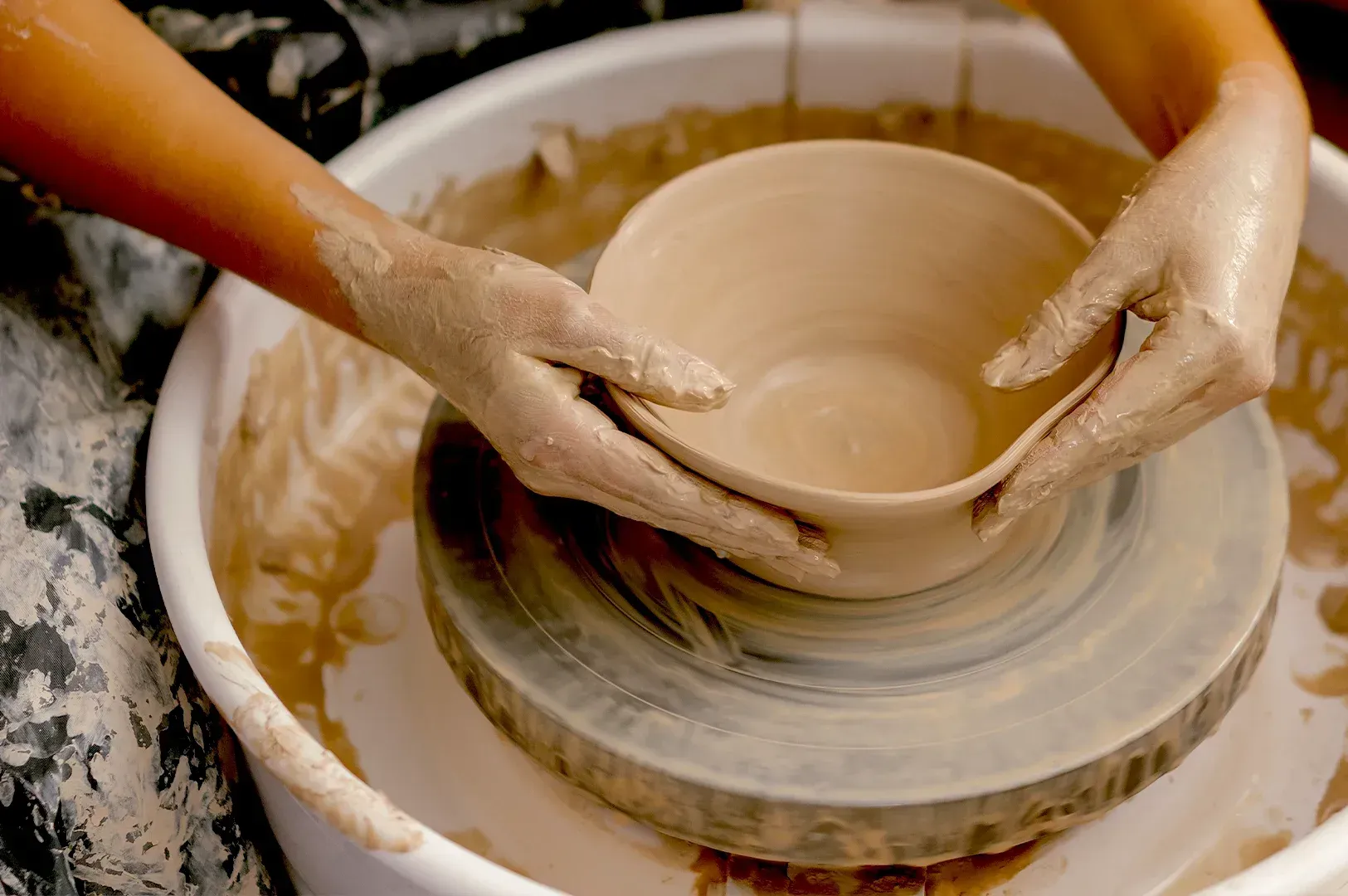
Consider a bowl thrown by hand. The wall thickens slightly where the potter paused. A finger left its faint spiral near the base. The glaze pooled darker on one side because the kiln does what the kiln does, and the maker allowed it.
That bowl carries evidence of a living process. You hold it and you are holding a decision, a body, a morning. The imperfection is not a defect in the object. It is the object telling you the truth about how it came to be. We recognize this without being taught. We are drawn to the inhabited thing.
Standards Without Sterility
None of this is an argument for carelessness. I want to be exact about that, because the two are often confused.
Running businesses taught me where the line sits. Some things must never drift. At the omakase restaurant, the rice was one of them. Its temperature, its seasoning, the moment it met the hand. We held that with a discipline that never softened, whatever else the night demanded.
Almost everything else was allowed to move. The fish changed with the season and the market. The room was reworked more than once. The way we greeted people evolved as we learned who they were.
That is the balance authenticity actually requires. You keep the core exacting, the training and the rituals and the sequence that make the thing itself. You let the surface breathe. A place with no standards is not authentic. It is only sloppy, wearing honesty as an excuse.
The flaw that means something sits on top of rigor. It is the human trace left after the care has been done, not instead of it.
Two Cups, Two Bowls

I think of two moments often, and they teach me different things. There was a bowl I ate late one night in Japan, at a counter that seated perhaps six. I had eaten there before. That night the broth tasted a shade different, deeper, maybe from the batch, maybe from the weather, maybe from the cook's own tiredness. It was not the bowl I remembered. It was better for not being identical. The variation was proof that a person, not a formula, stood over the pot.
And there was the worn cup in the tea room, mismatched from its saucer, its rim thinned by years of the same lips and hands. It did not pretend to be new. It asked me to slow down and notice it, and I did. One taught me that even a standard held with devotion breathes a little each time. The other taught me that time itself is a kind of maker, and that use is not damage.
The Signature of Time
Patina is only dirt, until you understand what it records. The step worn smooth in the middle. The counter marked where a knife has fallen ten thousand times in the same place. The seam of a jacket that no longer fully disappears because the tailor mended it by hand rather than replace it. These are not decline. They are the visible cost of having been used, cared for, and kept.
We spend a great deal of effort hiding this. We resurface, refinish, retouch, as though the goal were to erase every sign that a thing has lived. But the sign is the value. A learning curve leaves marks. So does love. So does any craft practiced long enough to become second nature.
Time signs its name in imperfections, and we keep trying to forge over the signature.
What the Cup Kept

The rain had stopped by the time I set the cup down. I have thought about that gold seam since. Someone chose not to throw the cup away. Someone decided the break was worth keeping, and made the repair a part of the object rather than a secret. The flaw became the most honest thing in the room.
Authenticity is not a performance of roughness. You cannot fake a scar and expect it to mean anything. And imperfection is not carelessness, not the absence of standards dressed up as soul.
It is something quieter than either. It is the evidence that a thing was made by a hand, used by a body, kept with attention over time. The uneven edge. The cup that outlived its match. The bowl that tastes a little different tonight.
I would rather have that than anything without a mark on it.
For more on craftsmanship and the authenticity of mastery and artistry, check this article:
The Revival of Forgotten Techniques.