
Local Markets and Global Stories: What Vendors Teach Us
I arrived early, before the aisles filled, when the market still belonged to the people who work it. The city was not mine. I did not speak the language beyond the words that buy bread and ask a price. I liked it that way. Alone, you notice more.
At a fish stall near the entrance, a glass case had fogged with the cold. A woman drew one finger across it, clearing a small window in the condensation, then leaned in to check the ice beneath. She was not performing for anyone. She was simply looking, the way you look at something you are responsible for.
I stood there longer than a stranger should. The light was gray and even. Somewhere behind me a crate scraped the floor. And in that small cleared circle of glass, the morning slowed to the pace of her attention.
The Work You Can See
A few steps on, a man was sectioning citrus. Not slicing for a garnish, but preparing whole fruit for the day, halving and quartering with a knife worn thin at the middle from years of the same stroke.
His hands knew the fruit. The skin gave under his thumb, releasing that sharp bright oil that hangs in the air near citrus stalls. He pressed, felt for ripeness, set the soft ones aside without pausing to think about it.
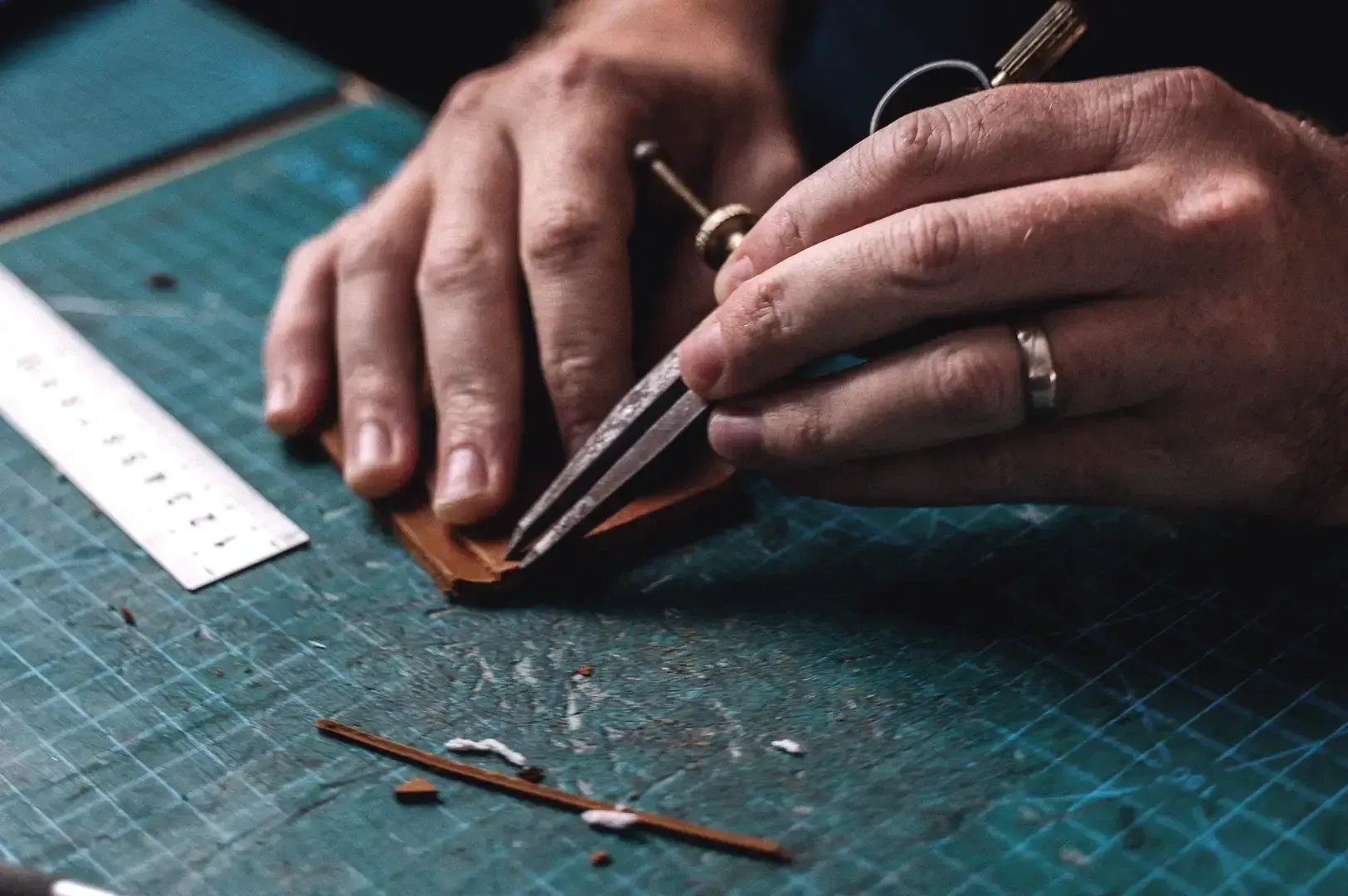
The tools were plain. A short blade. A metal scale gone cloudy with use. A ball of rough twine hung from a nail, and a stack of paper bags, the kind that hold warmth when you fold the top.
Watch a vendor long enough and it reads like studio practice. The repetition is not dull. It is refinement, made invisible by mastery. Each fruit wrapped the same way, the twine looped and pulled with a small tug he had done ten thousand times. Nothing hurried. Nothing wasted.
He weighed a bag, glanced at the scale, added one more piece without a word.
The standard lived in his hands, not on any sign.
What They Refuse to Compromise
I have come to believe that every good vendor guards something quietly, a line they will not cross even when it would be easier or cheaper to cross it.
The citrus man refused the soft fruit. It would have sold. Most buyers would not have known the difference until they got home. He knew, and that was enough.
I recognize the instinct. Building businesses taught me the same lesson, though it cost me years to learn it. Some things must stay sacred. The training. The standards. The rituals that hold a place together when no one is watching. The integrity of what you actually serve.
Almost everything else can move. Format, location, packaging, the shape of a menu. These are surfaces. They should change with the seasons and the years.
At the omakase restaurant, the rice was the line we never let drift. We changed the fish with what the day offered, changed the room more than once, changed how we greeted people. The rice, its temperature, its seasoning, the moment it met the hand, never moved. The guest rarely noticed the discipline directly. They only felt that something underneath was steady.
That is what the vendor's refusal protects. Not perfection. Trust.
Global Stories, Spoken Softly
Like I wrote in an article before, market stall holds more history than it lets on. The spices came along trade routes older than the country's borders. The technique arrived with someone's grandmother, carried across a sea in a decision no one wrote down. The language of the stall, the words for haggling and thanks, is a record of who passed through and who stayed.
None of it announces itself. It simply persists in the way a thing is done.
I stopped at a stall selling dried goods, and the smell reached me before I saw the bins. Toasted, faintly sweet, a warmth that was not the room. It pulled me somewhere I had not been in decades.
A kitchen from early in my life. Someone I loved standing at a stove, and this exact smell filling a small space while rain worked at the window. I could not have told you the story attached to it. There may not have been a story, only a Tuesday, a pot, a person.
That is how these things return. Not as narrative but as texture and scent, arriving whole and wordless before the mind catches up. The market did not remind me of home. For a moment it simply was home, then it passed.
A Small Exchange That Changes Your Pace

I chose three pieces of fruit and held them out to the citrus man, along with a coin, more than I owed, the way you do when you are unsure of a currency and too proud to count slowly. He did not take it. He shook his head once, small, and set two of the coins back on the counter. Then he wrapped the fruit, tugged the twine, and handed me the bag.
That was all. No lesson offered. No smile that asked to be remembered. But I understood the correction. He would take what the fruit was worth and not a coin more. The dignity was in the exactness. To overpay him was, in some quiet way, to misunderstand him.
I slowed after that. I stopped rushing through the aisles as though I were collecting them. The bag was warm in my hand.
For Each Bite
I carried the fruit through the rest of the morning and ate one piece standing at the edge of the market, watching the woman clear her glass again.
There is a kind of literacy you cannot study for. It is learned by standing still long enough to see how a person handles what they have made. The vendors were not teaching. They were only working, to a standard they set for themselves and kept whether or not anyone paid attention.
I think attention is a form of respect, something I’m familiar with from this article. We give it too rarely, and mostly to the loud things. The market asks the opposite. It rewards the quiet look, the second glance, the willingness to notice ordinary beauty held to an uncompromising line.
The fruit was good. Bright, a little sharp, exactly what he promised without ever saying a word.