Walking as Research: What Slow Movement Reveals

Bay San • June 23, 2026

The first sound of the morning was a broom on stone. It came from a man sweeping the threshold of his shop, unhurried, the bristles dragging in a rhythm older than the city’s traffic. I had arrived the night before, knowing no one, with no plan beyond breakfast somewhere I had not chosen yet. The air still held the cool of the night.


A bakery exhaled warm yeast onto the pavement. Condensation gathered on its window, and behind the fog I could see hands folding dough. I stood there longer than a stranger should. The man sweeping did not look up. He had the city to himself at that hour, and for a moment, so did I. The quiet rhythm of someone fully present, moving slowly, set the tone for the walk that followed.


Walking Without an Agenda

I have learned to walk the way one reads a place rather than consumes it. No route. No list of things to see. I let the streets decide where my attention goes. This is not idleness. It is a method, closer to fieldwork than leisure. Walking without an agenda forces you to slow, to notice, to be interrupted by details that would otherwise pass unseen.


Like I said in a previous article, craft shows itself in ordinary places. A tailor’s hands behind glass, steady and precise. A fruit seller arranging citrus by some private logic of ripeness. A cook wiping down a counter before anyone has arrived to sit at it. None of this announces itself. You must move slowly enough to encounter it, to let the small, disciplined gestures register in your memory. I keep notes, though not many. A smell. A gesture. The way a doorway is worn smooth on one side and not the other. These are the things that tell you how a place actually lives, long after the guidebook has gone quiet.

A Scent That Carried Me Back

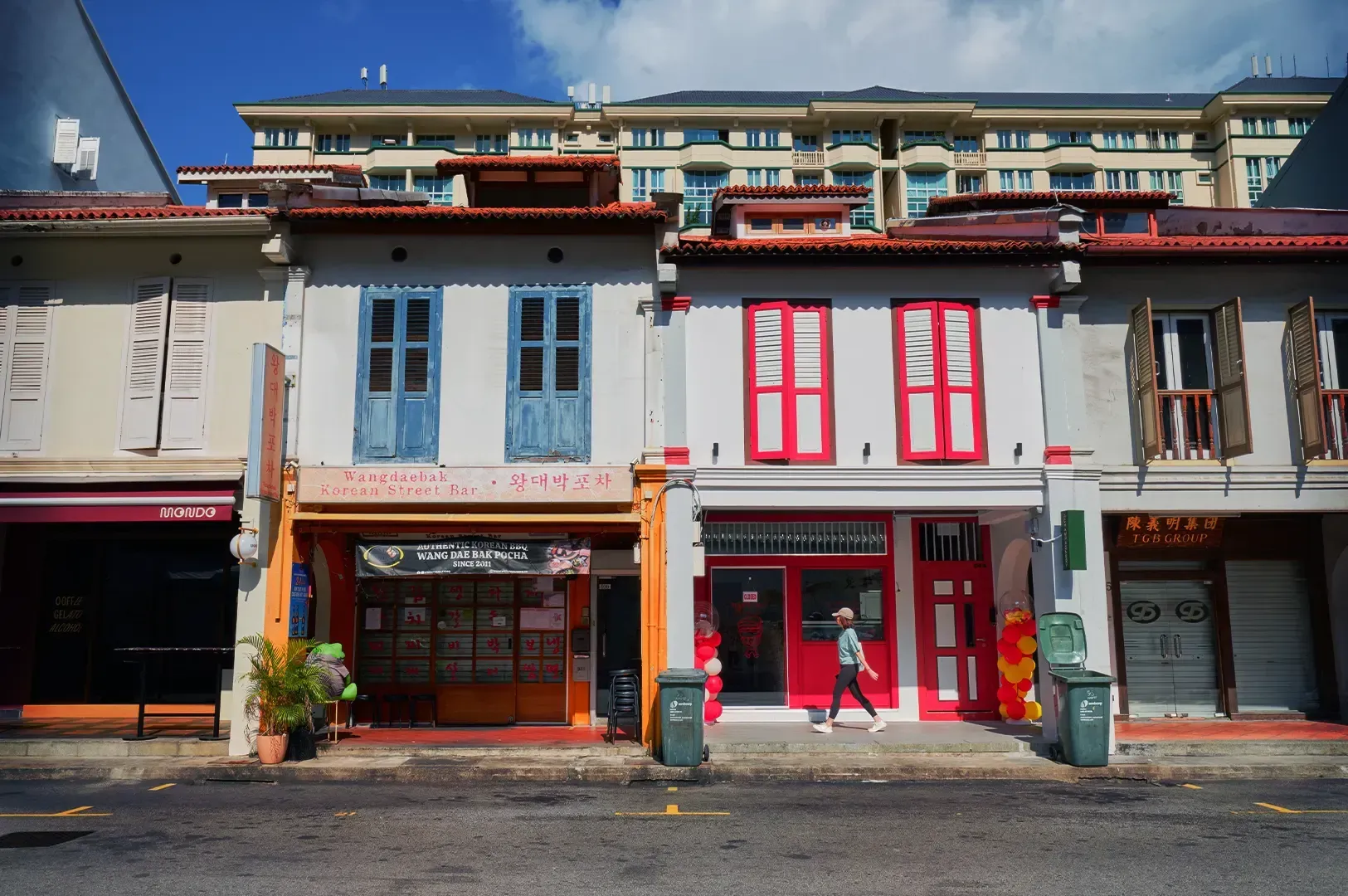
A person walking slowly down a vibrant street of traditional shophouses, capturing the essence of walking as inquiry and the unexpected discoveries found when we allow a city to interrupt our path.

Somewhere past the bakery, the smell changed. Steamed rice, faint and clean, drifting from a kitchen I could not see. It stopped me the way certain scents do, not with thought but with the whole body. I was no longer on that street. I was in the quiet hours before opening the omakase restaurant, years ago, when the rice was the first thing and the last thing we worried about.


I remembered the warmth of the room before the guests arrived, the particular silence of a place that is ready but not yet alive, the weight of a wooden paddle in my hand. Memory does not arrive as a story. It arrives as texture, scent, and the temperature of a room you have not stood in for years. I let it pass through me, then kept walking. The city, in these quiet hours, becomes a companion and a mirror.


What Endures and What Turns Over

Walking a city long enough, you watch storefronts change. A shop becomes a café becomes something else. Signs turn over, aesthetics shift with whatever season favors. And yet the essential shape of a place tends to hold. The corner where people have always gathered still gathers them. The street made for slowness resists every attempt to hurry it. The bones remain.


I know I have written a lot of entries on what I learned, but this time, I learned the same lesson building businesses. At the academy, we changed the format more than once. Materials, room layouts, and the language of instruction evolved. What we never changed was the standard beneath it all, the way a thing should be taught, the patience it required. At the consulting firm, the surface was always shifting (tools, methods, clients) but the posture of the work remained constant. You preserve the craft, the rituals, the training. You let everything else turn over. A place is the same. What can change, changes. What matters, stays. Walking teaches you to tell them apart.

Two Walks, Two Kinds of Attention

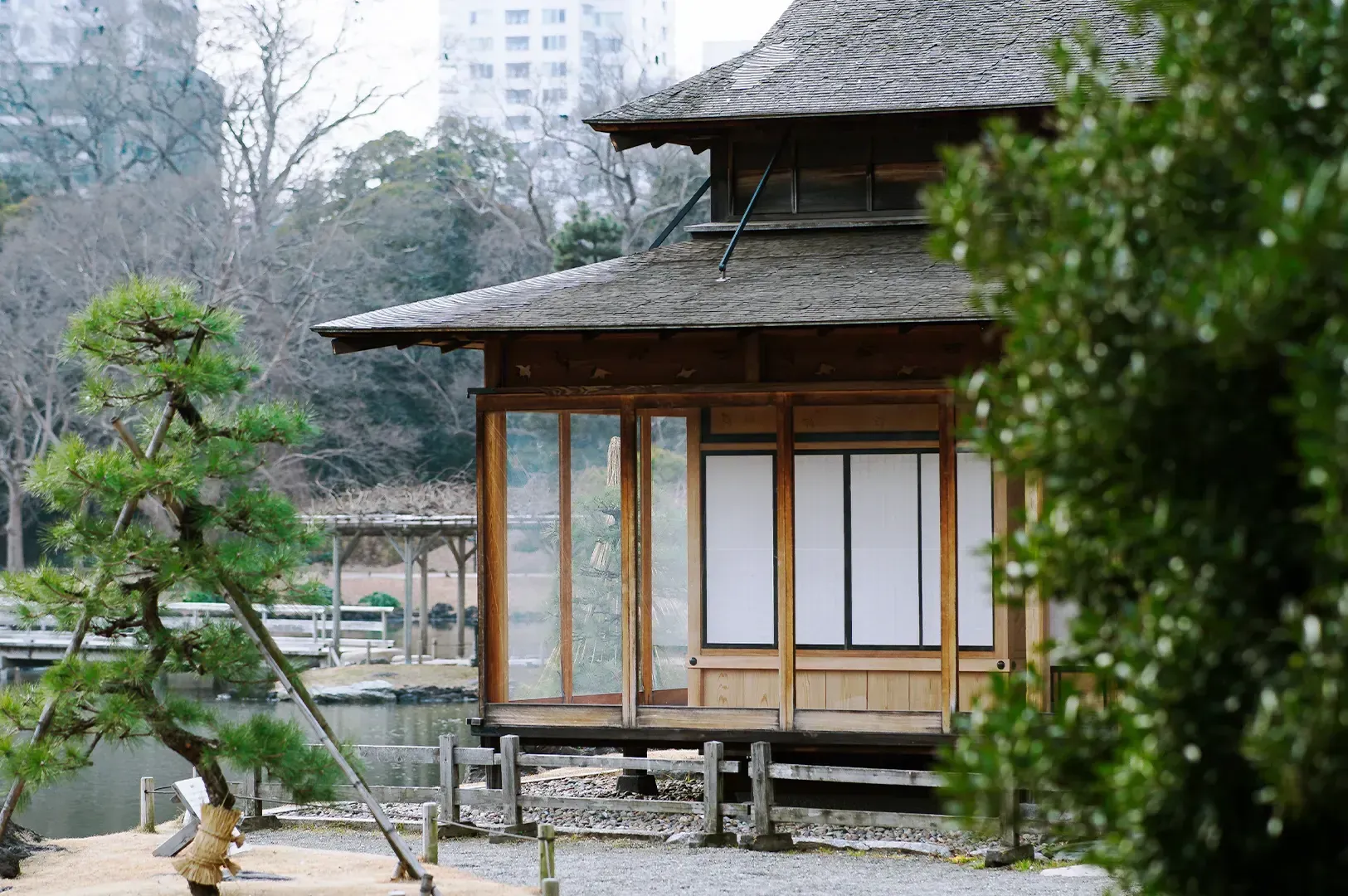
A traditional wooden Japanese teahouse set within a serene garden, serving as a contemplative destination that rewards the patient traveler who uses slow, intentional movement to engage with the city.

There was a walk in Japan, late, after a simple bowl at a counter. The streets had emptied. The vending machines hummed softly. I walked without thinking, full and quiet, the city reduced to wet pavement and shuttered shops. That walk asked nothing of me. It only wanted me to be present, to exist in its rhythm without interruption.


A different walk, in a different city, ended in a tea room as the afternoon cooled. That one was alert. The light was full. I noticed colors, proportions, and the spacing of trees along a street. By the time I sat down to tea, my attention had been sharpened rather than softened. One walk emptied me. The other filled me. Neither was better. They were simply two ways of paying attention, and I have needed both.


What the Walking Leaves Behind

I do not always know what I am looking for when I walk. That, I think, is the point. Walking is a practice of patience, of letting meaning arrive on its own schedule rather than mine. You cannot rush a city into revealing itself. You can only keep showing up slowly, open to being interrupted.


The man with the broom is still there in my memory, sweeping his threshold in the cool of the morning. I never learned his name. I never went into his shop. But I remember the sound. Bristles on stone, unhurried, the city not yet awake. Some mornings, that is enough to carry, and it is enough to remind me what quiet observation can teach about movement, time, and the life that persists even when no one is watching.

Recent Posts

A focused chef working in a quiet, warmly lit kitchen, symbolizing the pursuit of mastery and how su
By Bay San July 16, 2026
A reflection on how the people we keep quietly calibrate our standards, and why the right company tunes a life rather than filling it.
The book cover of
By Bay San July 15, 2026
Roman Krznaric reframes legacy as cathedral time: building for people you will never meet, and the quiet discipline of the long view.
A minimalist, warm-toned close-up of a simple ceramic tea cup on a table, symbolizing the quiet beau
By Bay San July 14, 2026
A reflection on how imperfection reveals the real, and why the human traces in craft and work are the quiet evidence of authenticity.
A notebook and pen resting on a dark desk, symbolizing the reflective and intentional planning requi
By Bay San July 9, 2026
A quiet letter to young founders on speed, standards, and the slow work of building something worth keeping at the beginning of the journey.
A close-up view of a refrigerated seafood display at a traditional market, showcasing the careful pr
By Bay San July 8, 2026
Market vendors are quiet custodians of craft and culture. A reflection on how their small, repeated choices teach a kind of global literacy.
A close-up, high-angle shot of the book A Field Guide to Getting Lost by Rebecca Solnit, centered on
By Bay San July 3, 2026
Rebecca Solnit reframes getting lost as a discipline: a return to humility, attention, and the kind of not-knowing that remakes you.
A minimalist, serene omakase bar interior, representing the deliberate structure and clear boundarie
By Bay San July 2, 2026
A reflective letter on boundaries as self-respect, practiced quietly through consistency and craft rather than announced through conflict.
A serene, sunlit home studio corner featuring a wooden bookshelf, a cozy chair, and a large window l
By Bay San June 30, 2026
A reflection on how structured morning rituals create the conditions for deep creative work, attention, and clarity before the world enters.
A copy of 'On Dialogue' by David Bohm resting on a dark surface, representing the foundational conce
By Bay San June 25, 2026
Why genuine dialogue is rare: a reflection on Bohm's idea of thinking together, suspension, and what real listening demands of leaders and teams.
A chef working in a warm, dimly lit restaurant kitchen, symbolizing the quiet dedication and profess
By Bay San June 25, 2026
A reflection on how standards become a quiet inheritance, passed down through care, training, and craft long after the founder leaves the room.
Show More