
In Defense of Slow Craft | My Quiet Empire

Bay San • January 1, 2026

Our culture is obsessed with velocity. We celebrate disruption, speed, and efficiency. We look for shortcuts, for life hacks, for ways to get more done in less time. The prevailing belief is that faster is always better. Yet, in this relentless pursuit of immediacy, we are losing something vital: the profound and enduring value of slow craft.


Slow craft is not about being sluggish. It is about being deliberate. It is the conscious choice to prioritize mastery over metrics, precision over pace, and depth over breadth. It is an act of quiet defiance against a world that demands instant results. Having built businesses founded on this principle, from the meticulous service in a tea room to the patient cultivation of knowledge in an academy, I have learned that the most valuable outcomes are often the ones that cannot be rushed.


The Economy of a Single Movement

I often find myself observing the head chef at our omakase restaurant as he prepares a single piece of nigiri. The process, from an outsider's perspective, might seem inefficient. There are dozens of small, almost imperceptible movements that could surely be consolidated or expedited.

He begins by selecting a piece of fish. His eyes scan the block of tuna, not just for color, but for the subtle lines of fat that will dictate its flavor and texture. His first cut is precise, made with a long, single-edged knife that has been cared for over years. He then turns to the shari, the vinegared rice. He takes a small amount in his hands, and in a series of fluid, practiced motions, forms it into a perfect bed for the fish. The pressure is exact. Too loose and it will fall apart; too tight and it will be dense.


He applies a whisper of wasabi, places the fish on top, and brushes it with a delicate layer of soy sauce. The entire process might take a full minute, a seeming eternity in a busy kitchen. But this is not inefficiency. This is the economy of mastery. Every single gesture is infused with years of practice, a deep understanding of his materials, and an unwavering respect for the guest who will receive it. He is not just making food. He is embedding his intention, his focus, and his expertise into a single, perfect bite. Rushing the process would not just make it faster; it would make it worthless.


The Pressure to Accelerate

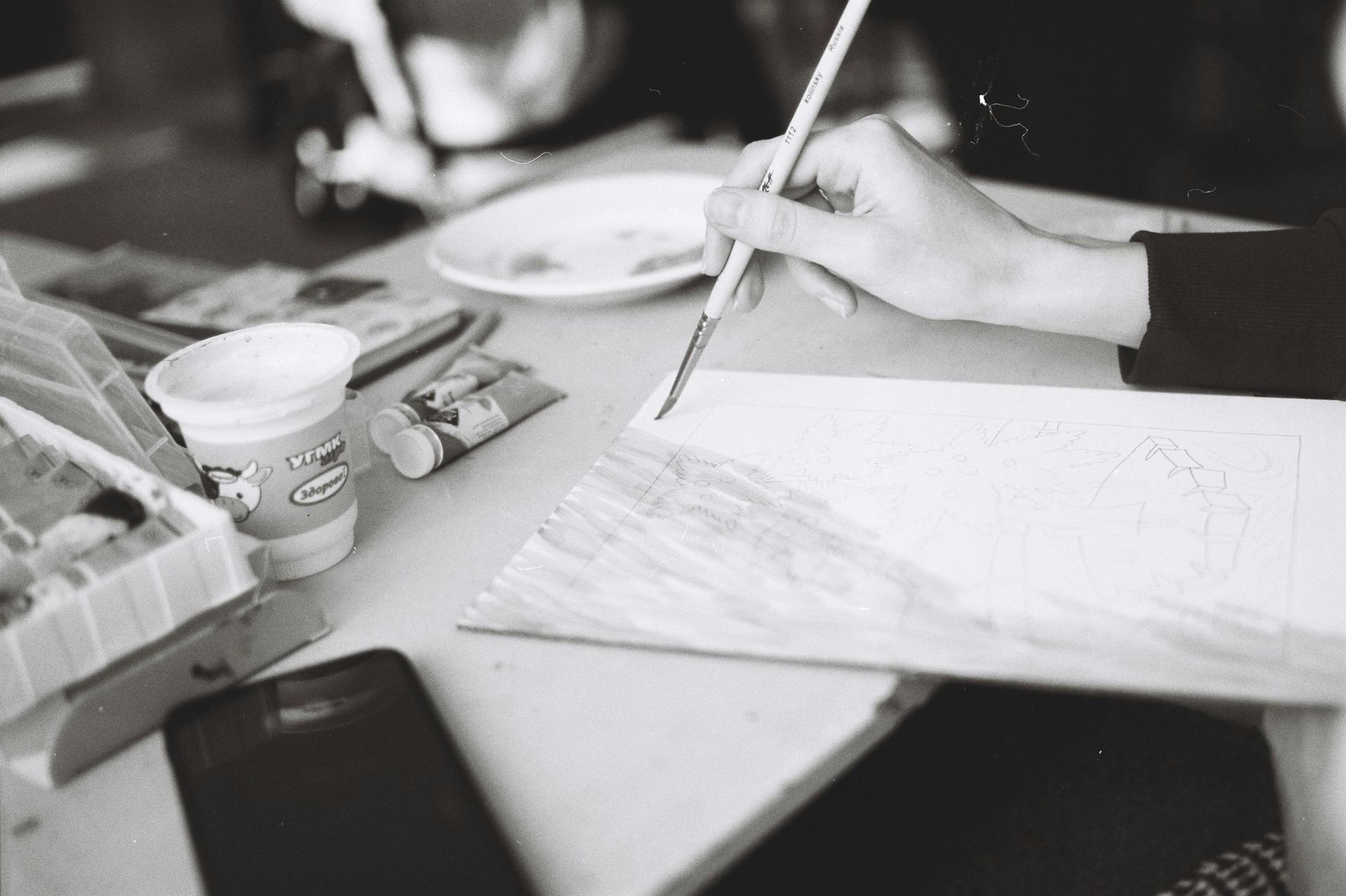
This black-and-white photograph captures an artist's hand in the process of painting over a pencil sketch on a sheet of paper. The table is cluttered with creative supplies, including small tubes of paint, a water cup, and a smartphone lying nearby.

The modern world exerts immense pressure against this kind of deliberate work. In business, we are driven by quarterly earnings, growth targets, and scalability. The system rewards speed and volume. An artisan who takes a week to make a single chair will never compete on price with a factory that produces thousands in a day. An educator who focuses on deep, Socratic dialogue with a small group of students will not produce the same output as a massive online course.

This pressure is both economic and cultural. We are conditioned to expect immediate responses to our emails, next-day delivery for our purchases, and instant access to information. Patience has become a forgotten virtue. Resisting this pressure is not easy. It requires a firm belief that the quality born of time and attention creates a different, more durable kind of value. It matters because when we lose slow craft, we lose more than just well-made things. We lose a connection to the material world, a respect for expertise, and a capacity for the deep focus that is essential for true innovation and fulfillment.


Intentionality, Not Indulgence

It is crucial to distinguish slow craft from simple inefficiency. The goal is not to be slow for slowness’s sake. That is indulgence. The goal is intentionality. Slow craft is about giving a process the time it needs, not more.


In our tea room, the ritualized service follows a set of precise steps. The water is heated to an exact temperature. The tea is measured with care. The pot is warmed before brewing. Each step is deliberate and unhurried. This is not about creating a slow experience to be theatrical. It is about controlling the variables to produce the best possible cup of tea. The patient process yields a superior outcome. The ritual itself becomes part of the product, creating a moment of calm and focus for the guest that is as valuable as the tea itself.


This is the key distinction. Inefficiency is waste. It is taking longer than necessary without any corresponding increase in quality. Intentional slowness is an investment. It is the application of time and focus as strategic resources to achieve a level of excellence that speed cannot replicate.


The Compounding Returns of Patience

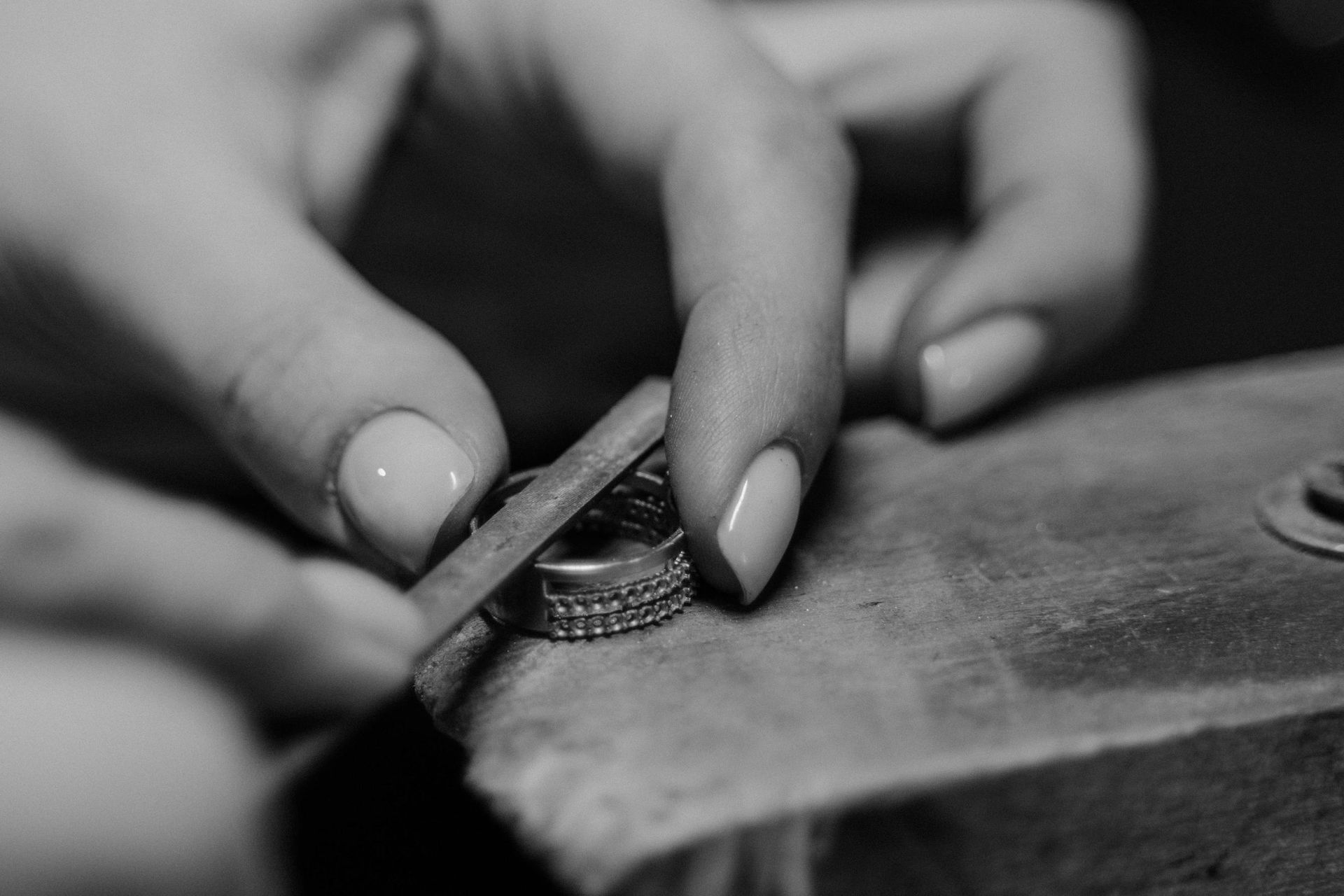
In this close-up black-and-white photograph, a pair of hands is shown delicately working on a studded ring using a flat metal tool. Resting on a worn wooden block, the hands demonstrate precise craftsmanship as they shape or finish the jewelry piece.

Building businesses around the principle of slow craft has taught me that this approach yields entirely different results than those focused on speed. A speed-focused business seeks to scale quickly, often by simplifying its product and automating its processes. It pursues breadth. A business built on slow craft, however, seeks to deepen its quality. It pursues depth.


The outcomes are profoundly different. A fast-food chain and a fine-dining restaurant both sell food, but they operate in different universes of value. One offers convenience; the other offers an experience. One is consumed and forgotten; the other is remembered and savored.

The same is true in education. An approach that prioritizes rote memorization and standardized tests can process many students quickly. An approach like ours at the academy, which favors patience, mentorship, and the slow development of critical thinking, creates a different kind of graduate. It builds not just knowledge, but understanding. The returns are not visible in the first quarter, but they compound over a lifetime.


The unhurried pursuit of excellence builds a powerful reputation. It creates a brand that people trust. It attracts talent that is motivated by mastery, not just a paycheck. It builds a legacy of quality that endures long after the initial flash of a fast-growing competitor has faded.


In a world that sprints, there is a quiet power in a steady, deliberate pace. It is a choice to honor the work, to respect the materials, and to serve the end user with an integrity that cannot be faked or accelerated. The patient application of time and attention yields compounding returns in quality, in reputation, and in personal satisfaction. Perhaps it is time we questioned our own relationship with speed, and asked not only how fast we can go, but what of real value we are leaving behind in our haste.


Recent Posts

A group of young professionals sits around a wooden table, diligently working on their laptops.
By Bay San December 30, 2025
How aesthetic integrity becomes business strategy. Reflections on building ventures where beauty is not decoration but foundational principle.
A man sits at the edge of a rocky cave opening, looking out over a vast landscape dominated by a maj
By Bay San December 25, 2025
A reflective exploration of how the places we travel to map the landscape of who we are, and how return journeys reveal our evolving selves.
This high-angle shot depicts a therapy session taking place in a sunlit room filled with potted plan
By Bay San December 23, 2025
On the quiet power of presence and deep listening as tools for building meaningful relationships and making better decisions through genuine attention.
A clear light bulb is positioned inside a chalk-drawn thought bubble on a textured black surface. Sm
By Bay San December 19, 2025
Grand ideas collapse without daily execution. Reflections on how discipline transforms vision into enduring success, from decades of building businesses.
A dark wooden floating shelf is mounted against a textured grey wall, displaying an eclectic collect
By Bay San December 19, 2025
Our possessions speak volumes about who we are. Reflections on curating objects with intention and what material culture reveals about values and identity.
A group of diverse people place their hands together in the center of a wooden table, symbolizing te
By Bay San December 19, 2025
How businesses outlast their founders through intentional structure, not just inspiration. Reflections on building institutions that endure.