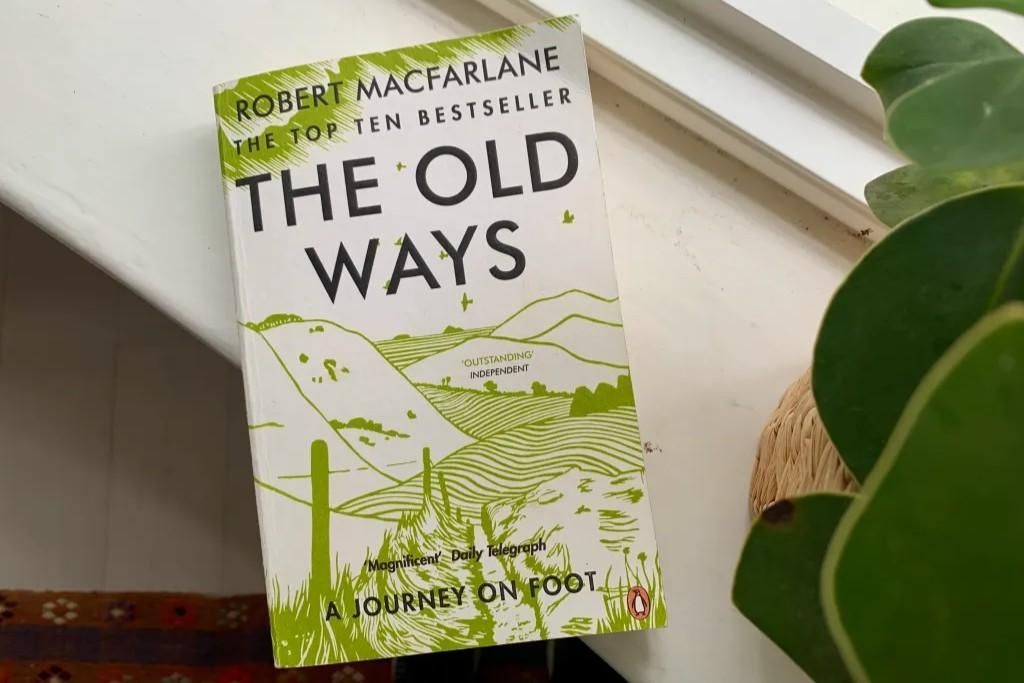
The Old Ways: A Journey on Foot by Robert Macfarlane
We often believe that our best thinking happens in stillness, behind a desk or in a quiet room. Robert Macfarlane’s luminous book, *The Old Ways: A Journey on Foot*, offers a powerful counter-narrative: that true clarity of thought is found not in stillness, but in movement. This is not a simple hiking memoir but a profound meditation on the relationship between our bodies, the landscapes we inhabit, and the quality of our own minds. Macfarlane argues that to think deeply, we must first learn to walk well.
*The Old Ways* chronicles Macfarlane's journeys along the ancient paths that crisscross Britain and extend to Palestine, Spain, and the Himalayas. He walks the sea-roads of the Outer Hebrides and follows the Icknield Way, one of Britain's oldest tracks. His central premise is that these "old ways" are more than just routes from one point to another; they are archives of human history, etched into the land by the feet of countless pilgrims, traders, and herders. To walk them is to engage in a conversation with the past, to feel the pull of a continuity that stretches far beyond our own lives. Macfarlane suggests that this connection to "deep time" offers a vital perspective, shrinking our modern anxieties and grounding us in a more enduring reality.

The book’s most compelling argument is that certain kinds of knowledge are accessible only through physical engagement with the world. Macfarlane is a Cambridge academic, but he understands that some insights cannot be found in a library. They arise from the rhythm of footfalls, the feeling of wind on the skin, and the burn of muscles on a steep ascent. He writes of how the steady pace of walking loosens the grip of linear thought, allowing for connections and ideas to surface organically. This is an idea that resonates deeply with the work of building any long-term venture. The most elegant business strategies or creative solutions rarely emerge from a forced brainstorming session. They often arrive unexpectedly, on a long walk or during a moment of unstructured movement, when the mind is free to wander alongside the body.
True to its philosophy, the book is structured not as a linear argument but as a series of journeys. Each chapter follows a different path, and the wisdom emerges from the experience itself, just as it does for the walker. Macfarlane weaves together natural history, archaeology, and personal reflection, demonstrating his point rather than merely stating it. The structure mirrors the act of walking: knowledge is accumulated step by step, not delivered as a pre-packaged conclusion.

The Old Ways is a beautiful and essential read for anyone who senses a connection between their physical and mental lives. It makes the quiet case that paying attention to place and practice, whether on a remote trail or a familiar city street, cultivates a form of embodied wisdom that is indispensable. It reminds us that sometimes, the best way to solve a complex problem is to close the laptop, put on your shoes, and go for a long walk.