

The Courage to Be Ordinary: Excellence Without Ego

Bay San • April 9, 2026

Years ago, I visited a small, unmarked workshop in Kyoto. It belonged to a metalsmith who had been recommended to me not for his fame, he had none, but for the quiet perfection of his work. The artisan, an older man with hands that seemed to hold a century of knowledge, was crafting simple brass tea scoops. There was no audience, no camera, no flourish. He spent nearly an hour on a single piece, his focus absolute, his movements economical and precise. When he finished, he examined the scoop not with pride, but with a critical, almost detached scrutiny. He placed it beside a dozen others, each one indistinguishable from the last, yet each a testament to a lifetime of practice.


I asked him, through a translator, if he ever signed his work. He looked at me, a faint smile on his face, and said something I have never forgotten: “The scoop will do its job. It does not need my name to do it better.


In that simple statement was a profound philosophy, one that runs counter to everything our culture seems to value. We are conditioned to pursue excellence for the sake of recognition. We build platforms, cultivate personal brands, and measure our success by the volume of the applause.


We are taught that the goal of mastery is to become extraordinary. But what if the ultimate expression of mastery is the courage to be ordinary? What if true excellence has no need for an audience?

The Unseen Architecture of Mastery

Blacksmith hammering heated metal on an anvil with sparks flying inside a dimly lit workshop.

Our world often confuses confidence with ego. Ego demands an audience; it is performative, loud, and fragile. It needs external validation to sustain itself. Confidence, however, is internal. It is the quiet self-assurance that comes from deep practice and accumulated experience. It is the metalsmith knowing the exact pressure to apply, the chef understanding instinctively when a fish is perfectly cured, the architect seeing the flow of a space long before the walls are up.


From the outside, this form of mastery can appear unremarkable. It lacks the drama of the "hustle." There are no grand pronouncements or dramatic pivots, only the steady, patient, and often repetitive application of skill. The master is not defined by moments of breakthrough genius, but by the unwavering consistency of their daily work. This is why true mastery can be so easily overlooked. It is not trying to be seen. Its only concern is the integrity of the work itself.


This presents a fundamental challenge to our cultural obsession with "performing" success. We are encouraged to document every win, to share every milestone, to curate a public narrative of upward momentum. The pressure is to be visible, to be influential, to be anything but ordinary. Yet, the private satisfaction of doing a thing well, for its own sake, offers a far more sustainable form of fulfillment. It is a satisfaction that cannot be measured in likes or followers, a quiet joy that comes from the work itself, not from the credit received for it.

Building in the Quiet

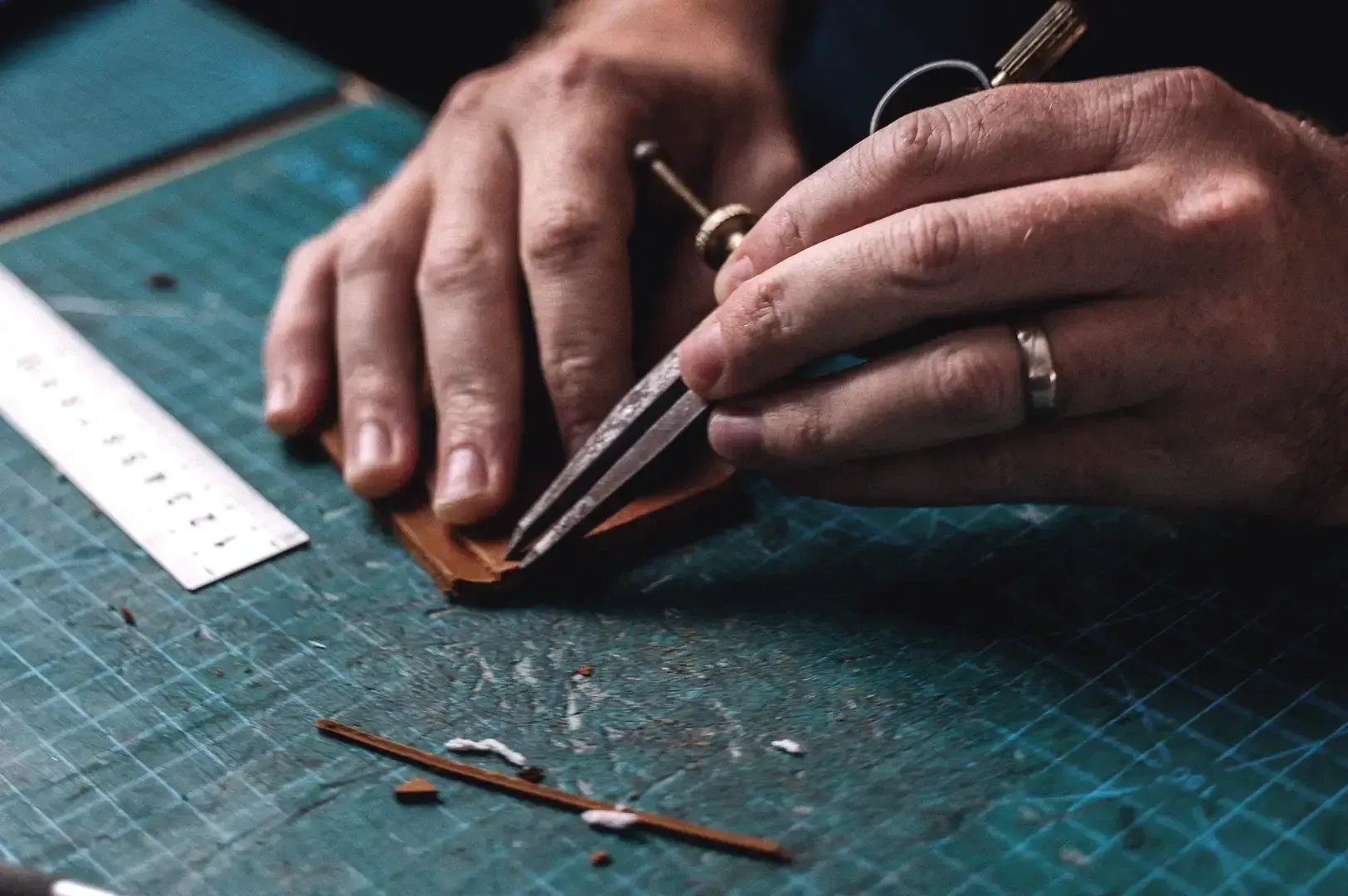
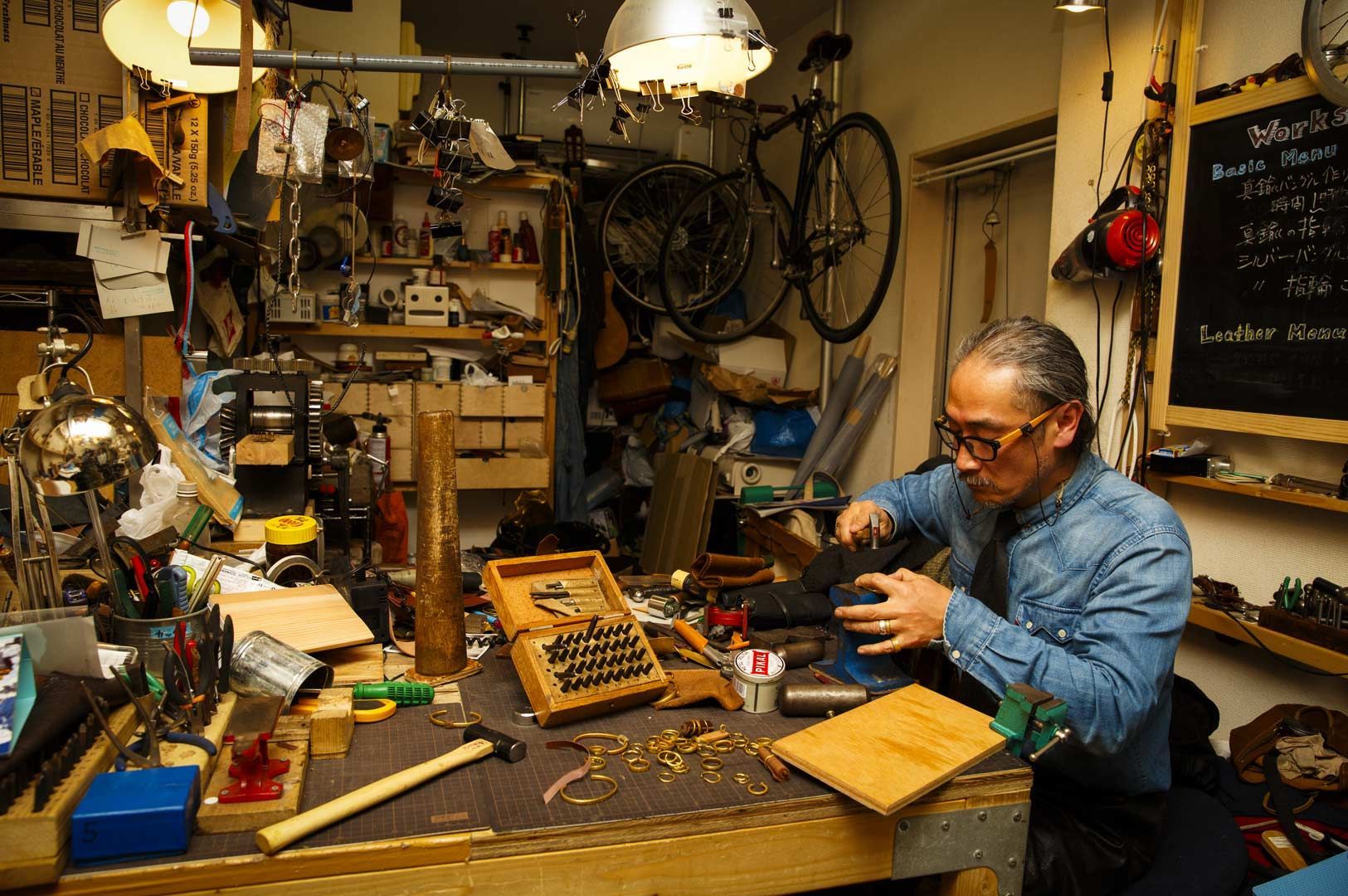
Craftsperson working at a cluttered workshop table filled with tools, leatherworking supplies, and equipment.

This philosophy has been a guiding principle in every business I have helped build. In the world of high-end consulting, it is easy to become enamored with flashy presentations and public accolades. But I quickly learned that the most enduring value we provided came from quiet, candid conversations behind closed doors. The work that truly mattered was not the polished report, but the slow, trust-building process of helping a leader see their own organization with new eyes. The most successful engagements were the ones that resulted in a quiet transformation within the client’s company, often with little to no external credit given to our firm.


Similarly, in establishing our educational academy, the temptation was to create a program that produced "star" graduates, individuals who would go on to achieve public fame and reflect glory back onto the institution. Instead, we chose to focus on cultivating a deeper, more internal form of mastery in our students. We measured our success not by their future job titles, but by their capacity for rigorous thought, their intellectual humility, and their commitment to their chosen craft, whatever it might be. The goal was not to create extraordinary people, but to help people do ordinary work in an extraordinary way.


Even in property, an industry often driven by ego and grand gestures, this principle holds true. The most satisfying projects have not been the most conspicuous ones, but those where we have been able to quietly restore a building's integrity, preserving its character and ensuring its utility for another generation. The work is architectural in the truest sense: it is about creating a strong, functional, and beautiful structure that can stand on its own, long after the architect’s name is forgotten. The building, like the tea scoop, does not need my name to do its job.

The Sustainability of the Ordinary

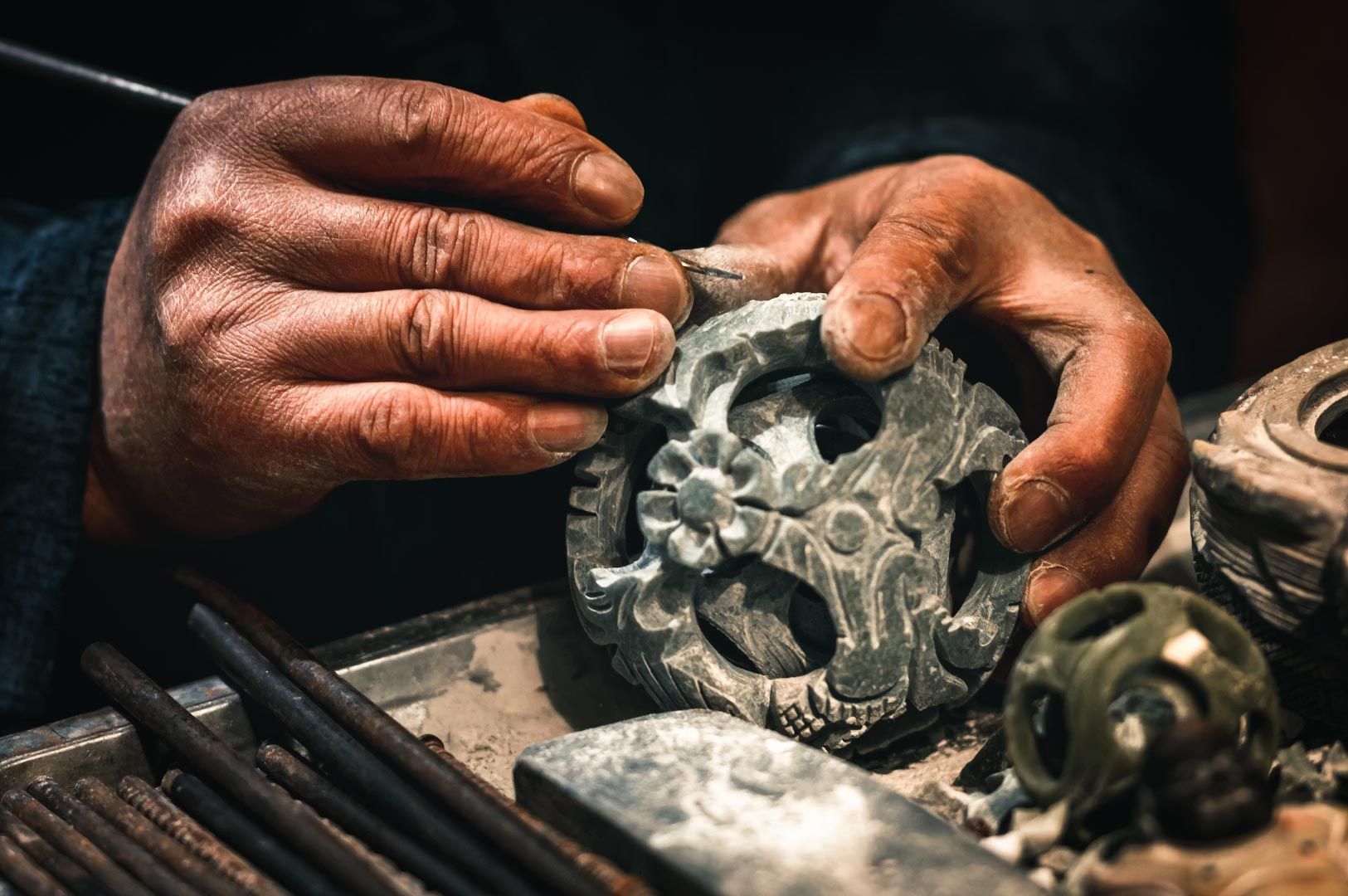
Close-up of a craftsperson carving intricate patterns into a stone ornament using hand tools.

There is a powerful link between this idea of ordinariness and the concept of sustainability, in both craft and business. The pursuit of constant, visible extraordinariness is exhausting. It leads to burnout, to compromise, and to a focus on short-term trends over long-term principles. It is a fire that consumes itself.


The quiet pursuit of excellence, however, is generative. It is a slow, compounding process. By focusing on the integrity of the work rather than the reception of it, a craftsman or an entrepreneur can sustain their energy and passion over the course of a lifetime. They are not beholden to the changing tastes of the market or the fickle nature of public opinion. Their anchor is the work itself.


This is the courage of being ordinary. It is the deliberate choice to find meaning not in being different, but in being consistent. It is the discipline to show up every day and do the work, regardless of who is watching. It is the understanding that the most profound legacy is not a name carved in stone, but an institution that functions beautifully, a tool that works perfectly, or an idea that continues to resonate, long after its creator is gone.


Choosing this path is not an act of surrender or a settling for less. In a world that screams for attention, choosing to be quiet, to be focused, to be humbly excellent, is a radical act. It is the most courageous choice of all. It is the recognition that the purpose of mastery is not to elevate the self, but to contribute something of quiet, lasting value to the world. And that is anything but ordinary.

Recent Posts

Traveler with a backpack looking at a modern city skyline with tall buildings on a cloudy day.
By Bay San April 14, 2026
Depth, not breadth, defines meaningful travel. A meditation on slow travel, extended stays, and discovering a place by inhabiting it rather than touring it.
Straight-on product shot of the book cover “Zen and the Art of Motorcycle Maintenance” by Robert M.
By Bay San April 10, 2026
Quality is not an accident; it is a discipline. Discover how Pirsig's meditation on maintenance shapes our approach to business, craft, and quiet mastery.
Three-quarter angle product shot of The Book of Joy by the Dalai Lama and Desmond Tutu, showing mult
By Bay San April 8, 2026
Joy is not a fleeting emotion but a disciplined practice. Discover how two spiritual leaders offer a framework for resilience in business and life.
Open lined notebook with a green fountain pen beside a Tomoe River notebook on a wooden desk.
By Bay San April 7, 2026
How ordinary objects become vessels of meaning through ritual and attention. Reflections on infusing the everyday with the sacred through consistency.
Close-up of two professionals shaking hands across a desk, symbolizing partnership, agreement, or su
By Bay San April 2, 2026
Building a sustainable business requires more than passion, it demands intentional structure aligned with your deepest values. Reflections on the balance.
Close-up of a ceramic bowl filled with grilled bamboo shoots drizzled with sauce, with wooden chopst
By Bay San March 31, 2026
How regional dishes carry the history and character of their origins. Reflections on experiencing the distilled essence of place through authentic cuisine.
Book titled ‘Wabi-Sabi for Artists, Designers, Poets & Philosophers’ on a blue background, featuring
By Bay San March 27, 2026
On embracing imperfection: Leonard Koren's meditation on wabi-sabi offers a framework for creation that honors transience over permanence. A reflection on building with constraint.
A chef preparing food at a market stall using wooden cooking tools, with trays and equipment arrange
By Bay San March 26, 2026
The qualities that distinguish exceptional educators from the merely competent. Reflections on presence, patience, and the art of transformative teaching.
A close-up of a hand using a metal trowel to spread plaster or cement over a wall covered with reinf
By Bay San March 24, 2026
How contemporary makers honor traditional craftsmanship while embracing evolution. Reflections on building upon heritage with intention and discernment.
Vintage copy of ‘The Gastronomical Me’ by M.F.K. Fisher standing upright on a wooden surface with a
By Bay San March 20, 2026
On appetite as philosophy: Fisher's memoir reveals that how we eat reflects how we live. A meditation on attention, pleasure, and intentional living.
Show More