

The Book of Joy by Dalai Lama and Desmond Tutu (with Douglas Abrams) | My Quiet Empire Book Review
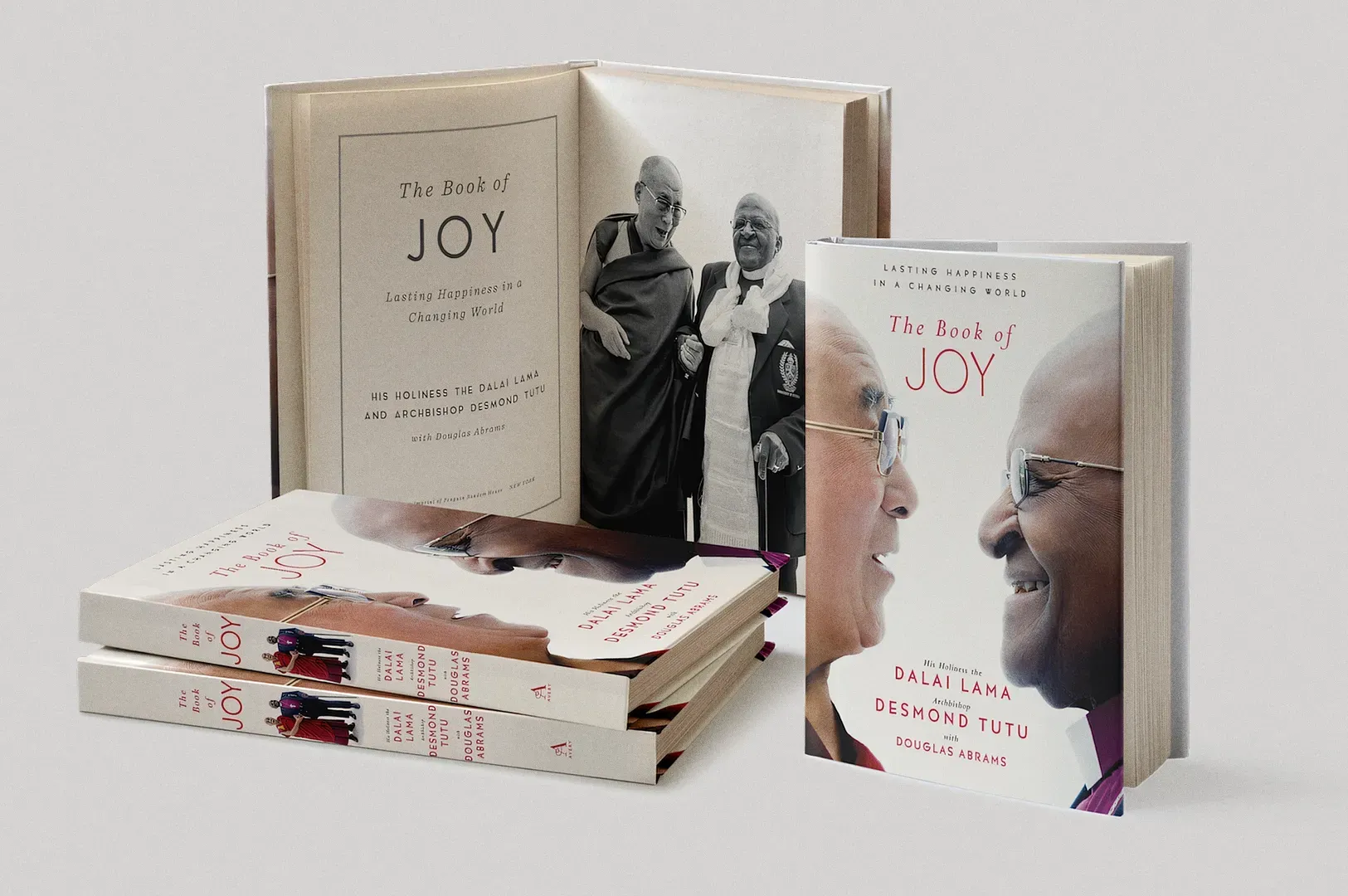
When you spend your days building businesses, the daily pressure can easily harden into a kind of emotional armor. We are taught to manage crises, optimize systems, and project a calm certainty. But quiet mastery requires something more sustainable than sheer endurance. It requires a foundational sense of perspective. This is why I found myself opening The Book of Joy, a week-long conversation between His Holiness the Dalai Lama and Archbishop Desmond Tutu, guided by Douglas Abrams.
The book is framed not as a theoretical treatise, but as a dialogue between two men who have endured exile, oppression, and extraordinary suffering, yet remain remarkably joyful. This conversational structure is the book's greatest asset. Abrams captures their warmth, their easy laughter, and their gentle teasing. It does not read like a rigid lecture. It reads like a shared inquiry over tea, which instantly disarms the reader and builds profound trust.

A central theme that resonated with my own entrepreneurial experience is the sharp distinction they draw between pain and suffering. Pain is an unavoidable physical or emotional reality. Suffering, however, is the narrative our minds create around that pain. To combat this, they outline the "Eight Pillars of Joy," practical frameworks like perspective, humility, gratitude, and compassion. In business, humility is often mistaken for weakness. Yet, Tutu and the Dalai Lama reframe it as a vital recognition of our interconnectedness. You cannot build an enduring institution if you believe you are the sole architect of its success.
One specific line from the Dalai Lama captured the essence of this practice for me: "Discovering more joy does not, I'm sorry to say, save us from the inevitability of hardship and heartbreak. In fact, we may cry more easily, but we will laugh more easily, too." Joy is presented not as a fragile happiness, but as a disciplined practice of opening oneself to the world, rather than closing off when things get difficult.

One of the book's most powerful images shows two kinds of leaves: one perfectly symmetrical and rendered, the other irregular and eaten by insects. Koren labels the perfect one "Greek" and the imperfect one "wabi-sabi." This simple contrast captures the essence of his argument. Western ideals strive for an abstract, eternal perfection. Wabi-sabi finds beauty in the particular, the mortal, the thing that shows the marks of its existence. This is a vital lesson for entrepreneurs and builders. It suggests that an enduring institution is not one that hides its flaws, but one that gracefully incorporates its history of mistakes and limitations. It embraces natural evolution over forced, synthetic growth.
The book itself is an object lesson in its own philosophy. It is brief, printed on uncoated paper, and filled with grainy, black-and-white photographs. Koren’s prose is spare and precise. He does not try to offer a complete, exhaustive definition; instead, he circles the concept, offering glimpses and suggestions. The book’s deliberate incompleteness invites the reader to finish the thought, to find their own examples of wabi-sabi in the world. It embodies its subject perfectly, proving its point through its own form.
This book serves anyone weary of the pressure to be polished. It speaks to the artist who understands that a finished work is never truly finished, the designer who sees beauty in natural materials, and the entrepreneur who questions whether scale is the only metric of success. Koren’s meditation on wabi-sabi doesn’t offer easy answers. Instead, it offers a different way of seeing; a lens that reveals the quiet dignity in the imperfect, the value in constraint, and the profound beauty of things as they are, not as we think they should be.