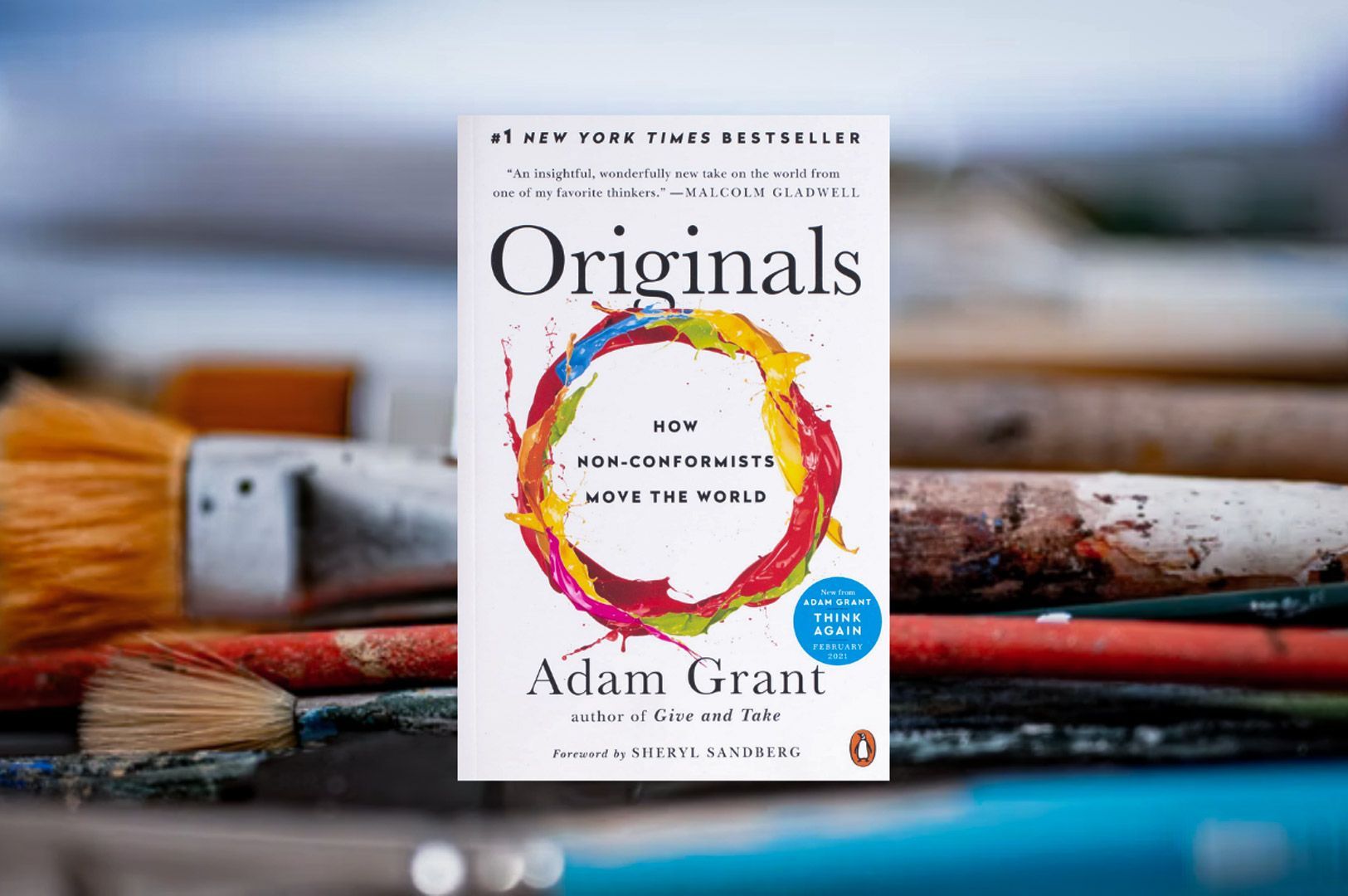


Originals by Adam Grant | My Quiet Empire Book Review
We often imagine innovators as rebellious geniuses, lone wolves who tear down old structures through sheer force of will. In Originals: How Non-Conformists Move the World, Wharton professor Adam Grant systematically dismantles this myth. Using a wealth of social science research, he argues that the most successful innovators are not reckless disruptors but strategic non-conformists: often surprisingly pragmatic and risk-averse individuals who have mastered the art of championing new ideas from within existing systems.

Grant replaces romantic notions of creativity with evidence-based frameworks. He distinguishes between procrastination and "strategic delay," showing how allowing ideas to incubate often leads to more creative outcomes. He introduces the concept of "vuja de," the act of seeing familiar situations with fresh eyes, as a key driver of business model innovation. For anyone who has ever felt stuck, this idea: that originality often lies in re-examining the obvious rather than inventing the new, is both liberating and practical. Grant’s research reveals that many originals aren't born risk-takers; instead, they create a portfolio of stability in their personal lives to offset the calculated risks they take in their professional domain.
This data-driven approach is a welcome antidote to the typical creativity manifesto. Grant isn't selling a story of heroic rebellion; he’s providing a toolbox for managers and leaders who want to foster innovation within their organizations. He explains why default thinkers often struggle to recognize truly original ideas and offers concrete strategies for soliciting honest feedback and building coalitions. For the institutional builder, this is invaluable. It provides a language and a process for cultivating a culture where new ideas can survive and thrive.

Yet, this is also where a tension emerges for the entrepreneur or creator operating on instinct. Can originality truly be systematized? While Grant’s frameworks are undeniably useful, they can sometimes feel like an attempt to reverse-engineer a process that is fundamentally messy, intuitive, and deeply personal. The lived experience of building something from nothing often relies on irrational conviction, a sense of taste, and a belief that defies the available data. The book is at its best when serving managers who want to nurture creativity, but it may feel less resonant for the founder trusting a vision that has no precedent.
Ultimately, Originals offers a compelling and highly practical guide to becoming more effective at championing new ideas. Grant provides a powerful counter-narrative to the myth of the suffering artist and the reckless visionary. Still, one is left with a lingering question about the limits of such frameworks. The most transformative work, the kind that truly shifts culture, often seems to violate the very patterns designed to explain it. Perhaps the greatest originals are not just those who follow the data, but those who know when to trust an instinct that has no data to support it yet.