

The Ritual of Morning Coffee in Foreign Cities

Bay San • March 17, 2026

Travel is inherently an act of displacement. We leave behind our familiar beds, our routine commutes, and the predictable rhythms of our daily lives to immerse ourselves in the unknown. This dislocation is often the very point of the journey; we seek the thrill of the new and the shock of the different. Yet, amidst the swirl of new languages, unfamiliar streets, and disorienting time zones, there is a profound need for an anchor. For me, that anchor has always been the morning coffee.

It is a simple, almost trivial act. But when performed in a foreign city, the ritual of morning coffee transforms from a caffeine delivery system into a vital practice of grounding. It becomes a bridge between the displacement of travel and the necessity of presence. It is a quiet calibration of the self before the sensory overload of the day begins.

A Quiet Corner in Kyoto

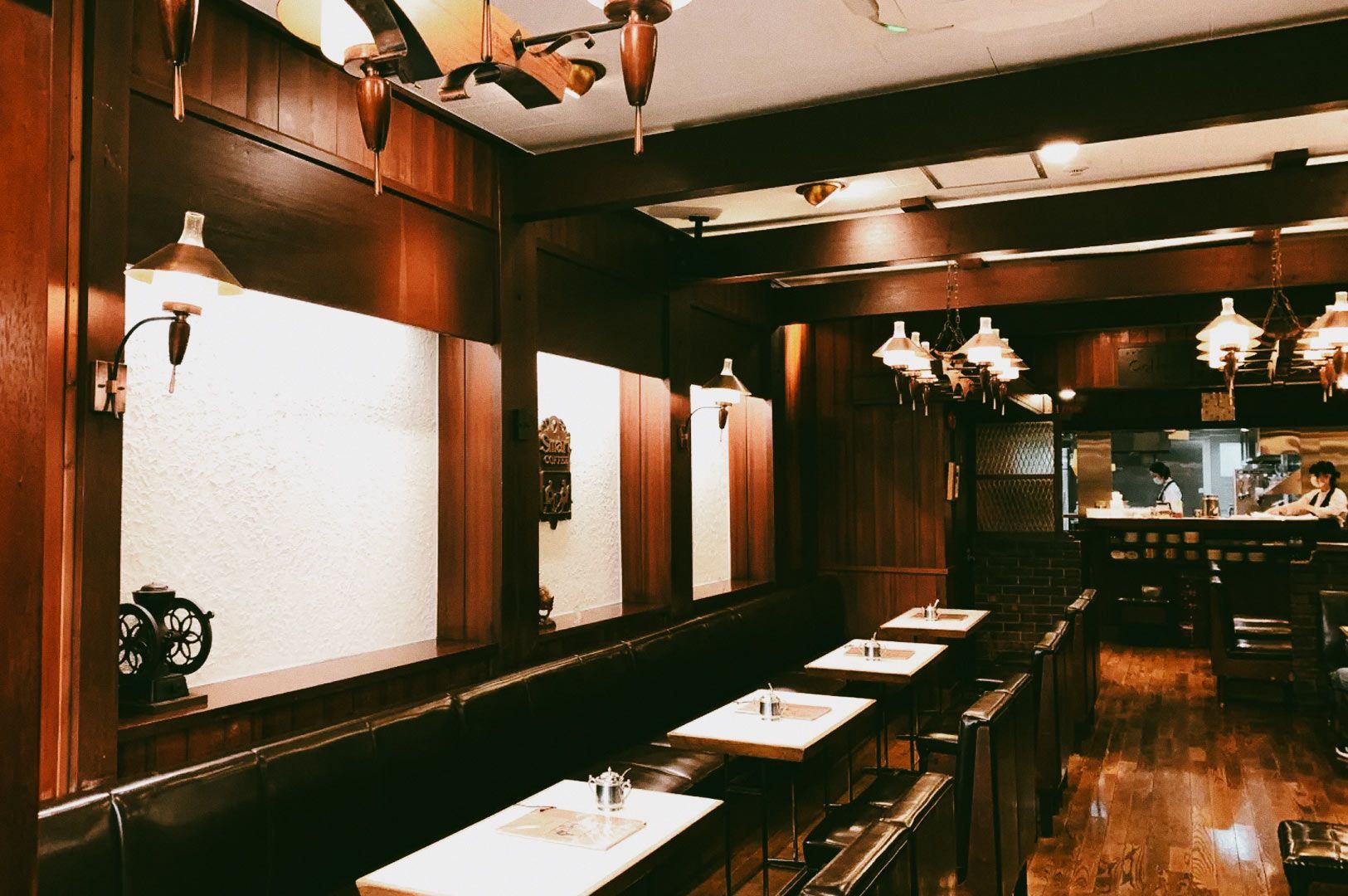
Cozy café interior with wooden walls and warm lighting.

I recall a specific morning in Kyoto. It was early autumn, and the air held a crisp, clean chill that seemed to sharpen the senses. I had found a small kissaten (a traditional Japanese coffee shop) tucked away in a narrow alley in the Gion district. The interior was dim, smelling of roasted beans and old wood. A jazz record played softly in the background, the scratching of the needle adding texture to the silence.

The master behind the counter moved with the precision of a surgeon and the grace of a dancer. He did not rush. He measured the beans, ground them by hand, and poured the hot water in a slow, steady spiral over the flannel filter. I sat at the wooden counter, watching the steam rise in the low light. When he placed the cup before me, it was not just a beverage; it was an offering. The coffee was dark, rich, and impeccably smooth, served in delicate porcelain that felt cool against my fingertips.

In that thirty minutes, the frantic energy of travel dissolved. I was not a tourist rushing to the next temple or a businessman preparing for a meeting. I was simply a person sitting in a quiet room, drinking coffee. The ritual forced me to slow down to the speed of the city's waking moments. I watched an elderly man read his newspaper. I heard the soft clinking of spoons against saucers. I felt the warmth of the cup seep into my hands. In that small, dimly lit space, I found a sense of belonging that no guidebook could provide.

Continuity in Chaos

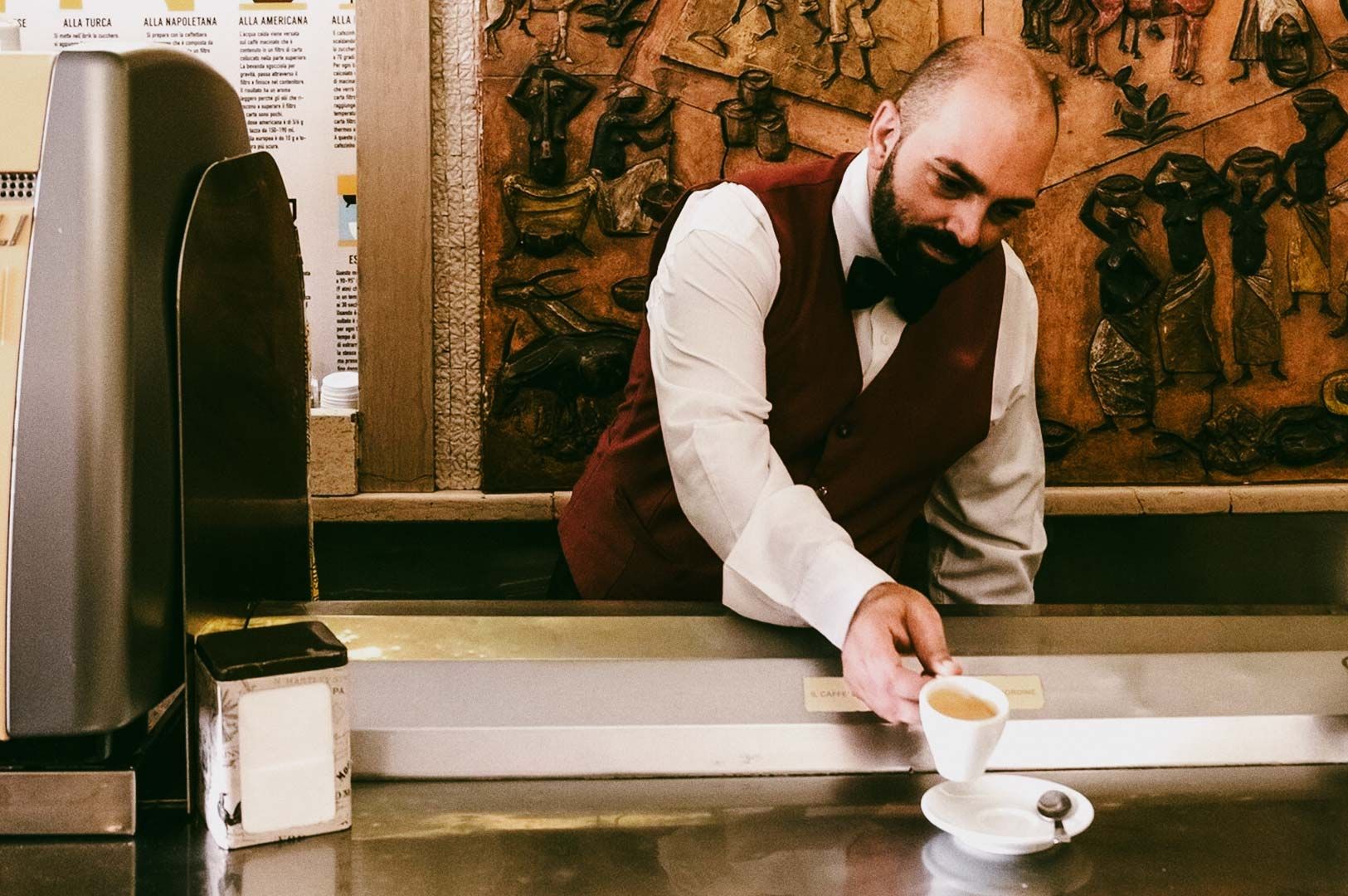
Barista serving a cup of coffee at an espresso counter.

One of the great challenges of frequent travel is the fragmentation of the self. Waking up in a different hotel room every few days can leave you feeling unmoored, as if you are skimming the surface of the world without ever truly touching it. The morning coffee ritual creates a thread of continuity across these changing geographies.

Whether I am in a bustling espresso bar in Rome, standing shoulder-to-shoulder with locals at the counter, or sitting on a plastic stool in Hanoi waiting for the condensed milk to settle at the bottom of a glass, the core of the act remains the same. It is a moment of stillness. It is a deliberate pause that says: I am here. The day has begun.

This continuity is not about seeking comfort or trying to replicate home. It is not about finding a global chain that serves the exact same latte I drink in New York. It is about bringing a familiar practice into an unfamiliar context. By maintaining this small daily rhythm, I create a stable platform from which to observe the new world around me. It allows me to be present in the foreignness without being overwhelmed by it.

The Lens of Local Culture

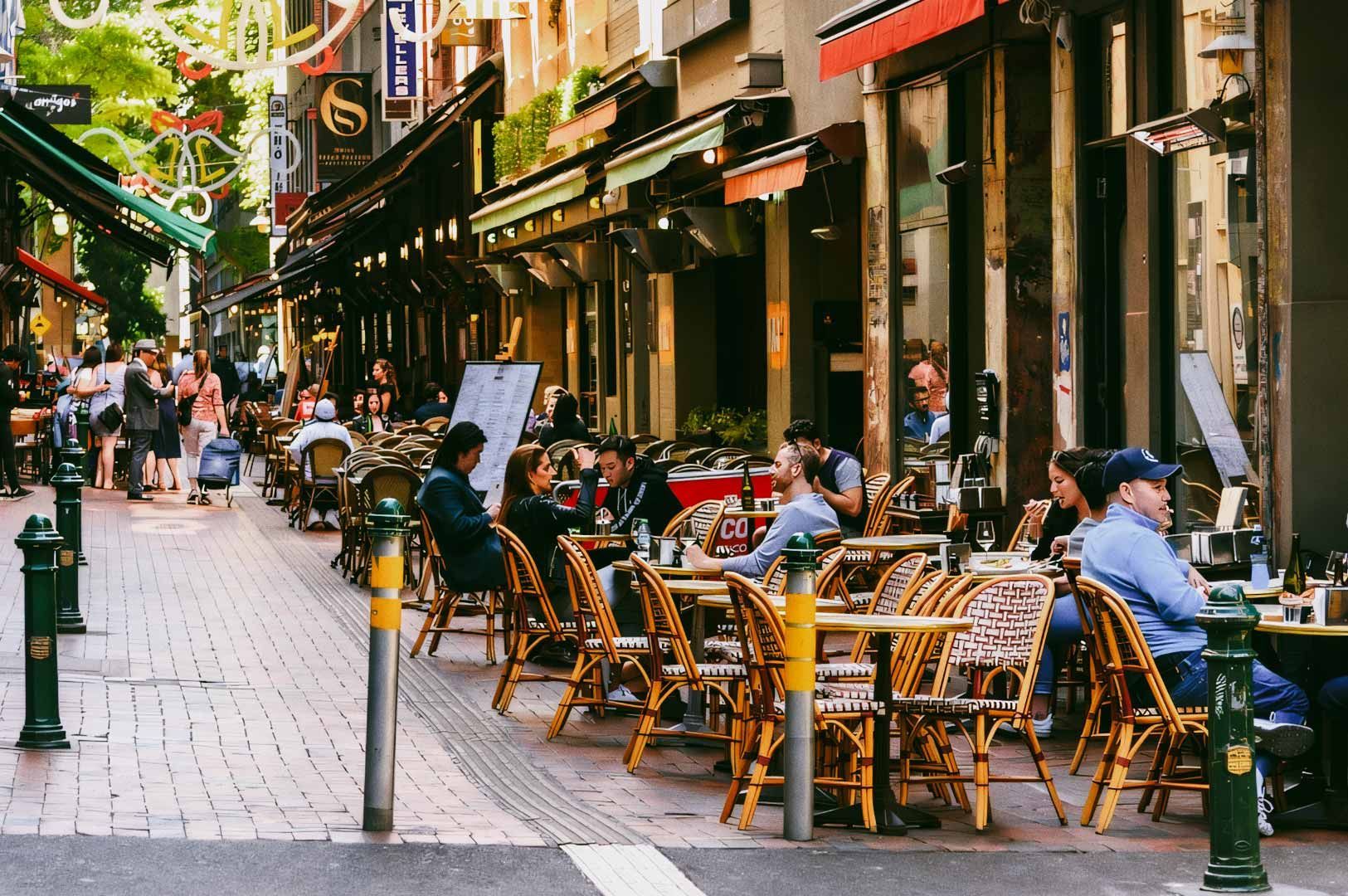
Outdoor café street with people dining at sidewalk tables.

There is no better way to understand the pace and values of a culture than to observe how it wakes up. The morning coffee ritual is a lens through which the character of a city reveals itself.


In Melbourne, coffee is a religion of precision and innovation. The cafes are bright, buzzing laboratories where the provenance of the bean and the temperature of the milk are discussed with intense seriousness. It reflects a culture that values quality, craft, and a certain vibrant, youthful energy. The morning there feels like a collaborative project in excellence.


In Paris, the ritual is more social and perhaps more cynical. You sit facing the street, the coffee often secondary to the cigarette and the people-watching. It is about seeing and being seen, about participating in the public theater of the boulevard. The pace is leisurely but guarded.


In Istanbul, the coffee is thick, potent, and meant to be lingered over. It leaves a sediment at the bottom of the cup, a reminder that some things are meant to be savored slowly and that the end of the experience is as important as the beginning. It speaks to a culture that values history, conversation, and patience.


By participating in these local variations of a universal habit, we stop being passive observers and start to slip into the bloodstream of the city. We learn the rhythm of its speech, the etiquette of its service, and the priority it places on pleasure versus efficiency.

Routine vs. Intentional Pause

Person reading a book with a cup of coffee on a wooden table.

At home, coffee is often a routine. It is fuel. We drink it while checking emails, packing lunches, or rushing out the door. It is a means to an end. In a foreign city, however, the ritual must become an intentional pause.


This distinction is crucial. If you treat your morning coffee in a new city as just another task to be completed, a quick pit stop on the way to the museum, you miss the point entirely. The value lies in the suspension of time. It requires a conscious decision to do nothing else but be where you are.


This means putting the phone away. It means resisting the urge to plan the day's itinerary or check the currency exchange rate. It creates a space for what I call "active idleness." In this state, the mind is relaxed but alert, open to the sensory details that usually slip past our filters. You notice the way the light hits the cobblestones outside. You smell the baking bread from the shop next door. You hear the cadence of a language you do not understand but can still appreciate as music.


Anchors of Presence

Over years of traveling for business and pleasure, this practice has fundamentally shaped my relationship with the world. It has taught me that connection to a place does not come from seeing all the sights; it comes from inhabiting small moments fully.


I have realized that I can learn more about a city in forty-five minutes at a corner café than I can in an entire afternoon on a tour bus. The coffee shop is a microcosm of society. It is a neutral ground where the private and public worlds intersect.


These morning rituals have become my personal map of the world. When I look back on my travels, I do not just remember the monuments or the meetings. I remember the taste of a cortado in Madrid, the sound of rain on a tin roof in Costa Rica, and the smell of cardamom in a cup in Mumbai. These sensory memories are the true souvenirs.


In a world that is constantly urging us to move faster and see more, the act of sitting down with a cup of coffee is a quiet rebellion. It is a declaration that we are not just passing through. Even if only for half an hour, we are residents of this moment, in this place, fully awake and alive to the world.

Recent Posts

Vintage copy of ‘The Gastronomical Me’ by M.F.K. Fisher standing upright on a wooden surface with a
By Bay San March 20, 2026
On appetite as philosophy: Fisher's memoir reveals that how we eat reflects how we live. A meditation on attention, pleasure, and intentional living.
Close-up of hands carefully holding and brushing a piece of sushi with sauce using a small wooden br
By Bay San March 19, 2026
How robust systems enable rather than constrain creativity. Reflections on building infrastructure that protects vision while allowing growth.
Book cover of ‘Originals: How Non‑Conformists Move the World’ by Adam Grant displayed in front of as
By Bay San March 13, 2026
Can originality be systematized? Adam Grant's research offers tools for fostering innovation, but the most transformative work may resist frameworks entirely.
Relaxing corner with hot drink, open notebook, and autumn hills.
By Bay San March 12, 2026
How the daily practice of reflection builds clarity, self-awareness, and intentional growth through disciplined examination rather than passive thought.
Traditional weaver at a handloom crafting a black-and-white zigzag textile with a red border.
By Bay San March 10, 2026
Exploring how preserving tradition creates enduring value in a world obsessed with novelty. True preservation requires adaptation, not resistance.
Cover of Viktor Frankl’s book ‘Man’s Search for Meaning’ placed on a wooden table beside a cup of co
By Bay San March 6, 2026
Frankl's testament from Auschwitz: meaning, not happiness, sustains us. A reflection on purpose as the foundation of resilience in business and life.
Busy city crosswalk filled with people moving across an urban street.
By Bay San March 5, 2026
On maintaining long-term vision amid cultural pressure for immediate results. True mastery is measured in decades, not quarters.
Red lighthouse on a rocky breakwater by the sea with a small boat nearby
By Bay San March 3, 2026
Reflections on how physical distance reshapes clarity and thought. A quiet letter from the road about perspective, solitude, and the discipline of detachment.
The book ‘The Art of Stillness’ by Pico Iyer placed beside a laptop in a calm, minimalist workspace.
By Bay San February 27, 2026
On the discipline of withdrawal: Iyer reveals that stillness is not escape but focus; choosing where attention goes. A reflection on strategic quiet.
Group of friends having a deep conversation around a table in a cozy, dimly lit cabin.
By Bay San February 26, 2026
A reflection on pivotal conversations that shifted worldviews and influenced life decisions through the power of genuine listening and dialogue.
Show More