A Letter on the Responsibility of Creating Beauty

Bay San • April 21, 2026

I have been thinking lately about the weight of beautiful things. Not their physical weight, but the subtle gravity they exert on our lives and the responsibility that comes with bringing them into the world. We often treat beauty as an indulgence, a luxury to be applied after the “real” work of function and finance is complete. But I have come to believe this is a profound misunderstanding. Creating beauty is not a decorative act; it is a foundational one. It is a form of service, an act of discipline, and a duty we owe to the future.


This is a letter for those who feel that same pull: the builders, the makers, the creators who insist on prioritizing aesthetics and craftsmanship in a world that often values only efficiency. It is a letter about the quiet, and sometimes heavy, responsibility we carry.

The Weight of a Room

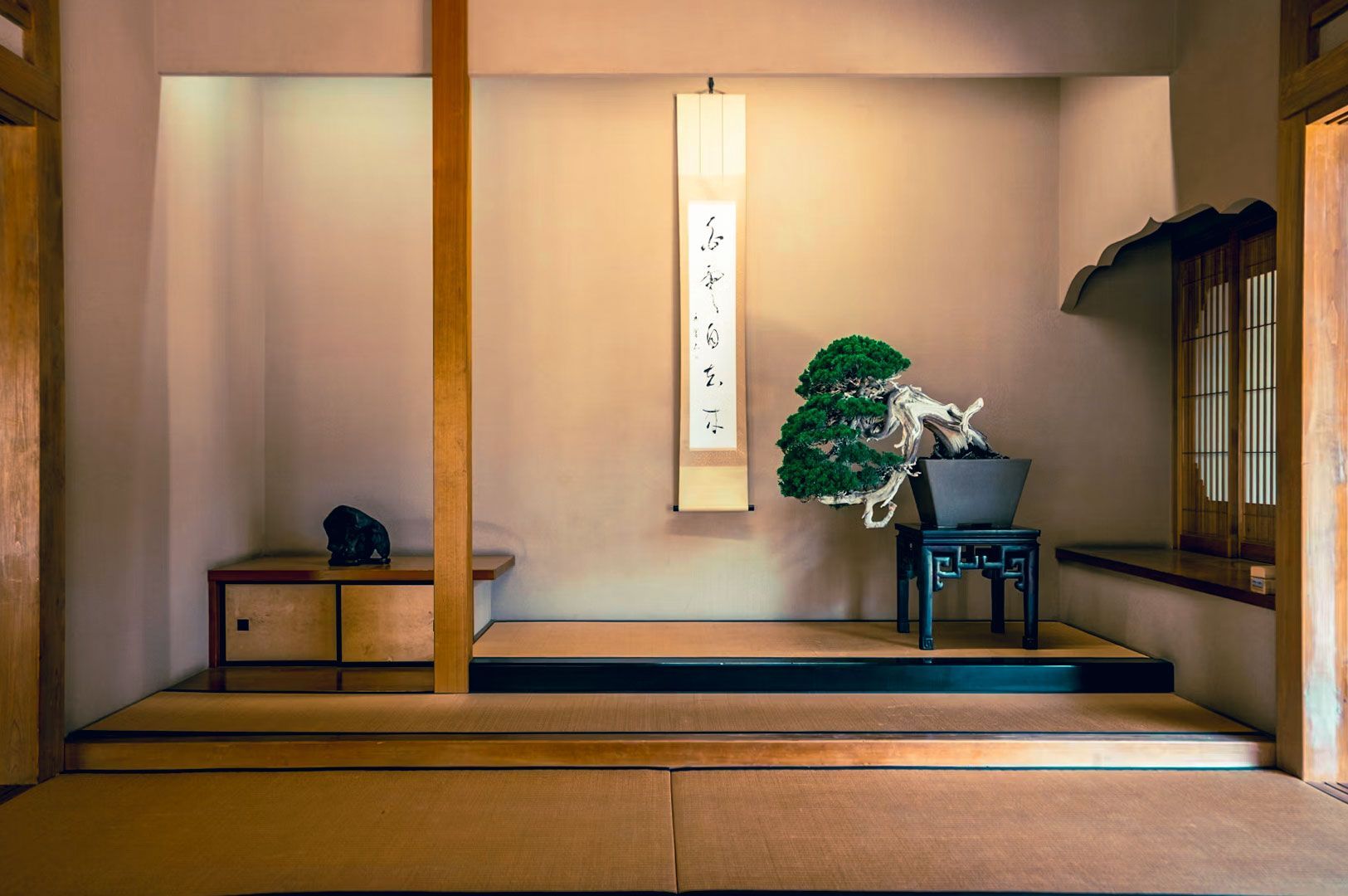
Minimalist Japanese room featuring tatami flooring, a bonsai display on a wooden stand, and a hanging calligraphy scroll.

The moment I understood this responsibility was not one of triumph, but of quiet observation. It was years ago, during the final stages of designing our first tea room. We had obsessed over every detail: the grain of the wood for the counter, the specific texture of the plaster walls, the way the natural light would fall across the room at different times of day. The space was empty, awaiting its first guests. I was standing in the doorway, feeling a sense of personal satisfaction, when an elderly woman who lived in the neighborhood peered in.


She didn't say much. She simply walked through the space, her hand gently tracing the line of the counter. She looked at the single flower arrangement in the corner. After a few minutes of silence, she turned to me and said, "Thank you for making this. Our street needed something quiet and beautiful."


Her words landed with unexpected force. I had built the space out of a personal passion, a desire to create an environment that I myself would want to inhabit. But her simple gratitude revealed a different dimension to the work. I realized I had not just built a commercial space; I had introduced something into the public consciousness, into the daily life of a neighborhood. This room would host first dates, difficult conversations, moments of solitary reflection, and quiet celebrations. It had a duty to hold those human experiences with grace. The beauty of the room was not for my satisfaction; it was a service to its future occupants. I understood then that creating a beautiful space is an act of civic generosity. It carries an obligation that extends far beyond the creator.

Beauty as Discipline, Not Decoration

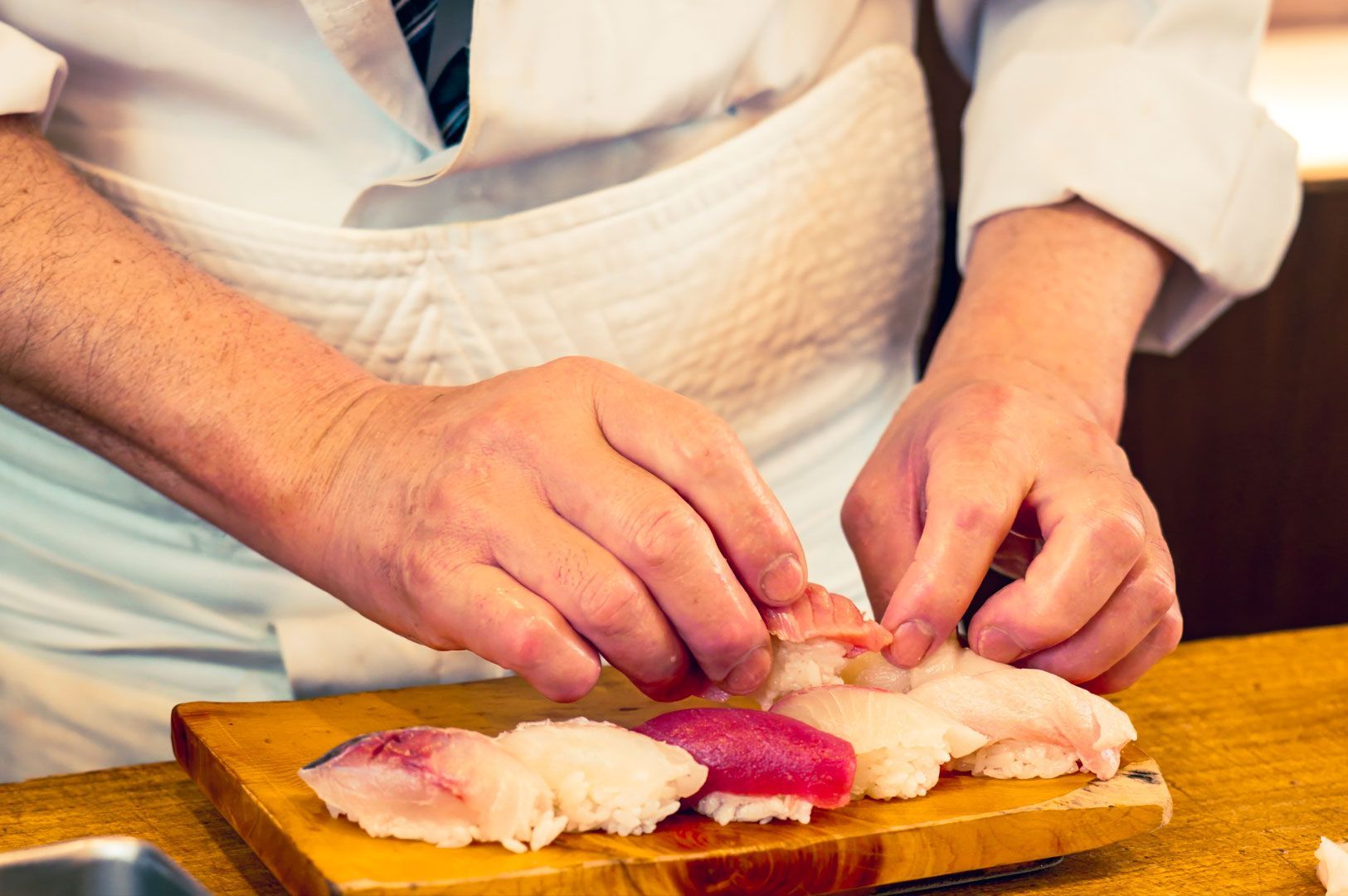
Chef’s hands carefully forming assorted nigiri sushi pieces on a wooden board in a traditional Japanese kitchen.

This understanding has shaped every venture since. We live in an age that glorifies optimization and efficiency, often at the cost of the soul. In this context, the deliberate choice to create beauty is an act of resistance. It is a declaration that some things are worth doing slowly, with care and intention, even if the ROI is not immediately quantifiable on a spreadsheet.


This is where we must distinguish between decoration and true beauty. Decoration is additive. It is the application of ornament to conceal a lack of inherent quality. It follows trends, shouts for attention, and fades quickly. True beauty is subtractive and integral. It is the result of stripping away everything that is not essential, until what remains is pure, functional, and resonant. It is the perfect arc of a ceramic bowl, the clean logic of a well-designed business process, the quiet harmony of a balanced room. This kind of beauty does not scream; it whispers. And it endures.


At our omakase restaurant, the pursuit of beauty is an exercise in extreme discipline. The goal is not to create the most elaborate or "Instagrammable" dish. The goal is to honor the ingredient. This requires a relentless process of subtraction. The chef's work is to remove every distraction, every flavor that does not support the essential taste of the fish. The beauty of the final piece of nigiri lies not in what has been added, but in the integrity of what remains. It is a discipline that requires decades of practice, a deep respect for materials, and a quiet confidence that has no need for flair.


Even in the seemingly abstract world of consulting, this principle applies. A truly beautiful strategy is not the most complex one; it is the simplest one that solves the problem. It has an elegance and clarity that makes it feel inevitable. Arriving at that simplicity requires the discipline to cut through the noise, to resist jargon, and to distill a complex reality into its core components. Like the chef, the strategist’s most important work is often what they choose to leave out.

The Tension Between Commerce and Craft

Plates of sushi covered with clear domes moving along a conveyor belt inside a modern Japanese sushi restaurant.

For anyone building a business around these principles, there is an inescapable tension between commercial viability and artistic integrity. The market often rewards speed, novelty, and scale; all of which are enemies of true craftsmanship. To choose the path of beauty is to accept a different set of metrics for success.


There have been countless moments where we could have made a decision that was more profitable in the short term, but would have compromised the integrity of the experience. We could use cheaper ingredients, hire less experienced staff, or design spaces that were trendier and less expensive to build. Each of these decisions would have been commercially justifiable.


Resisting this temptation is a constant battle. It requires a deep, almost stubborn belief that quality has its own form of gravity. It is a wager that if you build something with enough care and integrity, the right people will find it. They may not be the largest possible audience, but they will be the most loyal. They are the patrons who notice the weight of the cutlery, the clients who appreciate the nuance in a report, the students who feel the quiet dedication of their instructors at the academy.


Navigating this tension is not about being a starving artist. It is about building a sustainable economic model that protects the craft. It means pricing your work to reflect its true cost, not just in materials but in time, skill, and creative energy. It means educating your customer about why a thing of quality costs what it does. And it means having the courage to grow at a pace that does not compromise the soul of your work. It is a long, slow, and often difficult path, but it is the only one that leads to something that lasts.


The Responsibility to the Future

Why does any of this matter? In a world facing immense challenges, is the pursuit of beauty not a frivolous distraction?


I believe the opposite is true. Beauty is not an escape from reality; it is a way of fortifying ourselves to engage with it. A beautiful space, a perfectly crafted object, or a thoughtful experience provides a moment of order in a chaotic world. It reminds us of our capacity for excellence, for harmony, for things that are made with care. It is a source of psychic nourishment. When we are surrounded by ugliness, our spirits diminish. When we are in the presence of beauty, we feel a sense of possibility.


The creators of beautiful things are therefore not just serving the present; they are building a library of forms and standards for the future. The Shaker chair, the Japanese teacup, the well-proportioned public square; these things carry an intelligence across generations. They teach us about proportion, material, and human need. They are a quiet protest against the disposable and the expedient.


To choose to create beauty is to accept this responsibility. It is to recognize that what you are building is not just for you, or even for your immediate customers. It is a contribution to the world that will outlive you. It is a vote of confidence in the future. It is a quiet promise that even in an age of noise, some things are still worth doing with reverence, with patience, and with love.


This is the weight we carry. It is a heavy one, but it is also a privilege. It is the quiet duty of leaving the world more beautiful, more thoughtful, and more harmonious than we found it.


Recent Posts

Straight-on eye-level shot of the book cover “Deep Work” by Cal Newport, showing minimalist typograp
By Bay San May 1, 2026
Focus is not a productivity hack; it is a structural advantage. Discover how Cal Newport’s rules for deep work shape business, craft, and quiet mastery.
Exterior long shot of an office building at night showing a single professional standing inside a br
By Bay San April 30, 2026
How entrepreneurs can scale businesses without compromising core values. A reflection on growth, integrity, and what's worth protecting as you expand.
Grand historic reading hall with high arched ceilings, long rows of wooden tables, green study lamps
By Bay San April 28, 2026
Exploring how libraries and bookstores reveal a city's soul through quiet observation, curated spaces, and the ritual of intentional discovery.
Front-facing, eye-level shot of the book cover “The Power of Character in Leadership” by Dr. Myles M
By Bay San April 24, 2026
Character is built through daily choices, not corporate slogans. Discover how Myles Munroe' exploration of moral life shapes enduring business culture.
Professional in a suit speaking during a meeting at a café-style table with documents and coffee cup
By Bay San April 23, 2026
Why honest feedback has become rare, and how embracing it with grace transforms both personal growth and the organizations we build.
Overhead top‑down shot of the book Shop Class as Soulcraft: An Inquiry into the Value of Work by Mat
By Bay San April 17, 2026
Manual competence offers a profound form of freedom. Discover how Crawford’s meditation on skilled work shapes our approach to business, craft, and character.
Person dressed in a formal suit walking briskly down a city street carrying a dark tote bag.
By Bay San April 16, 2026
A quarterly letter on sustaining vision and integrity across decades of building. Reflections on stamina, patience, and what endurance teaches us.
Traveler with a backpack looking at a modern city skyline with tall buildings on a cloudy day.
By Bay San April 14, 2026
Depth, not breadth, defines meaningful travel. A meditation on slow travel, extended stays, and discovering a place by inhabiting it rather than touring it.
Straight-on product shot of the book cover “Zen and the Art of Motorcycle Maintenance” by Robert M.
By Bay San April 10, 2026
Quality is not an accident; it is a discipline. Discover how Pirsig's meditation on maintenance shapes our approach to business, craft, and quiet mastery.
Person working at a forge with flames rising from the furnace inside a workshop.
By Bay San April 9, 2026
True mastery resists recognition. A reflection on pursuing excellence quietly, without ego, and why ordinariness is the most courageous choice.
Show More