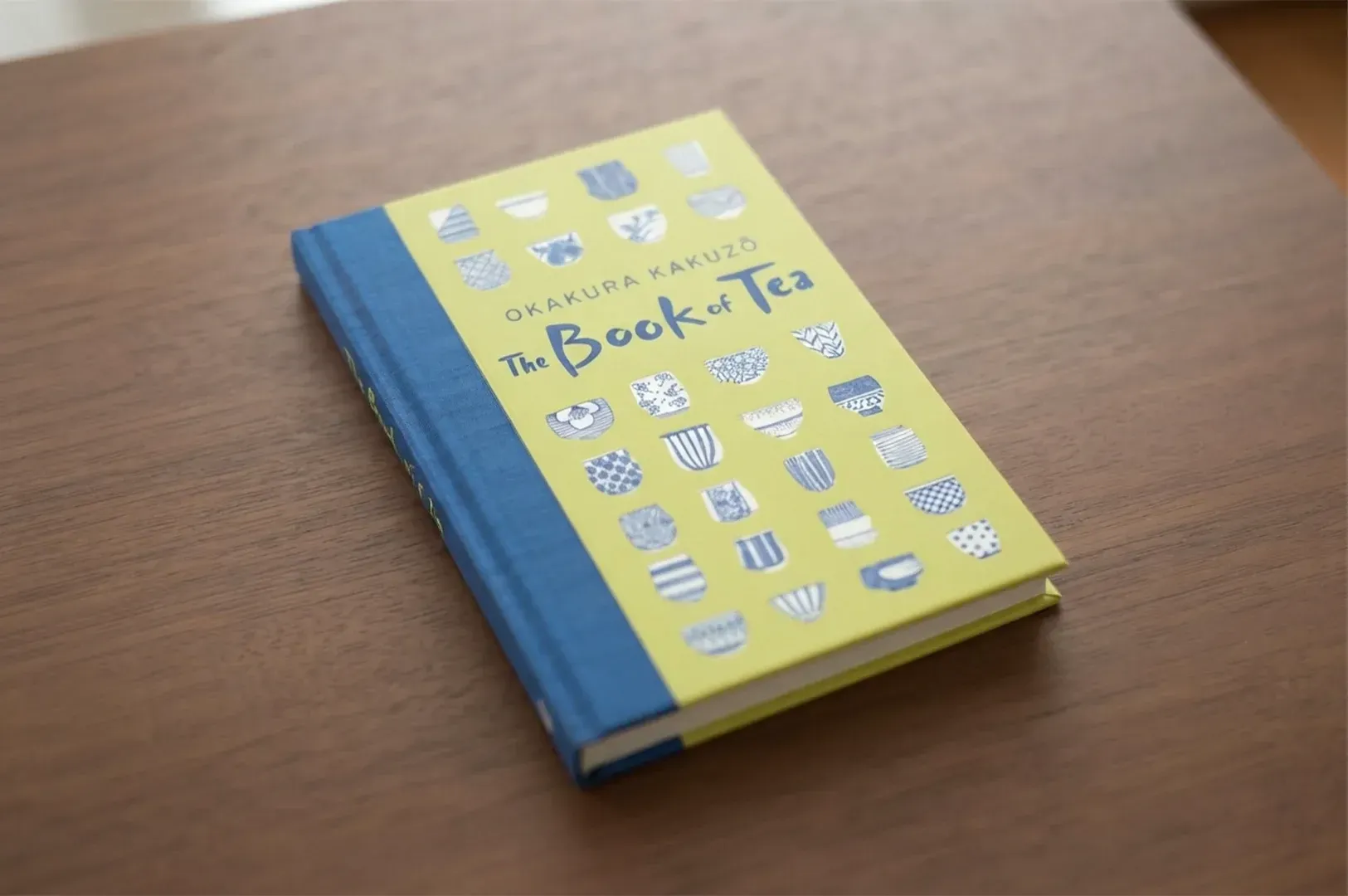
The Book of Tea by Kakuzō Okakura | My Quiet Empire Book Review
Bay San
I picked up The Book of Tea expecting a book about tea. What I found instead was a book about how to pay attention, which turns out to be the same thing, only quieter.
Okakura wrote it more than a century ago, for Western readers who thought of the tea ceremony as an exotic curiosity. But strip away the era, and what remains is an argument I have spent decades circling in my own work: that care for small things is not a soft virtue. It is a form of power.
The tea ceremony he describes is almost absurd in its slowness. The placement of a bowl. The angle of a ladle. The way light falls in a room built deliberately plain. None of it is efficient. All of it is intentional.
I recognized something in that. The businesses I have watched endure were never held together by the grand gesture. They were held together by the invisible, repeated standard. The towel folded the same way before anyone arrives. The email answered with the same care at the end of a long day as at the start.
Okakura writes that "the art of life lies in a constant readjustment to our surroundings." I have read that line as a hospitality principle, a leadership principle, and a personal one. The ritual trains presence. Presence, practiced daily, becomes character.
He is careful about simplicity, and I am grateful for it.

What he describes is not the stripped-down aesthetic that sells so well now. It is a spiritual discipline. The tea room is bare not because bareness photographs beautifully, but because a cluttered space cannot hold attention, and a cluttered mind cannot either.
I think about this every time I remove something rather than add it. A shorter menu. A quieter room. One decision made cleanly instead of five made hastily. The noise is always easier to keep than to clear. Clearing it is the work.
The idea that lingered longest is that taste is a moral matter.
Okakura suggests that what we tolerate shapes us. Rushing. Excess. Mess we stop noticing. A space that permits carelessness slowly teaches everyone in it to be careless. A space that insists, gently, on care teaches the opposite.
I have seen this in every team I have built. You do not lecture people into standards. You surround them with a room that already holds one, and most of them rise to meet it. The environment is the teacher.

I will say this plainly. The book romanticizes.
There is a wistfulness in Okakura, a sense that the modern world has lost something the tea room preserves. It is a beautiful lament, but it can tip into nostalgia for a purity that likely never existed so cleanly. Real craft is messier than his prose admits. I do not always trust the reverence.
Still, the discomfort is useful. It made me ask what I have let go noisy in the name of moving fast.
This one is for builders and makers tired of the noise. For anyone who suspects that the small, unwitnessed choices matter more than the loud ones.
I read the last page early one morning, coffee cooling beside me, the house not yet awake. I did not feel instructed. I felt slowed down, which may be the more honest gift.
Some books tell you how to do more. This one, quietly, asks you to do less, and to mean it.