

When to Break the Rules: Innovation Within Tradition
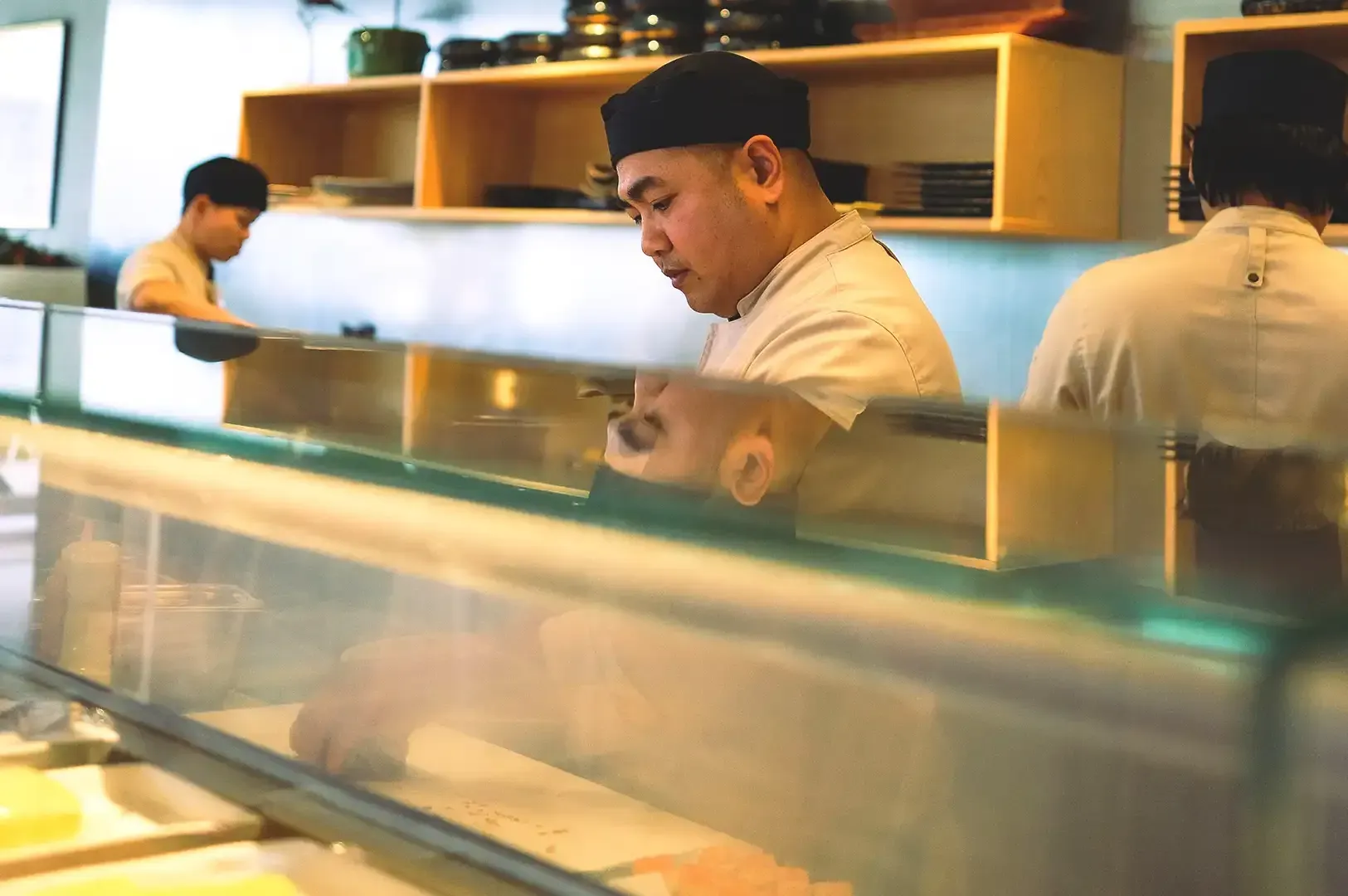
Before the doors open at the omakase restaurant, the rice is checked by hand.
A chef presses a small amount between his fingers, feeling for temperature more than taste. Warm, close to the body, never hot. The vinegar seasoned days ago to a ratio no one wrote down because no one needed to. It lives in the hands now.
I have watched apprentices ask, quietly, whether they might adjust it. Less sugar. A sharper edge. The senior chef rarely says no with words. He simply hands them the day's rice and lets them feel how far it already is from anything they could improve.
You do not get to change the rice in your first year. You do not yet know what the rice is for.
Obedience Comes First, and It Should
There is a story we like to tell about innovation. The rebel who ignores the rules and remakes the world. It flatters us, and it is mostly false.
Most rule-breaking I have seen up close was not vision. It was ego, impatient and dressed as courage. The young cook who plates his own way before he has mastered the house way. The new manager who dismantles a system he never took the time to understand.
Rebellion breaks a rule to be seen breaking it. Responsibility breaks a rule because keeping it would cost the thing the rule was meant to protect.
That distinction took me years to feel. Obedience, early on, is not weakness. It is how you earn the right to eventually disagree. You learn the rule so completely that you can hear it when it starts to lie.
Deviation With Respect
There was a small change at the omakase counter that I still think about. A particular fish, traditionally served cool, was arriving that season with more fat than usual. Served cold, the fat stayed dull, closed. One chef began warming his hands a breath longer before shaping it, letting the piece come up just slightly toward the body's temperature before it reached the guest.
It was almost nothing. A few degrees. No one at the counter would have named it.
But the fish opened. The fat loosened and turned generous, and the piece became what the season was actually offering rather than what the rule assumed. He had not
rejected the tradition. He had listened to it more closely than the rule did.
The Rule I Kept Too Long
At the consulting firm, we held a rule for years. Every engagement began with the same long assessment before any advice was given. It protected us. It kept us honest. It was, for a long time, the reason the work held.
Then it slowly stopped fitting some of the people who came to us. A few arrived already knowing themselves well, carrying years of prior work. The assessment was not protecting them. It was making them wait for a door they had already walked through.
I resisted the change for longer than I should have, because the rule had served us so faithfully that loosening it felt like betrayal. What told me it was time was not a number. It was a feeling in the room. The assessment had started to feel like ceremony rather than care.
So we let it flex, quietly, for those it no longer served. We did not abandon it. We stopped applying it where it had become a wall instead of a foundation.
The Container and the Room Inside It

There is a temptation I know well. When the work is hard, buy a better tool. A finer knife. A newer system. A more elegant framework. The purchase feels like progress, and for a while it quiets the discomfort of not yet being good enough.
But the better tool rarely fixes the thing. I have watched people acquire beautiful equipment and use it exactly as carelessly as they used the old. The instrument changed. The habit did not.
The quiet confidence I have come to admire looks unadorned. A cook with one worn knife, used properly, will always move me more than a drawer of untouched steel. Mastery tends to strip away rather than accumulate. It has stopped needing to prove anything.
Consider two instruments from two worlds. A chef's knife and an architectural drafting square.
The knife teaches attention to the single moment, the one cut you cannot take back. The square teaches attention to the whole, the line that must be true before anything can be built upon it. One asks for presence. The other asks for foresight. A person who learns both begins to see their work from both ends at once.
I think often of a rubric we built at the academy, in the early years.
We made it to assess the students. What we did not expect was how much it disciplined the teachers. To grade a thing honestly, an instructor first had to know, precisely, what good looked like. The rubric forced that clarity. It trained the teacher as much as the student, and the better teachers admitted this freely.
The tool you build to measure others will, if you are honest, measure you first.
Closing Reflection
The knife is sharp now. The stone goes back in its place, wiped and dry, waiting for tomorrow.
We become, slowly, the things we reach for each day. The stone made me patient because impatience showed up in the edge. The checklist made me honest because hoping showed up in the gaps. I did not choose these lessons. The tools taught them, quietly, through use.
That is the maxim I have kept, understated and earned: a tool does not lie, so choose carefully what you pick up each morning.
The room is still empty.
In an hour the first guest will arrive and know none of this, and that is exactly as it should be.