


Seasonal Making: Aligning Craft with Natural Rhythms

Bay San • October 8, 2026

The kitchen is coldest in the last weeks of winter. That is why we make miso then.

The soybeans have soaked overnight. Now they simmer in a wide pot, and steam rises into the dim room, carrying a smell that is earthy and faintly sweet. The windows have fogged. Outside, the street is still dark.

The cook does not check a timer. She lifts a single bean from the water with a wooden spoon, lets it cool on her palm, and presses it between her thumb and ring finger.

It resists, only slightly. She returns it to the pot, sets the lid back on, and goes to wipe down a counter that is already clean.

Twenty minutes later she tests another. This one gives without effort, folding into a soft paste against her skin. She nods once, to no one.

The beans will be mashed, salted, packed with koji, and pressed into a cedar barrel. Then they will sit through spring, through the wet heat of summer, into autumn. No one will open the barrel for a year.

I have watched her do this many times. What stays with me is that small pressure of her fingers. She is not testing the bean against a recipe. She is asking it a question and waiting for its answer.


Time You Spend, Time You Join

Most of my working life, I treated time as a resource.

It sat in a ledger beside money and attention. Something to allocate, measure, and use up efficiently. A day was a container. The goal was to fill it well.

Calendars encourage this. Every square is the same size, so every hour looks interchangeable. A Tuesday in February weighs the same as a Tuesday in June. Deadlines arrive on fixed dates whether or not the work is ready.

Seasons teach something calendars cannot. Not every hour is the same.

There is a time when the soybeans want to be cooked and a time when they do not. There is a month when plums are firm enough to salt and a week, not much longer, before they are too soft. Cold slows fermentation in a way that deepens flavor. Heat speeds it in a way that thins flavor out. The cook who ignores this still produces miso. It just tastes like hurry.

When you treat time as a rhythm, the question changes. It is no longer how much you can fit inside a day. It becomes what this particular day is asking for.

That is a quieter question. It is also a harder one, because the answer is not written anywhere. You have to listen for it.

What Cannot Be Hurried Into Ripeness

Overhead view of a minimalist workspace showcasing a person holding a cup of coffee, laptop, and notebook, symbolizing deliberate creative focus and rituals for better productivity.

I learned this first in the kitchen, but I understood it only later, through the academy.

In the early years I wanted it finished. I wanted the reputation, the full classrooms, the sense that the place had always existed. I pushed. I added programs before the first ones had settled. I measured progress by the term, sometimes by the week.

Nothing I forced held its shape for long.

What lasted came slowly. Teachers who stayed long enough to develop their own way of explaining a difficult idea. Rituals that formed on their own, at the start of a lesson or the end of a year, because people kept repeating them until they meant something. A culture you could feel in the corridor before anyone spoke.

None of that could be installed. It ripened. My job, I eventually realized, was not to produce it. It was to keep the conditions steady enough for it to grow.

The restaurant taught the same thing more bluntly. A young cook can memorize every step of preparing rice in a month. It takes years before their hands know how the grain behaves on a humid morning compared with a dry one. You cannot shorten those years. You can only make sure they are spent paying attention.

A property I return to taught it in stone and timber. The garden needed several seasons before it stopped looking planted and began looking like it belonged. The wooden floors darkened only through use. I could have hired people to simulate age. Instead we waited, and the building grew into itself.

Some things are made. Others are tended until they are ready. The mistake is confusing the two.


The Space Between Notes

At the tea shop there is a pause I have come to love.

The water is poured. The whisk moves, then stops. The bowl is turned and set down. And then, before anything else happens, there is a moment when nothing happens at all.

It is not empty. It holds everything around it. The scent of the tea rising. The faint sound of the kettle settling. The guest's breath slowing to match the room.

The Japanese call this interval ma. I think of it less as a concept than as a practice: the discipline of leaving space and trusting that the space does work.

There is a related idea in older Chinese thought, the notion of acting without forcing. Water does not argue with stone. It finds the path already there and, given enough seasons, reshapes the stone completely.

I do not think either idea means passivity. The tea master trains for decades. The cook tests the bean again and again. The stillness is earned. It comes from knowing the material so well that you no longer need to impose yourself on it.

Effort is still there. It has simply stopped pushing against the grain.

The Trouble with Endless Spring

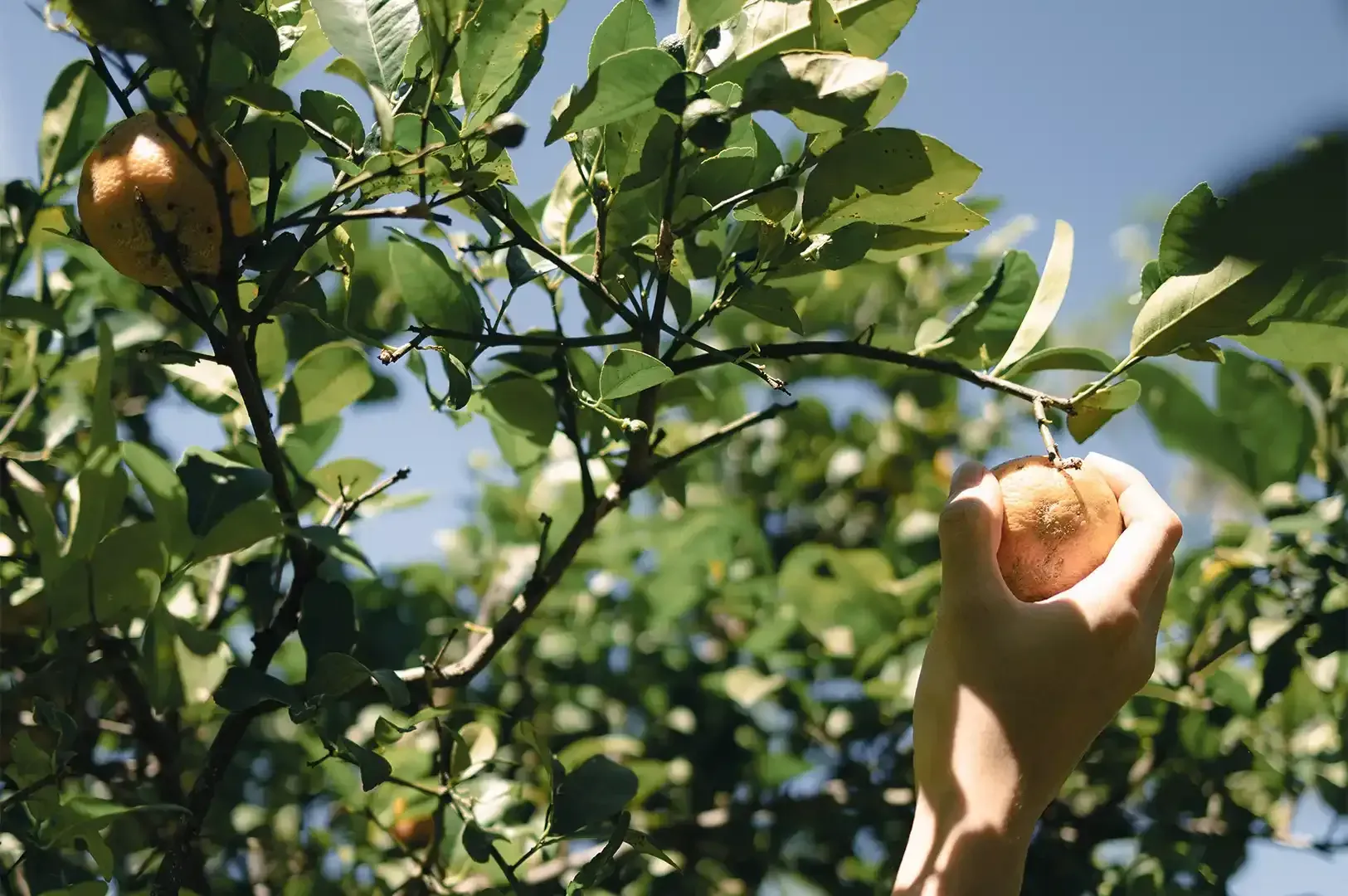
A hand harvesting ripe citrus directly from a sunlit tree branch, capturing the art of seasonal making and nature's timing.

Modern ambition loves spring.

Spring is growth you can see. New shoots, new launches, new rooms, new markets. It photographs well and reports well. A business in spring always looks like it is winning.

So we try to stay there. We plant every quarter. We expect every season to produce something visible. Rest looks like decline, and pruning looks like failure.

But a field kept permanently in spring exhausts itself. You get abundance without depth. Plenty of leaves, very little root.

Depth comes from the other seasons. Summer, when things ripen slowly in the heat. Autumn, when you harvest and decide what to keep. Winter, when everything appears to stop, and underground the real work continues.

The miso in that cedar barrel looks like nothing is happening for most of a year. That long, quiet stretch is precisely where its flavor comes from.

I have seen the same thing in people. The ones who grow deepest are rarely the ones who never stop producing. They are the ones who allow themselves fallow periods, seasons of study and repair, before the next thing begins.


Listening Before Making

Next winter, the cook will open the barrel.

She will lift the weighted lid and the cedar boards, and the smell will come up dark and rich, something a year of quiet waiting has written into the paste. She will taste it from the tip of a wooden spoon. Then, probably, she will begin the next batch, in the same cold weeks, testing a single bean between two fingers.

I used to think mastery meant control. Bending material to your will. Making it do what you planned, on the date you chose.

Now I suspect the deepest craft is something else. Not command over the bean or the grain or the timber, but agreement with the hours they need.

The material was always ready to tell us when.

We only had to stop long enough to hear it.

Recent Posts

Looking through glass doors into an empty corporate conference room with black leather chairs and la
By Bay San • October 15, 2026
Learn how everyday standards, tolerated lapses, and repeated behaviors quietly shape company culture, team habits, and long-term performance.
A leather artisan using precision divider tools and a ruler on a cutting mat to meticulously measure
By Bay San • October 13, 2026
Discover why precision, judgment, and shared standards turn craftsmanship into lasting business quality, trust, and stronger systems.

Front cover of The Art of Travel by Alain de Botton featuring an airplane window view, exploring how
By Bay San • October 9, 2026
We bring ourselves wherever we go. De Botton shows that travel's real gift is learning to see, an attention we can carry back home.

A mentor holding a digital tablet while coaching a professional who is taking notes in a notebook, i
By Bay San • October 6, 2026
The right mentor does not define who you become. They help you see your values, habits, and blind spots clearly, and leave the deciding to you.
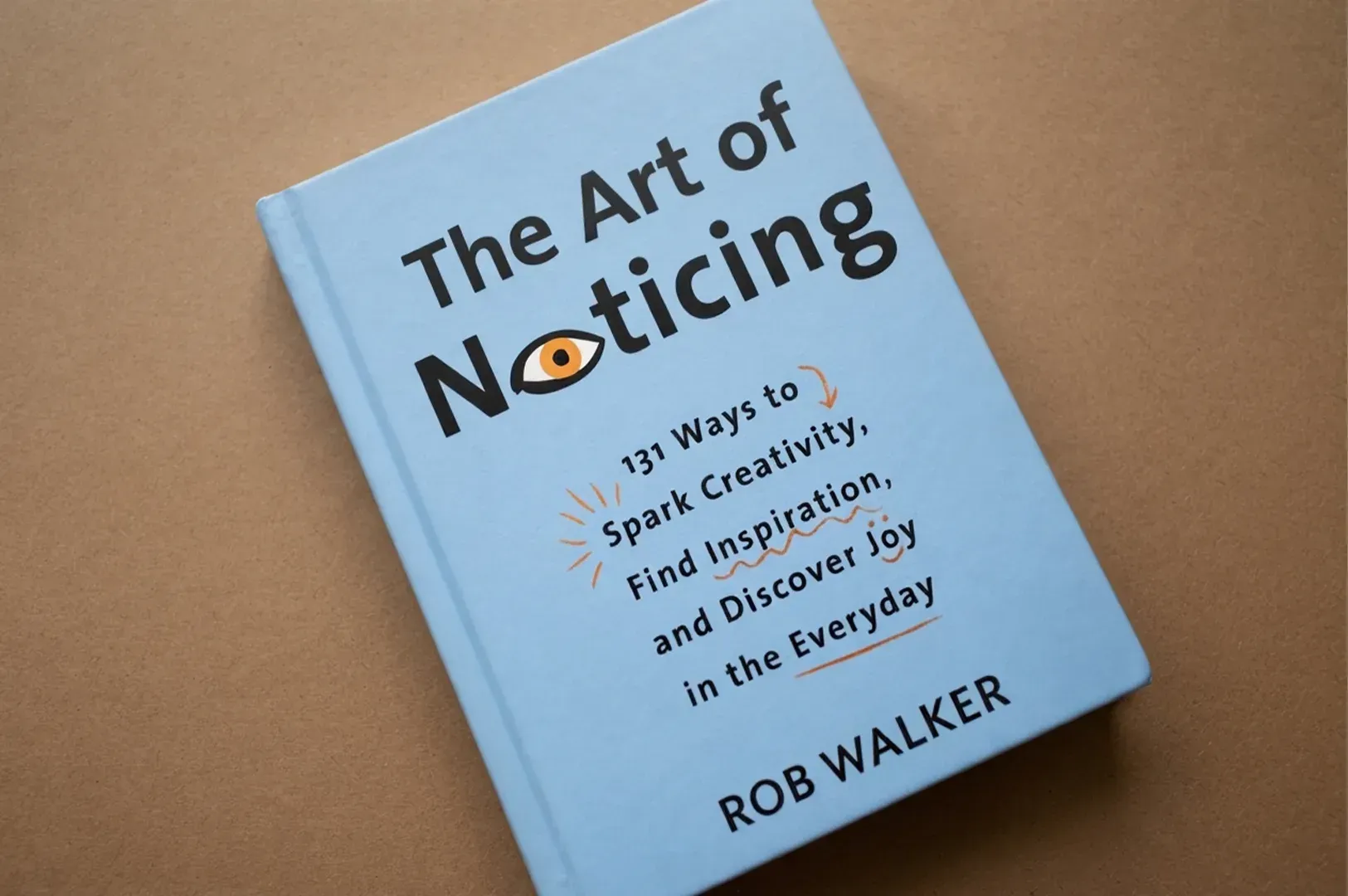
A light blue hardcover copy of The Art of Noticing by Rob Walker resting on a brown surface, highlig
By Bay San • September 18, 2026
Rob Walker shows noticing as a daily discipline, attention that sharpens taste, creativity, and calm power in a distracted world.

Two business professionals shaking hands across a desk, symbolizing trust, agreement, and the slow,
By Bay San • September 17, 2026
On reputation as a compounding asset: slow to build, easy to dilute, and earned in the small, consistent moments no one sees.

An open vintage suitcase resting on a textured surface, containing only an open book and a bright re
By Bay San • September 16, 2026
On travel minimalism as a ritual of attention: how carrying less makes room for presence, memory, and quiet self-command.
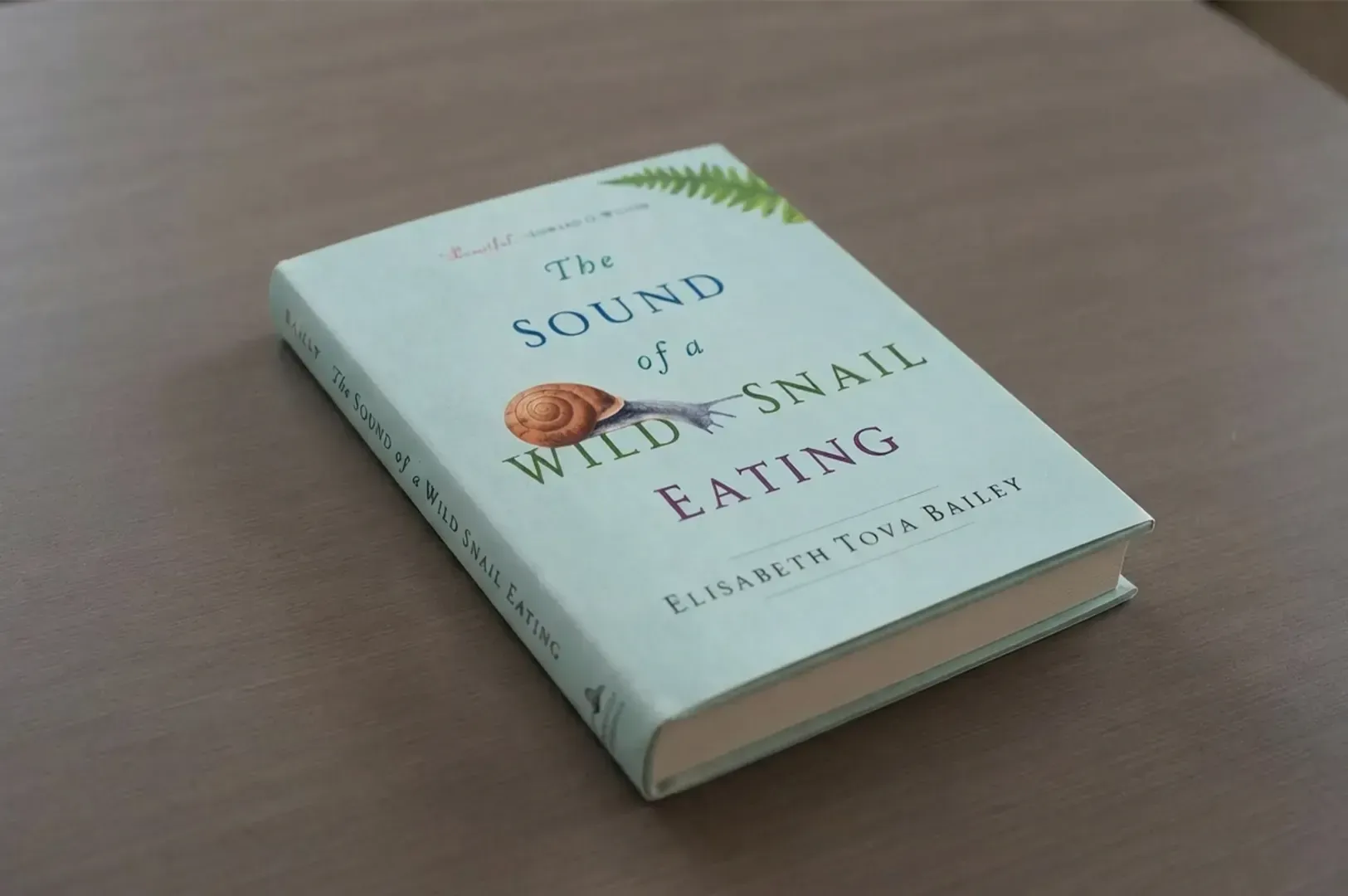
Close-up, three-quarter angle shot of the hardcover book The Sound of a Wild Snail Eating by Elisabe
By Bay San • September 11, 2026
On attention as power: what a bedridden woman and a wild snail taught me about pacing over force, and building things that last by noticing.
A solitary wooden stool standing on a rustic, sunlit wooden floor against a weathered brick and plas
By Bay San • September 10, 2026
On aging well as becoming more specific, not broader or louder. A quiet letter on taste, boundaries, and choosing people over performing for them.
Close-up shot of a craftsperson wearing black protective gloves delicately cleaning a weathered meta
By Bay San • September 9, 2026
On repair as stewardship: why what we refuse to discard reveals what we believe has a soul, and how making things last is a relationship with time.

Show More