The Hospitality of Strangers: Moments of Unexpected Connection
The taxi smelled faintly of cedar and rain. It was late when I arrived, late enough for the city to have withdrawn into itself, leaving only wet pavement, quiet signage, and the blurred reflections of passing cars. I had been traveling too long, not dramatically, not in the way that produces stories worth retelling, but in the smaller way travel wears a person down. The fatigue had settled behind my eyes. My words felt delayed. Even the simple act of giving an address required more concentration than it should have.
I gave it poorly, half in one language, half in another. The driver did not correct me. He simply nodded, adjusted his mirror, and reached toward the seat beside him. From somewhere I could not see, he handed back a small towel, warm and folded into a neat rectangle. There was no explanation, no flourish, no practiced speech about service. He did not wait for me to thank him in the correct way. I held the towel for a moment before using it, and the warmth moved first into my hands, then somewhere quieter.
The Gesture Before the Guest
We barely spoke during the ride. He asked, in careful words, whether the temperature suited me, and when I said yes, he turned the radio down slightly, not off, as if complete silence might have felt too severe. It was a small adjustment, almost nothing, and yet it changed the atmosphere of the car. That is often how real hospitality announces itself: not through extravagance, but through proportion. The grand gesture usually asks to be remembered. The small one asks for nothing. It enters the room, does its work, and disappears.
When we arrived, the driver folded the receipt twice, pressed it flat, and handed it over with both hands. I stepped out into the rain feeling oddly restored, though nothing significant had happened in the ordinary sense. I had entered a taxi, been driven from one place to another, and paid the fare. Yet for a few minutes, I had been received. The towel had not solved my tiredness or changed the unfamiliar city, but it had interrupted
the hard surface of travel. It had made a temporary shelter inside an ordinary transaction.
Service Is Not Performance
Building businesses has taught me to distinguish service from performance. Performance bends toward applause. It wants to be seen, named, and praised aloud. Service, the deeper kind, often happens where no one is looking. It is the towel warmed before the passenger arrives, the room reset before the next guest crosses the threshold, the chair adjusted without comment, the cup replaced before the crack becomes inconvenience.
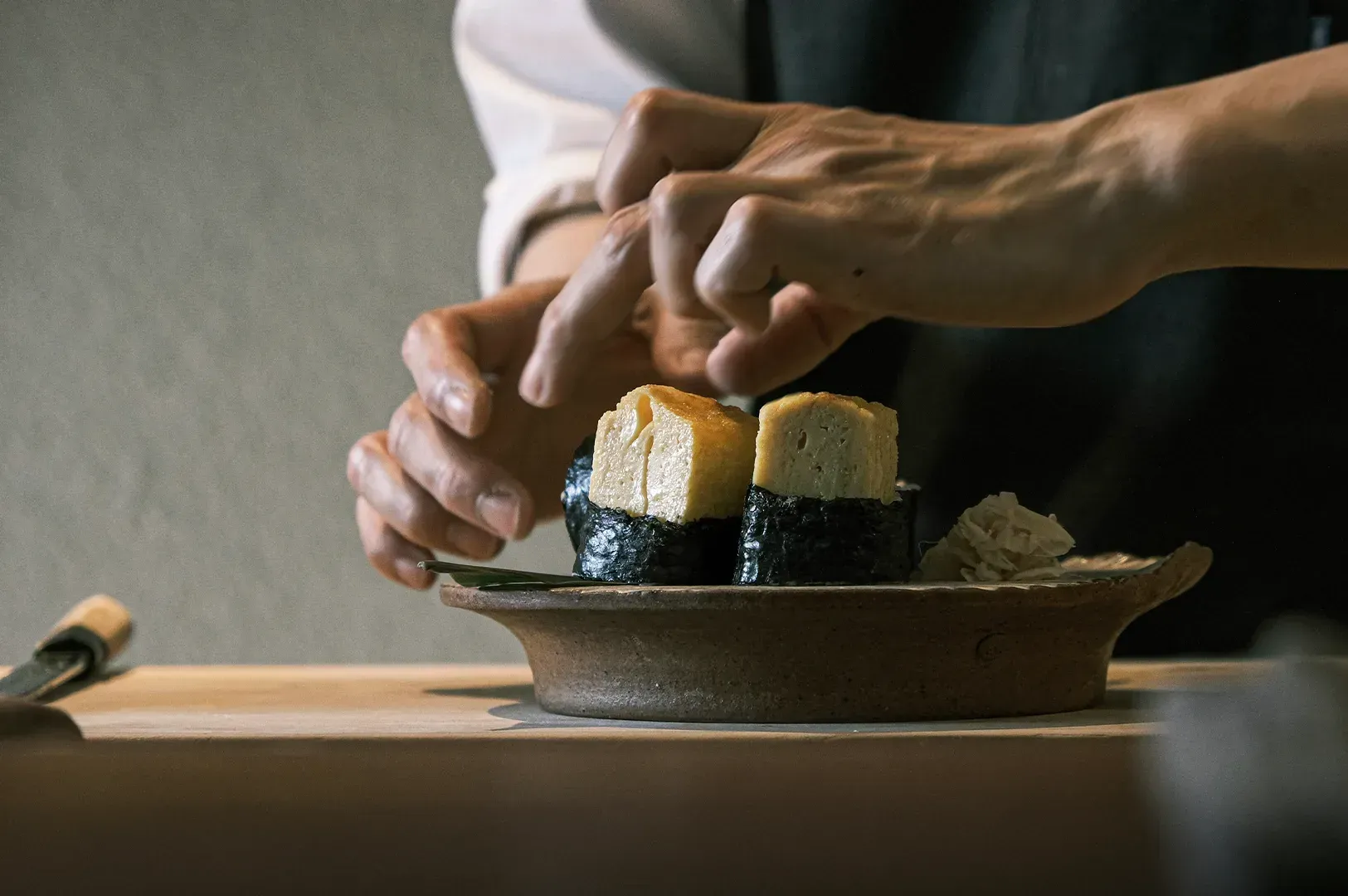
At the omakase restaurant, I learned that warmth and standards are not opposites. People sometimes imagine that systems make hospitality cold, that precision crowds out care. My experience has taught me the reverse. Systems, when designed with integrity, create the conditions for tenderness. When sourcing, timing, cleanliness, preparation, and sequence are already held in place by discipline, attention is freed for the person in front of you. Care rarely survives chaos for long. It needs structure, margin, and repetition humble enough not to announce itself. The driver’s towel was not luck. It was evidence of a standard, one he had likely practiced many times for many people whose names he would never know.
Memory Returns Through Texture
Later that night, at the inn where I was staying, I noticed the cedar scent again. It lingered faintly in the wooden doorway, warmed by the interior light, and pulled me somewhere I had not visited in years: the first months of building the academy. Long evenings. Paper stacked unevenly on a desk. Cooling coffee. A small space heater giving off a dry, woody warmth in a room that never seemed properly finished.
I did not remember those months as a sequence of events. I remembered them in textures: the grain of a desk under my palm, the particular tiredness that follows a difficult decision finally made, the strange permission that warmth can offer when a person has been holding themselves together for too long. Memory rarely returns through explanation. It returns sideways, through the senses, when we are not prepared for it. A scent opens a door we did not know we had left ajar, and suddenly we are not revisiting facts, but a former self.
The Glance That Adjusts the Room
The next morning, an older woman ran the inn’s small dining room alone. The cup she set before me was chipped at the rim, glazed in a soft gray that had clearly been washed by hand for years. She poured tea without asking, then paused and studied me for a moment too long to be accidental. “You slept badly,” she said. It was not a question. I admitted that I had.
She nodded, disappeared, and returned with a second small dish, something warm and plain that had not been set before anyone else. She did not make a ceremony of it. She placed it beside the chipped cup, touched the edge of the table once, and moved on. She had not flattered me or fussed over me. She had simply seen what was in front of her and answered it.
That morning taught me something different from the taxi ride. The driver had cared for me before he knew me. His hospitality was prepared, structural, available to anyone who entered his car. The woman at the inn offered another form of hospitality. Hers was not prepared in advance. It was particular, improvised, impossible to script. She read the person in front of her and adjusted the morning accordingly. I was not only cared for. I was seen.

The System and the Glance

Between them, they described the whole architecture of hospitality: the prepared and the responsive, the standard and the glance, the comfort offered to everyone and the comfort offered to one person because of who they happen to be at that hour. I have spent years trying to build both into the places I run: the towel and the glance, the repeatable gesture and the human exception.
It is harder than it sounds. Too much system, and hospitality becomes efficient but hollow. Too much improvisation, and it becomes dependent on mood, energy, talent, and chance. The finest places, like the finest people, learn to hold both. They prepare generously, then remain awake enough to notice what preparation alone cannot solve. A system without warmth becomes machinery. Warmth without structure becomes inconsistency. But when the two meet, a person feels held without being managed, seen without being examined, served without being made into an audience.
What Strangers Leave Behind
I left the inn with the taste of plain food and weak tea still in my mouth. Neither stranger will remember me, and that is part of what made the encounters feel honest. They expected nothing in return, not loyalty, praise, or gratitude performed brightly enough to become its own burden. Hospitality from strangers is a temporary shelter. It does not last, and it is not meant to.
You step into it briefly, out of the rain, out of fatigue, out of the long habit of moving through the world with your guard quietly raised. Then you step out again, slightly changed, carrying warmth without a clear source. A place reveals itself through these gestures, but so does the traveler. We learn what we are still able to receive. Mine, it turned out, had not hardened beyond softening. Not yet. And perhaps that is why the towel stayed with me: a folded warmth passed from one stranger to another, small proof that the world, even in its impersonal hours, can still make room.
For more on Travel and Discovery from My Quiet Empire, check on:
What Great Teachers Have in Common | Observations