
The Philosophy of the Flâneur: Purposeful Wandering in Modern Cities

Bay San • July 21, 2026

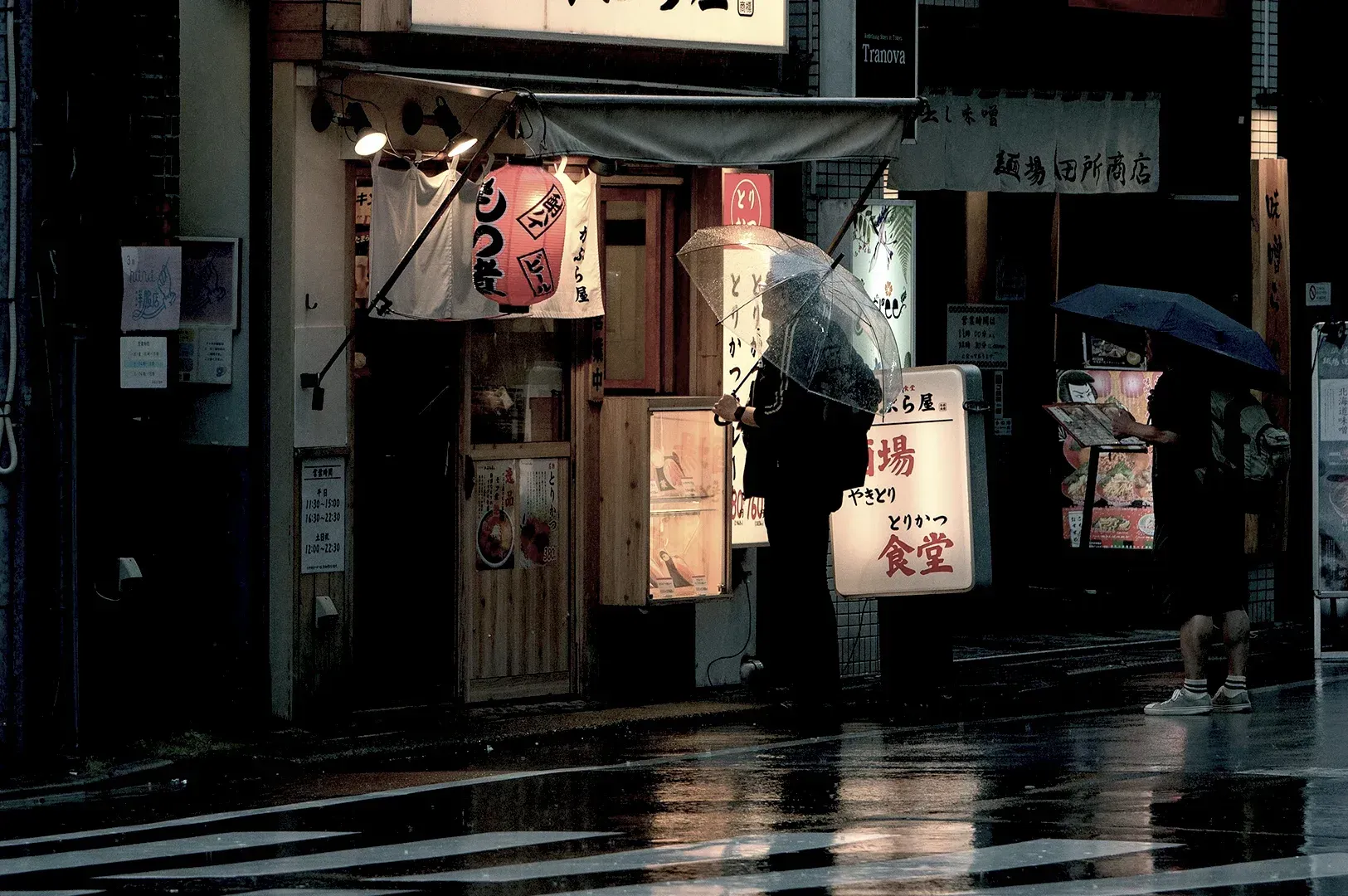
The crossing signal in Tokyo makes a sound I have never forgotten. A soft, repeating chirp, patient and mechanical, marking the seconds while a thousand people wait at the edge of the pavement. When it changes, the crowd moves as one body, umbrellas tilting, shoes hushing against wet asphalt. Then it empties again, and the sound returns, chirping to no one.

I stood at that corner one rainy evening with nowhere I needed to be. That is a rare thing to admit. I had no appointment, no reservation, no route saved to my phone. I let the signal keep its rhythm and I did not cross. The city kept moving. I stayed still, and for a moment I could see it more clearly than the people rushing through it.


What the Flâneur Actually Does

We tend to picture the flâneur as an idle figure, a man in a good coat with nothing to do. That is a misunderstanding. The flâneur is not idle. He is working, quietly, at the one thing most of us have stopped practicing. He is paying attention.

To wander with intent is not the same as drifting. Drifting asks nothing of you. Wandering asks everything, only softly. You give up the destination so you can keep the noticing. You trade efficiency for presence, which the modern city treats as a poor exchange.

I understand the tension. I spent years measuring my days in outcomes. A walk that produced nothing felt like a walk wasted. It took me a long time to learn that noticing is a form of production, even when it leaves no receipt.

A Kitchen Somewhere in the Rain

A rainy evening scene in a Japanese alleyway featuring a person with a transparent umbrella standing outside a traditional restaurant, capturing the beauty of slow, intentional urban exploration.

A smell caught me near that crossing. Steamed rice, faint, drifting from a doorway I could not place. It undid me for a second. I was no longer in Tokyo. I was back in the first months of building the academy, in a plain room that smelled of instant noodles and printer toner, where I worked late because there was no one else to do the work.

I remembered the particular tiredness of those weeks. The hum of a cheap fan. The window that would not close all the way, letting in the smell of rain on warm concrete. Memory does not arrive as a story. It arrives as scent and sound, whole and wordless, before the mind can name it. I stood on the foreign street and let it pass through me, and then I let it go.


The Discipline Underneath the Drift

Building things taught me something that changed how I walk. In every venture, there were two categories of things, and confusing them was always the costly mistake. Some things could never move. The training. The rituals. The craftsmanship, the small operational disciplines that no customer ever saw but every customer somehow felt.

Wandering works the same way. It looks like pure freedom, and it should feel like it. But underneath there is a quiet structure that keeps it from becoming aimless. You hold the discipline of attention. You let everything else be loose. The discipline is what turns a drift into a practice.

Two Corners of One City

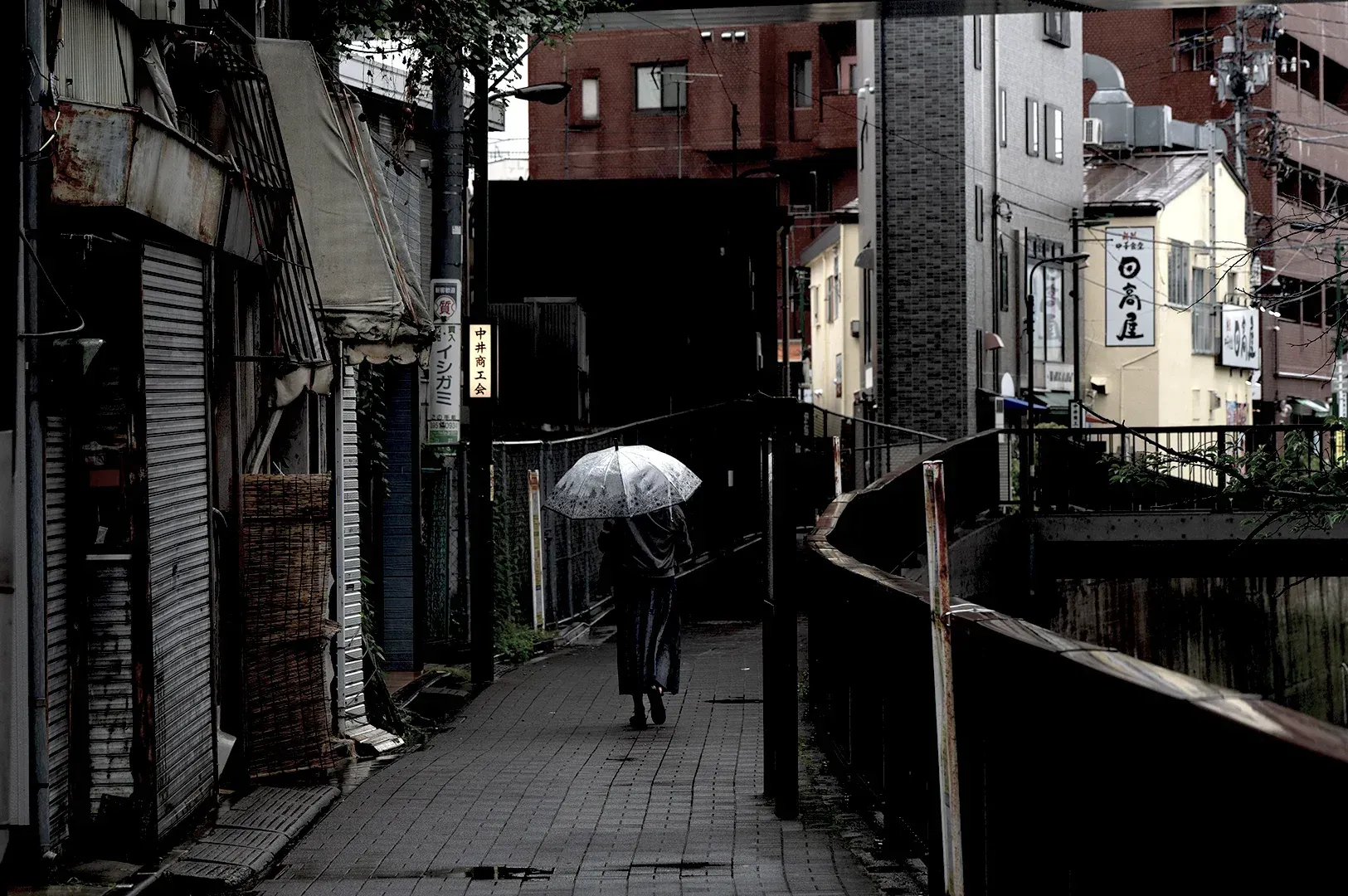
A solitary figure walking away down a narrow, quiet urban path under a clear umbrella, reflecting the theme of disciplined attention and wandering through city streets.

I chose three pieces of fruit and held them out to the citrus man, along with a coin, more than I owed, the way you do when you are unsure of a currency and too proud to count slowly. He did not take it. He shook his head once, small, and set two of the coins back on the counter. Then he wrapped the fruit, tugged the twine, and handed me the bag.

That was all. No lesson offered. No smile that asked to be remembered. But I understood the correction. He would take what the fruit was worth and not a coin more. The dignity was in the exactness. To overpay him was, in some quiet way, to misunderstand him.

I slowed after that. I stopped rushing through the aisles as though I were collecting them. The bag was warm in my hand.


For Each Bite

I carried the fruit through the rest of the morning and ate one piece standing at the edge of the market, watching the woman clear her glass again.

There is a kind of literacy you cannot study for. It is learned by standing still long enough to see how a person handles what they have made. The vendors were not teaching. They were only working, to a standard they set for themselves and kept whether or not anyone paid attention.

I think attention is a form of respect, something I’m familiar with from this article. We give it too rarely, and mostly to the loud things. The market asks the opposite. It rewards the quiet look, the second glance, the willingness to notice ordinary beauty held to an uncompromising line.

The fruit was good. Bright, a little sharp, exactly what he promised without ever saying a word.

Recent Posts

Book cover for In Praise of Shadows by Jun'ichirō Tanizaki, illuminated by a stark, contrasting beam
By Bay San July 17, 2026
Tanizaki makes the case for shadow over brightness, and why restraint, patina, and dim light create the atmosphere that clarity destroys.
A focused chef working in a quiet, warmly lit kitchen, symbolizing the pursuit of mastery and how su
By Bay San July 16, 2026
A reflection on how the people we keep quietly calibrate our standards, and why the right company tunes a life rather than filling it.
The book cover of
By Bay San July 15, 2026
Roman Krznaric reframes legacy as cathedral time: building for people you will never meet, and the quiet discipline of the long view.
A minimalist, warm-toned close-up of a simple ceramic tea cup on a table, symbolizing the quiet beau
By Bay San July 14, 2026
A reflection on how imperfection reveals the real, and why the human traces in craft and work are the quiet evidence of authenticity.
A notebook and pen resting on a dark desk, symbolizing the reflective and intentional planning requi
By Bay San July 9, 2026
A quiet letter to young founders on speed, standards, and the slow work of building something worth keeping at the beginning of the journey.
A close-up view of a refrigerated seafood display at a traditional market, showcasing the careful pr
By Bay San July 8, 2026
Market vendors are quiet custodians of craft and culture. A reflection on how their small, repeated choices teach a kind of global literacy.
A close-up, high-angle shot of the book A Field Guide to Getting Lost by Rebecca Solnit, centered on
By Bay San July 3, 2026
Rebecca Solnit reframes getting lost as a discipline: a return to humility, attention, and the kind of not-knowing that remakes you.
A minimalist, serene omakase bar interior, representing the deliberate structure and clear boundarie
By Bay San July 2, 2026
A reflective letter on boundaries as self-respect, practiced quietly through consistency and craft rather than announced through conflict.
A serene, sunlit home studio corner featuring a wooden bookshelf, a cozy chair, and a large window l
By Bay San June 30, 2026
A reflection on how structured morning rituals create the conditions for deep creative work, attention, and clarity before the world enters.
A copy of 'On Dialogue' by David Bohm resting on a dark surface, representing the foundational conce
By Bay San June 25, 2026
Why genuine dialogue is rare: a reflection on Bohm's idea of thinking together, suspension, and what real listening demands of leaders and teams.
Show More