



Partnerships as Practice: Choosing the Right People to Build With
The academy is quietest just before six. I let myself in through the side door, and the sound the key makes turning in the old lock is the same every morning. A small mechanical click, then the give. I have heard it for years. It still tells me the day has permission to begin.
The corridor smells faintly of chalk and floor wax. Light has not yet reached the windows. I stand there a moment, before anyone arrives, and I think about the people who will fill this place in an hour, and the people I chose, long ago, to build it with me.
That is the thing no one tells you at the start. The work you make is not really made by you. It is made by the people standing next to you when the room is empty and no one is watching. They shape what the work becomes, quietly, over years.
Choosing them is the most important thing I do. And I have not always done it well.
The Signal I Talked Myself Out Of
Years ago, early in the life of one venture, I nearly took on a partner who was, by every visible measure, exceptional.
Sharp. Persuasive. The kind of person who makes a room lean forward. I wanted to build with him. I could already picture what we would do together.
There was one small moment I chose to ignore.
Over dinner, he spoke about a former collaborator. Not cruelly. That would have been easier to catch. He spoke about her with a kind of light dismissal, as if her contribution had been obvious, replaceable, slightly beneath him. He smiled while he did it.
I remember feeling something cool pass through me, and then I remember explaining it away. He was tired. It was one comment. Everyone has a difficult past partnership.
But it was not one comment. It was a window.
How someone speaks about the people they used to build with is how they will one day speak about you. I knew that, somewhere. I just did not want to know it that night.
We worked together briefly. It ended more or less the way that dinner predicted. When it did, I understood that the signal had not been small at all. I had simply wanted the partnership more than I wanted the truth about it.
A Framework I Trust Now
I do not have rules for choosing people. People are too alive for rules. But I have a handful of things I watch, and I watch them patiently, over time, because character reveals itself slowly.
Standards
The first question is the quietest. What do they protect when nobody is watching?
Anyone will hold a standard in front of an audience. The person worth building with holds it at eleven at night, alone, when lowering it would cost nothing and no one would ever know. I have learned to watch what people do with the unwitnessed choice. That is where their real standard lives.
Temperament Under Pressure
Calm is easy in fair weather. So I pay attention to the harder moments. A guest complaint at the omakase restaurant. A timeline slipping at the consulting firm. A number that comes in worse than we hoped.
Watch how someone behaves when the margins tighten. Do they get smaller and sharper, or larger and louder? Do they steady the room, or do they need the room to steady them? Pressure does not build character so much as reveal the character that was already there.
Relationship to Craft
Some people respect the slow parts. The training. The repetition. The tenth attempt at a thing that was almost right on the ninth.
Others are always looking for the shortcut, the version that gets to the applause faster. You can usually tell within a single project which kind of person you are dealing with. The ones who honor craft treat quality control as a form of respect. The others treat it as a delay.
I want to build with people who find the repetition meaningful rather than tedious.
Truth-Telling
Can they disagree with me cleanly?
This matters more than agreement ever could. I do not need a partner who echoes me. I need one who can say the uncomfortable thing across the table, plainly, without theatrics, without manipulation, and without going silent and withdrawing for a week afterward.
Clean disagreement is a rare skill. It requires enough respect to be honest and enough steadiness to stay in the room while the honesty lands. When I find someone who can do it, I hold on.
Long Horizon
Finally, I listen for how they measure time.
Some people think in weeks. Every decision is a sprint toward a visible finish. Others think in seasons and decades, willing to plant something now that will not bear fruit until long after the excitement has faded.
Stewardship is a long-horizon instinct. The people I have built the most durable things with all shared it. They cared what the work would be in twenty years, not just what it would look like on Friday.
Leverage and Dependency
There is a distinction I did not understand when I was younger, and now consider almost everything.
Some partners create leverage. They build systems, they bring clarity, they set a culture that holds without being held. When they join the work, the work becomes lighter and better at the same time. You can step away and return to find things stronger than you left them.
I had a partner like this in one venture. Nothing dramatic. He simply made things run. Decisions got cleaner. Standards got clearer. People knew what was expected because he had made it legible. I did less and the work improved. That is leverage.
Other partners create dependency, and it can look almost identical at first, because they are often brilliant and charming and busy.
But slowly you notice something. You have become the translator, explaining them to the team. The stabilizer, smoothing what they disrupt. The adult in the room, quietly cleaning up after the energy they bring. The work does not get lighter. It gets heavier, and the weight is you.
I have been on both sides of that. The lesson took time. A partnership is not measured by how impressive someone is in the room. It is measured by what the work feels like once they have been in it for a year.
Quiet Diligence

So I have learned to do a slower kind of due diligence. Not on their competence, which is easy to check, but on their values, which are not.
I try to work with someone before I commit to them. A small project, a shared problem, something with a real deadline and a little friction in it. You learn more from one modest project done together than from ten conversations about what you might do.
During that trial, I watch the small things. How they treat the most junior person present. What they do when a plan changes at the last minute. Whether they take credit carefully and blame generously, or the reverse.
I ask questions that reveal values rather than skill. What is a decision you regret, and why. Tell me about a collaboration that ended badly. What would you refuse to do even if it worked. The answers matter less than the way they are given.
And I define things in writing early, while the goodwill is high and no one is angry yet.
Decision rights. Quality thresholds. How we handle conflict when it comes. And, gently, how we would part if we ever needed to, with dignity intact. Naming the exit early is not pessimism. It is respect.
Two Rhythms

I have come to think the best partnerships have a rhythm, and you can feel it. The omakase counter moves in a precise cadence. Quick, exact, each motion arriving on time. There is a rhythm to good service that everyone behind the counter shares without speaking. When it is right, no one needs to be told what comes next.
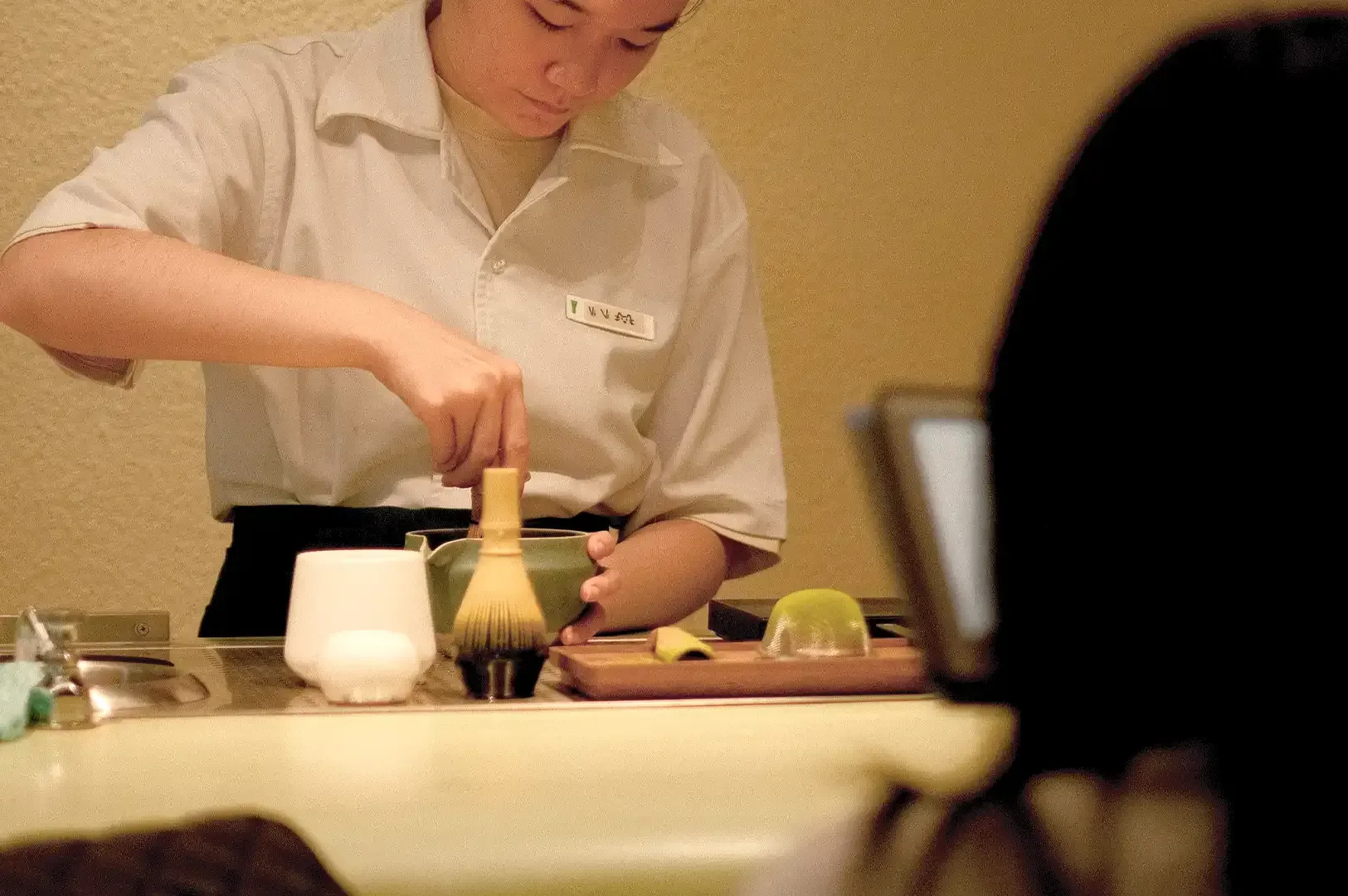
The tea room moves differently. Slower, quieter, the pauses as considered as the pours. The rhythm there is patient rather than quick.
Neither is better. What matters is that everyone is keeping the same time. The wrong partnership feels like two people playing at different tempos, always a half beat off. The right one feels like shared rhythm, whether the work is fast or slow. You stop having to count.
What Partnership Practices
I let the door close behind me and walk toward the light beginning to reach the far windows.
I think of the people I build with now. What they have made me is not simply more successful. They have made me more exacting, because they hold a standard I have to rise to meet. More honest, because they will not accept the easy version. More calm, because I trust them to hold their end when the pressure comes.
That, in the end, is what partnership practices. Not strategy. Character.
You do not choose people once. You choose them again every morning, in the small ways you keep faith with them and they with you. The key turns in the lock. The room fills. And what the work becomes is decided, quietly, by who was willing to stand in it beside you.
For more on why character matters more in being an entrepreneur, check out my articles on
My Quiet Empire.